A Charity Leader and His Innovative Nonprofit Serving ‘Unbanked’ People Win $100,000 Award

By Caroline Bermudez
Contributor
November 17, 2013 | Read Time: 4 minutes
The South has the nation’s highest percentage of people who lack checking or savings accounts. Nearly half of all people in America without access to banking services, 46 percent, live in the region.
It is those people that Hope Credit Union serves, people who are on the “outside looking in,” says William Bynum, the organization’s chief executive.
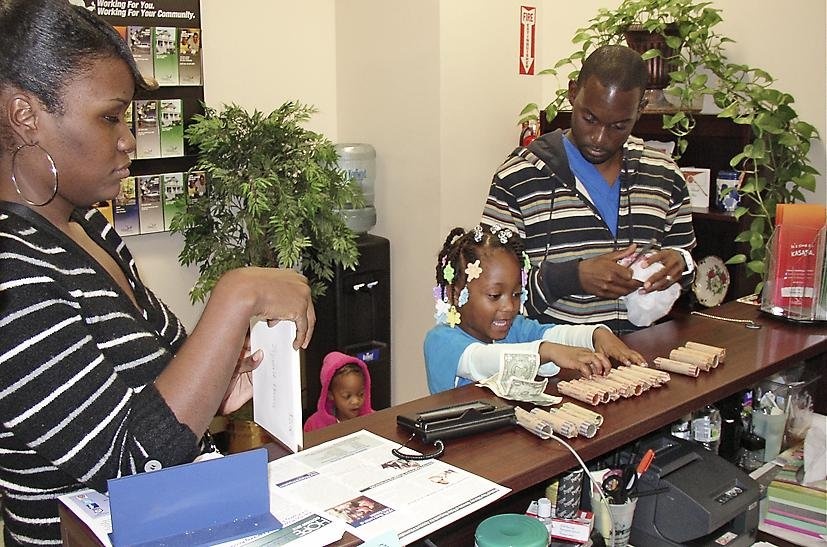
Since its founding in 1995, Hope Credit Union, in Jackson, Miss., has provided financial services to many people in the South who have been unable to rely on traditional banks.
What’s more, its loans to rural health and dental clinics have helped provide medical care to people who had few options and have helped created decent-paying jobs in many small towns.
Such accomplishments, which have helped at least 400,000 people, are why Mr. Bynum and the credit union received the John P. McNulty Prize, a $100,000 award given by the Aspen Institute to honor people who take entrepreneurial approaches to solving social problems.
Anne McNulty, an Aspen Institute trustee who created the prize in honor of her late husband, says Mr. Bynum won because his work champions local communities that would otherwise be ignored.
“Credit is the oxygen that helps communities thrive; in poorer communities, credit is not easily available,” she says. “What Bill is doing is creating a future.”
And Mr. Bynum is already looking well into the future: He is considering new ways of using mobile technology to extend services and to continue taking aggressive steps to back people and businesses most banks won’t assist.
Local Request
Nearly two decades ago, Mr. Bynum moved from North Carolina to Mississippi to lead the Enterprise Corporation of the Delta, a nonprofit loan fund that helps local businesses grow. In Jackson he joined Anderson United Methodist Church. After learning of Mr. Bynum’s job, the church’s pastor asked him to start a credit union to help local residents avoid abusive, high-cost lenders.
“We chartered Hope Credit Union in response to check cashers, cash-for-title lenders, and pawn shops that preyed upon residents, primarily minority, low-income communities that surrounded the church,” Mr. Bynum says.
Based on his day job, Mr. Bynum knew there would be high demand for financial services, given the limited resources available to many people.
“If you look at where the major banks are located, there’s a big donut hole around Arkansas, Louisiana, and Mississippi,” he says. The tiny credit union was staffed by volunteers until 2002, when Enterprise Corporation of the Delta started providing regular grants. Since then, the credit union has grown fast.
The group currently has a $9-million annual budget and $170-million in assets. It is now a full-service financial institution, providing business credit, mortgages, consumer loans, financial counseling, and banking accounts to 28,000 people in Arkansas, Louisiana, Mississippi, and the Memphis metropolitan area. It has grown fivefold, expanding in the past five years from three branches to 15.
For an organization that serves people who have often been turned down by banks, Hope has seen great success.
During the housing crisis, 85 percent of the organization’s home loans were made to first-time buyers, a risk traditional banks would not have undertaken, Mr. Bynum says.
Customers like those, Mr. Bynum says, are why he is confident Hope will grow to $300-million in assets within the next four years. He adds that Hope has plans to double the number of its branches and the number of people that it serves over the next four years.
Mobile Access
Part of its growth plan involves using mobile technology to further its reach. Hope has developed an app to help people better manage their finances and created a remote-deposit “capture” function that allows customers to take pictures of their checks and deposit them directly into their accounts.
To finance its expansion, Hope started a $20-million fundraising campaign last June, when it was invited by former President Clinton to the meeting of the Clinton Global Initiative in Chicago. So far the campaign has raised $8-million.
For Mr. Bynum, the importance of Hope’s work is to reduce the exclusion from financial institutions that its members have experienced.
“People in low-income communities, people who live in bank deserts need and want the same things we all want,” he says. “They want to be treated with dignity.”
About the John R. McNulty Prize
Who gives the award: The Aspen Institute
How much: $100,000 award every year
Who picks the winner: Madeleine Albright, former Secretary of State, was among this year’s judges.
Who it is named for: A Goldman Sachs executive who retired to work with help nonprofits, including the Aspen Institute. He died in 2005.