A Charity Leader Believes Tech Holds the Key to College for Needy Students

By Caroline Bermudez
Contributor
November 17, 2014 | Read Time: 5 minutes
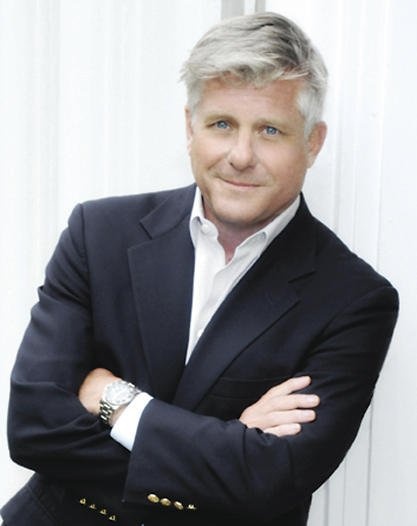
Keith Frome has spent most of his adult life helping to build College Summit, a charity that has helped thousands of low- income students obtain higher education. Now he is getting a chance to lead it.
He is returning to the group he co-founded after seven years devoted to establishing a charter school.
Mr. Frome has rejoined the organization at a challenging time: Financial struggles have required it to make tough choices.
According to its 2013 Form 990 tax filing, the group’s assets declined by nearly $3.7-million, following two previous fiscal years of spending more on staffing needs than was sustainable. To aggressively cut costs, College Summit reduced its staff by 20 percent and is planning to sell its Washington headquarters. The trimming has put the charity on the road back to fiscal health, and it is projected to increase its assets by $1-million this year.
The challenge of figuring out how to help more needy students apply to college has forced the organization to confront the limits of its budget. It is hardly alone, says Mr. Frome.
“The problem for college-access organizations is, how do you provide a nurturer and a nagger in every kid’s life?” he says. “That is going to be very difficult to do in person because people are expensive, and people who are willing to sit around and advise kids are not enough to go around.”
The demand for its services well outstrips its manpower—and its $15-million annual budget. Mr. Frome is betting that technology could help fill that void for students.
“Management is hard to scale, information is not,” he says.
Continuity and Change
Mr. Frome succeeds co-founder J.B. Schramm (Derek Canty is College Summit’s third co-founder), who led the group for two decades before leaving last year to work on advocacy efforts to help more kids go to college. Mr. Frome’s appointment is a blend of continuity and change. It also came as a surprise to those he has worked with for many years, says Charles Harris, a College Summit board member who headed the search committee. (Editor’s note: The previous sentence has been updated to correct a misstatement; Mr. Frome was not a member of the search committee that chose him.)
“I was as surprised as anyone that he was interested,” says Mr. Harris, director of capital aggregation at the Edna McConnell Clark Foundation. “He’s deeply grounded in the work, yet he hasn’t been involved in it day to day for quite some time.”
Mr. Frome left College Summit in 2007 to start the King Center Charter School, a grade school for children in the East Side neighborhood of Buffalo, N.Y.
He did not think about returning full time to College Summit until February, when he delivered a well-received speech at a meeting for people interested in venture philanthropy. The incident prompted him to mull a return.
A desire to push College Summit into new projects, combined with his experience as an educator, convinced the board to hire Mr. Frome.
“The market in which we operate is rapidly evolving. You might say it is congested,” says Mr. Harris. “We’re lacking in the perspective he’ll bring in.”
Cutting Costs
College Summit serves 36,000 high-school students in more than 40 school districts across the nation. Mr. Frome wants to help even more through technology.
Last year, the group hosted the College Knowledge Challenge, a contest staged with Facebook and the Bill & Melinda Gates Foundation. It then awarded grants to organizations to create mobile and web tools that can help teenagers reach and finish college. Gates gave $2-million to the effort, which selected 19 winners from 180 applicants.
College Summit developed a website, CollegeAppMap, to serve as a hub for these apps. It has attracted more than 700,000 visitors in less than a year. The organization has held 10 “appathons” across the nation, beginning with the Los Angeles Unified School District. The effort was supported by a $350,000 grant from the Bezos Family Foundation, the philanthropy of Jeff Bezos, the founder of Amazon. Such projects are critical to keeping the organization’s costs down and serving more students.
Because it has trimmed its staff, College Summit will shift more of its budget to technology projects, thereby lowering its costs and making its services cheaper for high schools. In 2013, the cost per student was $449, down from $1,209 in 2010.
Mr. Frome’s goal is to slash it to $330 per student, and he hopes that someday high schools will pay approximately $10,000 annually to reach all their students.
But his biggest goal is to hand over more of the organization’s future to the young people it is encouraging to pursue their dreams.
Says the charity leader: “The recognition of the power of peers to impact other students, that power, when you watch it, is palpable and inspirational.”
Keith Frome, chief executive, College Summit
Education: Bachelor’s degree, University of Hartford; master’s degree, analytic philosophy, University of Connecticut; master’s degree, literature, religion, and education, Harvard Divinity School; doctorate in philosophy and education, Columbia University
Career highlights: Executive director, King Center Charter School, in Buffalo; chief academic officer, College Summit
Salary: He declined to reveal it. His predecessor, J.B. Schramm, made $180,364 in total compensation in the 2013 fiscal year, according to the organization’s most recent informational tax filing.
Book he’s reading: Mr. Frome just finished The Invisible Bridge: The Fall of Nixon and the Rise of Reagan, by Rick Perlstein; The Emperor’s Tomb, by Joseph Roth; and The Emerald Light in the Air, by Donald Antrim. He is about to start the novel Lila, by Marilynne Robinson.