A Facebook Co-Founder and His Wife Use Effective Altruism to Shape Giving

By Ben Gose
Senior Editor
November 3, 2013 | Read Time: 4 minutes
Effective altruism is still a niche movement, made up primarily of a small number of philosophers, techies, and financiers who structure their work or their giving—or both—to achieve the most good possible.
But it’s a niche that happens to include a young couple who may eventually give away billions of dollars. Dustin Moskovitz, a co-founder of Facebook, and his wife, Cari Tuna, are organizing their foundation, Good Ventures, to adopt the principles of effective altruism.
The foundation has formed an unusually close relationship with GiveWell, a nonprofit founded in 2007 by two former hedge-fund analysts who had the brash idea that they could identify the world’s best charities.
Good Ventures may soon become GiveWell’s largest supporter, and the nonprofit has used the foundation’s support to start a project that it describes as its top priority. The project, GiveWell Labs, involves broad-based research to identify some of the most promising areas for philanthropy. In the past, GiveWell has focused much more narrowly on metrics-based evaluations of a few high-performing organizations.
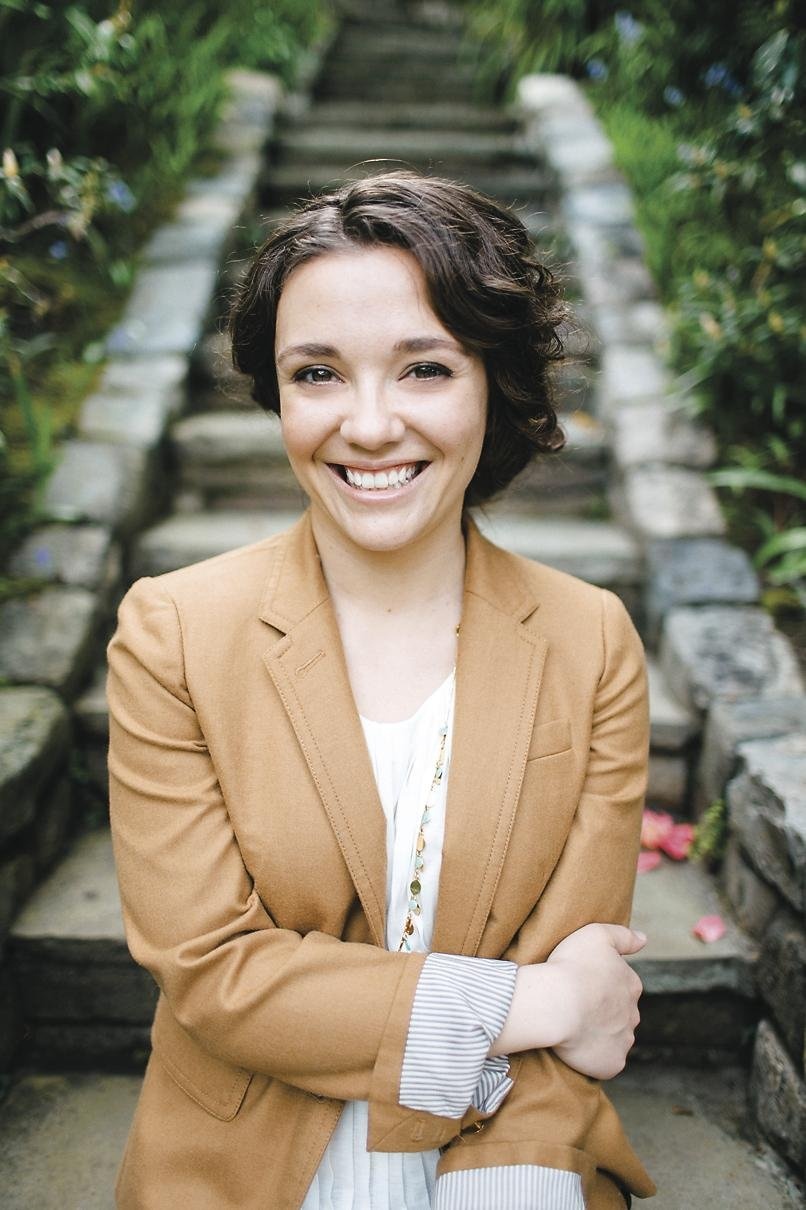
“We’re trying to look across broad categories and see whether there are specific areas where we might make a difference,” says Ms. Tuna, who is 28 and the president of Good Ventures. “The research GiveWell produces will benefit not only us but also their audience of thousands of donors.”
Teaming Up
Mr. Moskovitz, who is 29, is now co-founder and CEO of Asana, a company that designs software to help work teams collaborate. Forbes recently estimated his net worth at $5.2-billion, and he and Ms. Tuna (they married in October) have signed the Giving Pledge, promising to give away at least half of their net worth. In a brief interview on Quora, an online question-and-answer site, Mr. Moskovitz described money as a resource that had pooled up around him and that needs to “flushed back into the system.”
“It turns out to be quite difficult to flush such a large sum back into the world in a way you can feel confident about, which is why we started Good Ventures and work so closely with GiveWell,” he said.
Ms. Tuna says Good Ventures has no established grant-making budget, and she declined to say how much money it has. The foundation, whose mission is to “help humanity thrive,” currently has no paid staff.
“We’ll scale up the size of Good Ventures as we develop our philanthropic strategy,” she says.
Ms. Tuna, a reporter at The Wall Street Journal until 2011, has worked closely alongside GiveWell to identify grant-making priorities for the foundation, which she says may eventually include international aid, policy advocacy, and scientific research.
Ms. Tuna met Holden Karnofsky, a GiveWell co-founder, through a mutual friend in 2011 and was so impressed by the nonprofit’s research that she offered the group free office space at the Good Ventures headquarters in San Francisco. GiveWell’s team, now up to 10 full-time employees, moved west from New York in the past year.
Foundation Experience
Good Ventures is also trying to learn from other funds that Ms. Tuna admires, which include the Bill & Melinda Gates Foundation, the William and Flora Hewlett Foundation, and the Open Society Foundations.
The biggest grant Good Ventures has given to date, $1.25-million, went to the Against Malaria Foundation, the top-ranked charity by GiveWell. But the foundation’s second-largest grant, $1-million, was recommended to Good Ventures by the Gates foundation. That grant, made in 2012, supports Population Services International’s efforts to slow the spread of resistance to an anti-malarial drug in Myanmar.
“We want to co-fund projects with major foundations whose work we admire to learn how they do what they do—how they source ideas and vet them and how they monitor progress and evaluate results,” Ms. Tuna says.
More Openness
Good Ventures also had hoped to learn by studying what has worked—and hasn’t worked—for major foundations in the past. But Ms. Tuna says she found little independent analysis of philanthropy’s track record. So Good Ventures has made small grants to GiveWell and to the Center for Global Development for projects designed to better understand how much some big philanthropic efforts of the past actually achieved.
On the Good Ventures Web site, Ms. Tuna has adopted the same transparent and open approach that GiveWell is known for. Ms. Tuna has published summaries of “conversations” that she and GiveWell staff members have had with several experts, including officials from the Brookings Institution, Open Society, USAID, and the World Health Organization.
In a blog post in April, she wrote that the Myanmar project had “made slower progress than originally anticipated.”
“We see transparency as a way to multiply our impact,” Ms. Tuna says.
“Foundations generate some of the best information about charities. They often don’t share it publicly, or they share it in ways that are less useful than they could be,” she says.
“There are good reasons to keep information confidential. But, directionally speaking, we want to challenge ourselves to be more open.”