Amnesty International and United Way Diverge on Prostitution Stance

By Michael Anft
Contributor
December 10, 2015 | Read Time: 6 minutes
Two big nonprofits have launched divergent new approaches to helping prostitutes. One of these strategies has elicited howls of protest.
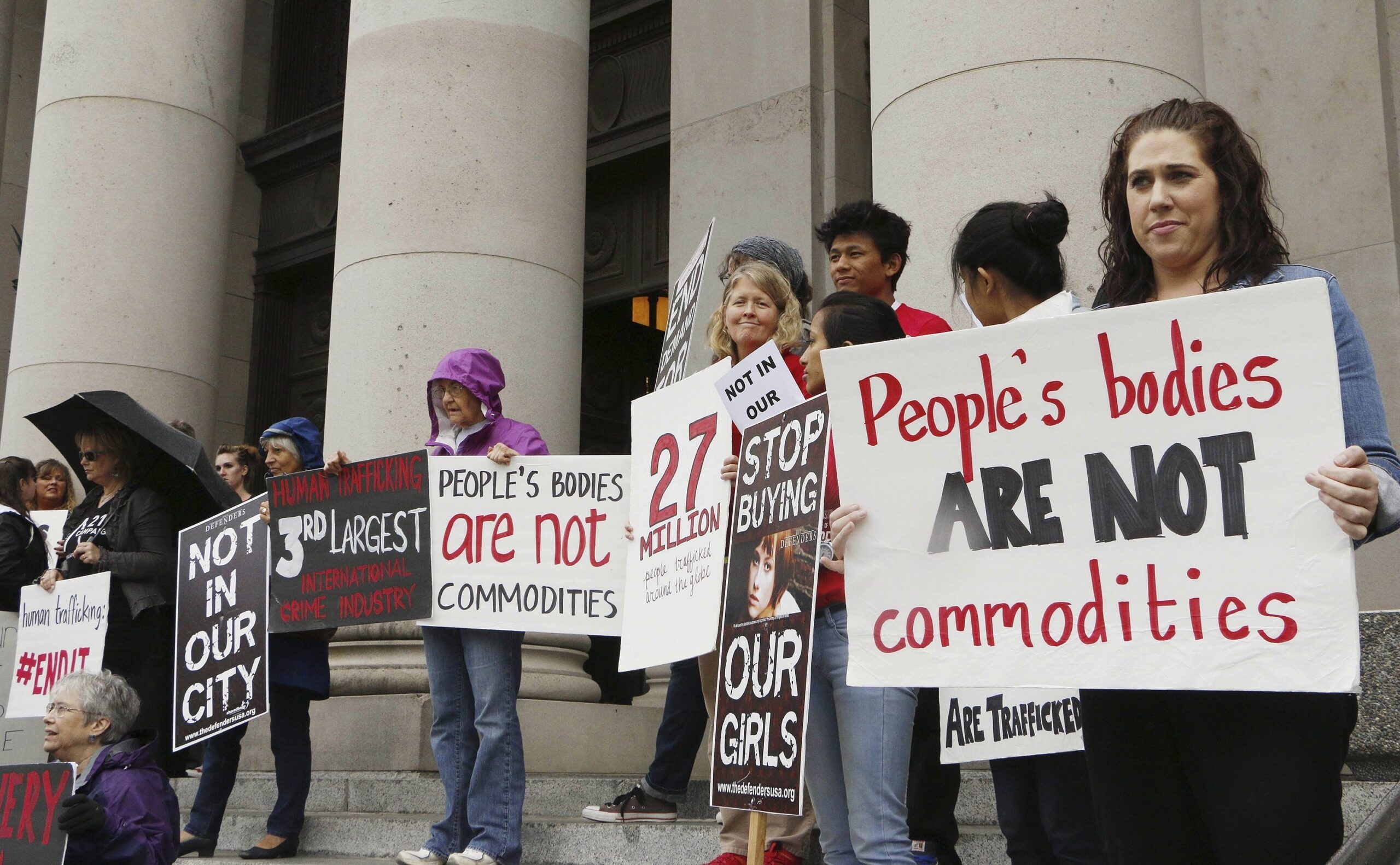
The United Way’s announcement this summer of a new center to fight slavery and human trafficking, including trafficking in sex workers, drew a quiet response. Meanwhile, a decision by Amnesty International to advocate for the decriminalization of the age-old practice worldwide has angered leaders of organizations that work to fight sexual slavery or help people after they have escaped from prostitution.
More than 21 million people worldwide are trafficking victims, according to estimates by the United Nations. Most are forced to work in jobs that aren’t illegal, such as agriculture, domestic work, fishing, or mining. But an estimated several million wind up as prostitutes.
In August, Amnesty’s International Council endorsed a plan to advocate that nations repeal laws prohibiting prostitution, although Amnesty continues to oppose organized sex trafficking.
“In many of the countries where we work, we see a lot of violence and sexual extortion by police” against prostitutes, says Kate Schuetze, a policy adviser at Amnesty International’s headquarters in London. “Sex workers can also be discriminated against when it comes to other basic human-rights issues, including health care and housing. What we’re advocating is consistent with international human-rights law.”
The plan maintains that while prostitution involving minors should remain illegal, many adult sex workers are pushed into the trade by economic and political forces, and they should have rights as they enter into consensual encounters with paying customers.
The plan has been supported by a handful of rights groups, including Human Rights Watch, and by one of Amnesty’s supporters, the Open Society Foundations.
“The vast majority of practicing sex workers have made it clear that decriminalization is the best approach to protect their human rights,” says Sebastian Kohn, a program officer at the Open Society Foundations, which has made grants to sex-worker organizations for the past decade.
Courting Controversy
Amnesty International has yet to dedicate a budget for a decriminalization strategy or construct a campaign around it. However, the nonprofit is looking for ways to use the issue to strengthen other campaigns, such as those aimed at reducing violence against women.
“It allows us to call on governments to work on a wider range of rights issues,” Ms. Schuetze says.
Many groups that work to stop sex-related human trafficking, as well as some women’s rights organizations, have protested Amnesty’s proposal.
In June, more than 400 of them signed a letter to Salil Shetty, secretary-general at Amnesty International, stating their concerns. During the summer, when the plan was still under debate, anti-trafficking activists said that it could give cover to governments that wished to treat brothel owners and pimps as legitimate businesspeople.
“Amnesty is addressing a tiny, tiny, tiny portion of those who sell sex who choose to do so,” says Taina Bien-Aimé, executive director of the Coalition Against Trafficking in Women.
Ms. Bien-Aimé says that a legal model developed in Sweden more than 20 years ago — one that criminalizes Johns but offers services to prostitutes instead of arresting them — is the best way to help people who sell their bodies.
“In order to protect these people’s rights, we need to penalize their exploiters, including the Johns,” she says.
Ian Kitterman, a policy specialist at Demand Abolition, a project of the Hunt Alternatives Fund that focuses on reducing the demand for transactional sex, says his group is “disappointed” in Amnesty’s position.
“If there were no buyers, there’d be no business,” says Mr. Kitterman. “Anytime we’ve seen decriminalization, we’ve seen an increase in prostitution. When there are no laws against it, men think it’s OK to buy prostituted persons.”
Amnesty is using some of the negative feedback to shape its final documents on decriminalization, but it isn’t going to change their basic shape, says Ms. Schuetze.
“Many of the groups who are against this are led by people who believe that all prostitution is a form of coercion. It’s a moral issue for many of them, not a rights issue,” she says. “We’ve said for years that human trafficking should be criminalized internationally. There’s nothing in our policy that would contradict that.”
United Way’s Plan
The United Way Worldwide says its Center on Human Trafficking and Slavery has faced few objections.
America’s largest charity decided to start the center after President Obama prodded Brian Gallagher, its president, to do so two years ago.
“When issues get big enough, we get involved,” Mr. Gallagher says. “This issue is in the same category as the AIDS epidemic was in the 1980s.”
Start-up grants from the Carlson Family Foundation and Sabre, a technology company have helped the center raise its initial operating funds.
The center will work to reduce human trafficking by linking organizations that already do advocacy work and provide services to victims. It will look to expose business supply chains that rely on slave labor. And it will run an advocacy campaign that it hopes will make trafficking a major issue in next year’s presidential election.
It will work with groups that advocate to reduce the demand for commercial sex and organizations that educate people that prostitution is not a victimless crime, says Mara Vanderslice Kelly, the center’s executive director.
“We’re here to provide leadership that may not have been there before, a platform,” says Ms. Kelly, who previously worked on the trafficking issue as part of the White House’s Office of Faith-Based and Neighborhood Partnerships.
A Catalyst for Debate
Several dozen United Way agencies across the nation have become involved in the cause. The federal government, which spends less than $150 million annually on anti-trafficking efforts, will need to step up its funding to help the best emerging local anti-trafficking ideas become large-scale strategies, says Ms. Kelly.
“Trafficking and slavery are a $150-billion-a-year business worldwide,” she adds, saying the center will advocate for more federal dollars. “What the federal government is doing is a drop in the bucket.”
Although fundraising won’t be its focus, the center could act as a catalyst for raising money locally. With nearly 20 million donors and 2.6 million volunteers worldwide, the United Way has a large base that could be energized by concerns over trafficking, Ms. Kelly says.
Victims’ advocates and others wonder how much attention the United Way center ultimately will give to sex trafficking (as opposed to labor trafficking). But several are optimistic that it will inspire more public debate on the subject.
“The most important thing the center will do is raise the profile of the trafficking issue,” says Jeanne Allert, executive director of the Samaritan Woman, a Baltimore group that offers services to women have been trafficked for sex.
She hopes that the center will also function as a repository of information on the subject.
“No entity has taken a lead on becoming a central clearinghouse for available services,” Ms. Allert says. “If the United Way can offer that, as well as some resources sharing in the longer term, it would be very helpful to us.”
Corrections: A previous version of this article referred to trafficking and slavery as a $15-billion-a-year business worldwide instead of $150 billion. Also, it said that start-up grants from the Carlson Family Foundation and Sabre have totaled nearly $1 million. The foundation says the number is well below that figure but has declined to reveal the exact amount. And a quote from Ian Kitterman has been corrected.