As Wealth Spreads Around the Globe, So Do Opportunities for Fundraisers

By Caroline Bermudez
Contributor

April 7, 2013 | Read Time: 3 minutes
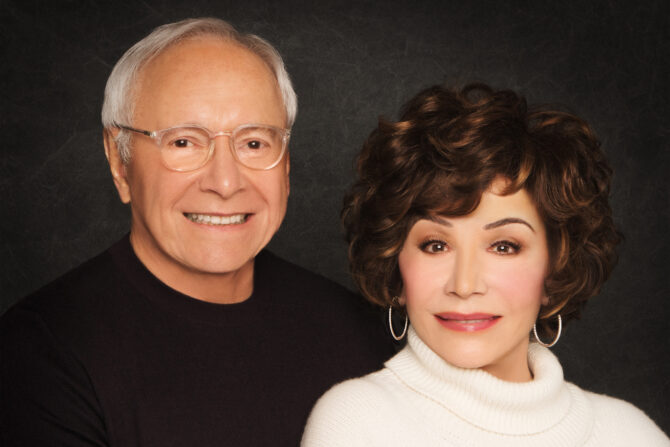
As the number of millionaires and billionaires around the world grows, fundraisers have more opportunities to court many people outside the United States. That’s why Penelope Cagney and Bernard Ross, two nonprofit consultants, have just released a book they edited, Global Fundraising: How the World Is Changing the Rules of Philanthropy. Ms. Cagney discusses the key findings:
How has philanthropy been upended internationally?
Wealth lies in the [global] North, and the South is poor—that’s being turned upside down. We can no longer make assumptions that donors are going to be in the North, that they’re going to be coming from so-called developed nations.
There are people in Africa who resent the image the West gives of them. There are still pockets of dire poverty in Africa and India, but the middle class is growing, fortunes are being made, and major philanthropists are being born.
Where need is is changing and how we address that need is changing. Even if fundraisers never leave the U.S., they still have to be aware of what their colleagues are doing elsewhere. Innovations are coming increasingly from outside the United Kingdom and the United States. Our consciousness has grown and our dollars will follow.
What are some of those innovations?
The use of mobile phones in India and Africa has changed the way people give. The use of mobile phones is in many ways more advanced in other countries [compared to the United States] because their regulation is different and it makes it easier. Even the poorest person can be a philanthropist.
Brazil is very sophisticated when it comes to corporate social-responsibility programs. They cooperate to a greater extent. They custom fit their programs for a particular environment.
Are there fundraisers who have successfully adapted to the shift in philanthropy?
I worked in England at a time when [its] philanthropy was in its infancy, during the Margaret Thatcher reign. The first Oxford [University] campaign was 20 to 25 years ago, and there was nothing. They couldn’t find a major gift, they had trouble finding major-gift officers, there was no infrastructure for the fundraising office. The students protested the capital campaign.
When Margaret Thatcher started promoting private support of organizations and less government, she sowed the seeds [for philanthropy]. Organizations began to grow the capacity to raise funds because they had to. The consciousness of the British people also grew.
And now the situation has very much changed. In terms of sophistication, UK fundraisers are on par with U.S. fundraisers. Oxford has raised more than half of its money in its billion-dollar campaign from outside the UK.
What skills should fundraisers have as the profession goes global?
There needs to be more of an international context for education. We have to keep up on international affairs. It behooves us to learn at least one other language.
It’s always a good idea to spend some time abroad. I think it could be more of a track, maybe exchanges. Maybe we need to have a program or school that is focused on international philanthropy.
Is fundraising still a young field?
It confounds me that many don’t recognize it as a profession. Part of it is that while we do have certification, it’s not required in the same way as it is for a CPA, a lawyer, or a doctor.
Entry into the field is still relatively easy; you could move over from a volunteer to a paid fundraiser at a small organization fairly easily. There needs to be greater recognition among the people who hire professional fundraisers about what that means. I have yet to see CFRE [certified fundraising executive] required.
Certification is a good thing for the industry because while it doesn’t guarantee you’ll get a good fundraising professional, it does say that they at least have some familiarity with what is current and necessary to function in an increasingly complex environment for philanthropy.