April 17, 2011 | Read Time: 3 minutes
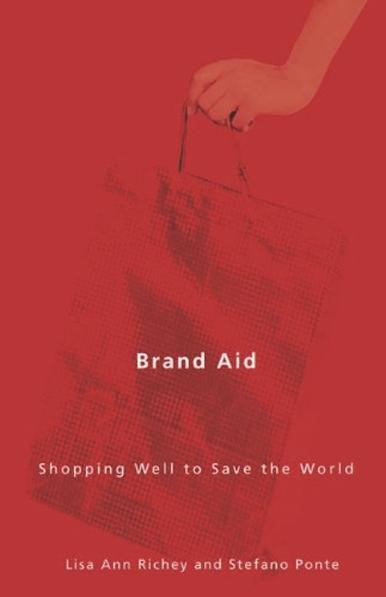
Product Red, the campaign co-founded by the rock star Bono to raise money to fight AIDS, has generated over $170-million. But in a new book, Brand Aid: Shopping Well to Save the World, two researchers raise doubts about the value of such efforts that persuade people to buy products from companies that promise to give to charity.
Lisa Ann Richey, a professor of international development studies at Roskilde University, in Denmark, and Stefano Ponte, senior researcher at the Danish Institute for International Studies, talk about their book in an interview with The Chronicle:
Why did you write this book?
Ms. Richey: When Product Red was launched in Davos in 2006, I had just come back from six months of field work where I worked in an AIDS clinic. So when I heard [backers say] “It’s very easy, two pills and it costs about 40 p [pence] and that’s all you need to save your life,” it was a real contrast to the experience that I had had.
Mr. Ponte: Consumers were asked to buy something that wasn’t produced in Africa by Africans, but to help them.
What do you think Product Red gets right and wrong?
Ms. Richey: It makes it look like there’s just a technological fix based on pills. You don’t have to deal with the messy social phenomena. One thing that is good is that it does link the idea of thinking about what we buy and what’s happening in other parts of the world. But in some ways that’s also what they get wrong by depicting Africans with AIDS as suffering strangers who are there as waiting, passive recipients for the help of Western donors.
Where do you see charity-marketing deals going?
Mr. Ponte: After Product Red started, similar but different initiatives have also come [into] play. One of them, for example, by Benetton, the clothing maker and marketer, follows a very similar trajectory with fewer companies because it’s only one brand. In that particular case it was financing and micro-lending institutions. You had a celebrity, Youssou N’Dour, the musician, who promoted [it] in a similar way [to Bono.] There will be a proliferation of these kinds of initiatives.
Does Product Red get donors involved?
Ms. Richey: The way of being an activist is to purchase a product; it’s a consumption exercise.
If Product Red had success in promoting engaged, activist consumer groups working on AIDS awareness or awareness about Africa or global inequality, that hasn’t been much of their publicity campaign and we haven’t really found out much about it.
This kind of “causesumerism” doesn’t force consumers to engage politically, but it suggests that they are engaging politically. It suggests that the products themselves are good because the cause is just and the products contribute to the cause, but it doesn’t ask us to question the conditions of production. We need to make people think [about causes] close to them about how to contribute, how to do good and doing more than just dressing well.