February 19, 2012 | Read Time: 3 minutes
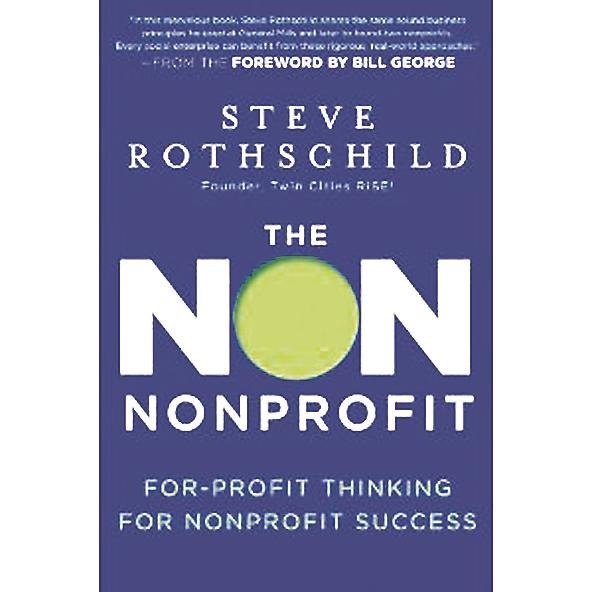
Charities should not shy away from becoming more like businesses and seeking ambitious ways to produce revenue, says Steve Rothschild, a former General Mills executive who founded Twin Cities Rise, a charity that provides job training and placement for people in poverty. His new book, The Non-Nonprofit: For-Profit Thinking for Nonprofit Success, outlines seven business principles he thinks charities should embrace. Mr. Rothschild spoke to The Chronicle.
What can grant makers do to better support charities?
Demand outcomes, data from recipients of your philanthropy. Part of it is a question of understanding what an outcome or what impact really is.
Too often we’re accustomed as a society to think of impact as outputs: How many people did you train? How many people did you place in a job? How many people completed this educational process?
That’s what they get rewarded for. They’re easier to measure; they’re cheaper to measure; they’re more immediate, you can make decisions more easily, but they don’t necessarily align with what the purpose of those organizations is, and quite frankly, what the purpose of many philanthropies is—and that’s to deal with underlying societal issues.
What can nonprofits best learn from business?
For-profits have the capacity to raise money in the marketplace and to invest in innovation, in new ideas, and plant and equipment. Nonprofits don’t have that ability; they don’t have access to capital markets. Nonprofits have to think about this differently; they have to think about the fact that they do create economic value just like for-profits in many cases.
One can use the same exact tools like return on investment to determine it, and if you can demonstrate it, as many have, you should be able to monetize that social value you’re creating and not have to live hand-to-mouth.
Do charities take enough risks?
I don’t think they have the capacity to risk as much as for-profits because they don’t have the economic wherewithal to afford a downturn.
I’m on the board of American Public Media/Minnesota Public Radio. One of the reasons they were able to experiment a lot is that they built a for-profit business called Rivertown Trading Company, which had its origins in the Garrison Keillor show, “A Prairie Home Companion.” They started selling T-shirts and stuff like that. That turned into a business, which they sold for $124-million and turned into [an] endowment, and they took part of that endowment and created an investment fund for new ideas. They’re in the minority when it comes to that.
What will nonprofits look like in the future?
They’re going to be better managed. Many of the people who start nonprofits are terrific people, but they tend to be program-oriented. Many of them don’t have the expertise in understanding social value and monetizing it.
Government isn’t in a position to play the traditional role it has in supporting lots of nonprofits to do their work. Philanthropy can’t make up the difference. How are you going to respond? You just can’t do business as usual.