Charities Unveil Bold Year-End Appeals in Storm’s Big Shadow

By Jennifer C. Berkshire
Contributor
November 11, 2012 | Read Time: 8 minutes
Despite the struggling economy, along with fundraising competition from Superstorm Sandy and the 2012 elections, many charities are developing audacious end-of-year plans to seek contributions.
Among them: The Children’s Miracle Network is releasing a holiday catalog that offers donors the chance to give $12-million for a hospital. The antipoverty charity Heifer International, which usually emphasizes modest contributions of $20 to $100, is seeking $25,000 donations in its year-end appeal.
Such high ambitions are seen as necessary given that nonprofit experts project an overall rise in giving for 2012 of probably just 1 or 2 percent above last year. In a study of returns from 3,000 nonprofits, the Blackbaud fundraising-software company found a slight dip in donations this fall, but a largely positive picture for the year.
“For most of the year fundraising numbers have been up by low and single digits,” says Charles Longfield, Blackbaud’s senior vice president.
Focus on the Wealthy
As charities fashion their year-end appeals, they may be wise to focus on the wealthy, say people who advise affluent donors.
Uncertainty about the economy and how Washington might overhaul the tax code, including the possibility of limiting charitable deductions, is one reason many rich people are especially eager to give now, says Kim Laughton, president of Schwab Charitable, a nonprofit that offers donor-advised funds.
She notes that Schwab has seen a big increase in contributions from its clients—roughly double the levels in the third quarter of 2011. When people put money into the advised funds, they can get an immediate tax deduction but can take as much time as they want to decide which charities should benefit.
“We’re definitely seeing a trend where people are giving more now because they don’t know what to expect in 2013,” says Ms. Laughton.
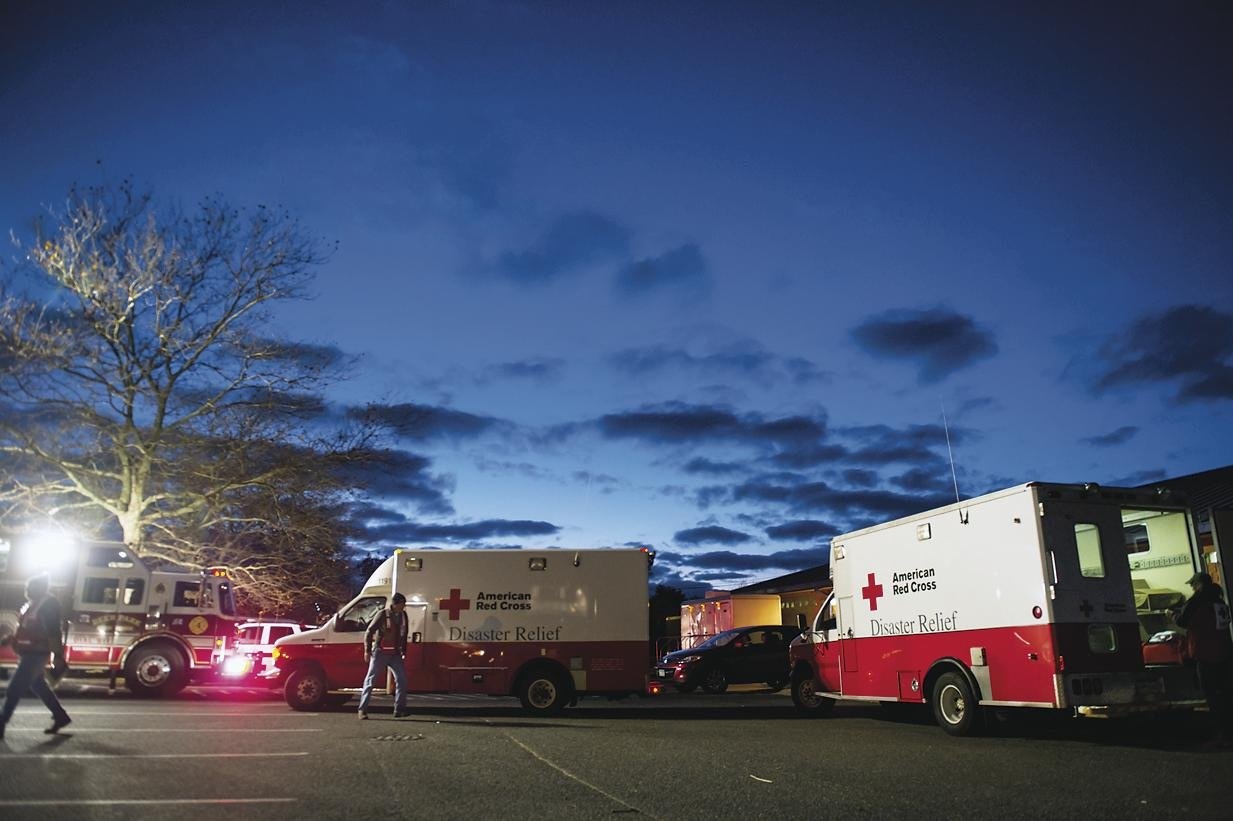
She says that Schwab Charitable has moved quickly to encourage and assist donors in making gifts to benefit relief organizations working on recovery efforts after the recent superstorm.
But she and other advisers to major donors say that they don’t expect end-of-year giving to other causes to decline as a result.
“Our clients tell us that they are planning on giving more this year than they did in 2011,” Ms. Laughton says. “Their hurricane-related gifts are coming on top of the giving they’ve already planned.”
At Rockefeller Philanthropy Advisors, which helps wealthy donors steer about $200-million a year to charity, many donors also expect to step up giving this year, says Melissa Berman, president of the organization.
“For charities who get support from high-end donors, this is all great news,” says Ms. Berman. “But times are still tough for charities that rely on middle-income and lower-income donors.”
Seeking New Donors
That’s a key reason many charities are aggressively seeking new donors during the holiday season, rather than simply relying on their usual pools of supporters.
Youth Villages, a child-welfare charity that works with troubled children in 11 states, is reaching out to potential donors even in states where the nonprofit doesn’t yet provide services.
The group purchased lists of donors who fit the profile of their supporters: people who had given to child-welfare or other social-service nonprofits in the past.
The charity recently sent an appeal to prospective donors across the country, introducing them to the children that Youth Villages helps and making the case for why an end-of-year donation is so vital.
“Our goal is to add 7,000 new donors,” says Richard Shaw, chief development officer.
He notes that in a time of political uncertainty and continued cutbacks in state-government support, Youth Villages increasingly counts on the help of foundations, corporations, and individuals.
And so far, says Mr. Shaw, the search for new donors is paying off: “Within 18 days of sending out our appeal, we’d raised 77 percent of our projected revenues.”
Some smaller groups are also recruiting donors this holiday season.
Chess for Success, a charity in Portland, Ore., that teaches low-income children in urban schools to master the complex game, recently created a new club.
It’s sending appeals to donors who have given to similar causes, asking them to join the “special gift society” by making donations from $50 to $1,000. The charity, which has a budget of $459,000, hopes to persuade 35 to40 new donors to give at least $1,000.
“When you say ‘major gift,’ it can sound like only fat cats or socialites need apply,” says Paul Morris, director of development for Chess for Success.
“But ‘special gift’ doesn’t have that same connotation,” he says. “It’s more inclusive.”
The Long Island Council on Alcoholism and Drug Dependence is appealing to an entirely new group of donors this holiday season: athletes.
The charity is co-sponsoring a first-ever 5K race that begins at the stroke of midnight on New Year’s Eve.
The Long Island council hopes to bring in $20,000 from the event and from sponsorships purchased by local businesses and makers of athletic gear.
“We’re talking to people we’ve never talked to before,” says Jeffrey Reynolds, the group’s executive director.
Promoting the race not only puts the charity in front of potential new supporters, he says, but also gives it an opportunity to spread the word about its mission.
“This is a new way for us to bring our cause out into the open,” he says.
And now that Superstorm Sandy has wreaked havoc on Long Island, he says, the race may also help benefit disaster relief.
5 Ways to Inspire Donors to be More Generous
- Exploit uncertainty about the charitable deduction. Encourage major donors to give big gifts now, rather than waiting.
- Reach out to potential new supporters. Tell the charity’s story to a new audience.
- Ask for larger-than-normal, “transformative” gifts in holiday appeals.
- Encourage donors to team up to make large gifts.
- Acknowledge the need for disaster-relief support, but don’t shy away from making a pitch for another type of charity.
Life-Changing Gifts
Other charities are playing for bigger stakes this holiday season, trying to convince donors to spend big on so-called life-changing gifts.
Heifer International, in Little Rock, Ark., which donates farm animals to poor people in the developing world, added what the charity is calling a “Gift of Transformation” to this year’s holiday gift catalog.
The $25,000 donation pays for herds of heifers, llamas, and goats; flocks of sheep and chickens; a pen of pigs; a school of fish; a gaggle of geese. The charity tells donors that money can pay to teach a family how to use the animals to sustain themselves, produce income, and breed livestock to give away to other families.
Allison Stephens, a spokeswoman for Heifer, says that the real intent of asking donors for such a large commitment is to get them talking about real solutions to global poverty.
“Although the price seems high, the scales of poverty and hunger are huge,” she says. “Every dollar, every gift helps, but ending hunger and poverty requires significant investment in solutions.”
The Children’s Miracle Network, which raises money for nonprofit children’s hospitals across the country, is also making a big request of donors through a holiday catalog. Its new online catalog emphasizes what the charity calls “impact giving.”
Through GiveMiracles.org, donors can purchase pediatric supplies, equipment, and services ranging from $25 worth of diapers for a hospital pediatric unit to the “ultimate gift”: $12-million for an entire 30-bed neonatal intensive care unit at the Arnold Palmer Hospital for Children, in Orlando, Fla.
Craig Sorensen, chief concept officer at the Children’s Miracle Network, says the charity hopes to raise between $250,000 and $500,000 through the online catalog.
The organization is also encouraging donors to team up and “crowd give,” persuading networks of friends and family members to chip in on a gift that would be out of reach for a single person.
“If we can find a donor for one big gift, we would consider that a home run,” says Mr. Sorensen. “But generating interest and potential new donors is also important for us.”
The Sandy Factor
Charities of all sizes and causes are casting a wary eye on the impact that Superstorm Sandy could have on year-end fundraising efforts.
As the recovery effort kicks into high gear, and charities urge Americans to open their wallets to benefit hard-hit communities, groups that rely heavily on holiday giving fear they could be left out in the cold.
At the Elizabeth Glaser Pediatric AIDS Foundation, Colleen Zakrewsky, vice president of development and marketing, says she’s hopeful that the charity’s donors will find it in their hearts—and wallets—to support both storm victims and her group.
“Our message is, contribute to this essential effort, but contribute to us too,” says Ms. Zakrewsky.
Other charities say that they have already factored uncertainty into their end-of-year fund raising—and that such planning is now helping them to weather this big storm.
Maura Daly, chief communications and development officer at Feeding America, whose food banks are helping victims of the storm, says the charity had anticipated a dip in giving this year as a result of competition from election fundraising and donor uncertainty about what would happen at the polls.
“We planned for that to be offset by an increase in corporate giving,” she says.
She says she expects Feeding America to stay on track to meet its $81-million fundraising goal this year, but she acknowledges that the timing of the hurricane couldn’t be worse for the relief group.
While the charity will lure plenty of gifts, many of those will be earmarked for Sandy-related efforts rather than providing the unrestricted money the group usually has been able to count on from holiday-season donors.
“End-of-year fundraising is critical to us,” she says. “It’s the largest season of giving, particularly individual giving. But there are some things that are just out of our control.”