Charity Research Leader Urges Sector to Be Stronger Advocate for Itself

By Alex Daniels
Senior Editor, Foundations
January 15, 2016 | Read Time: 7 minutes
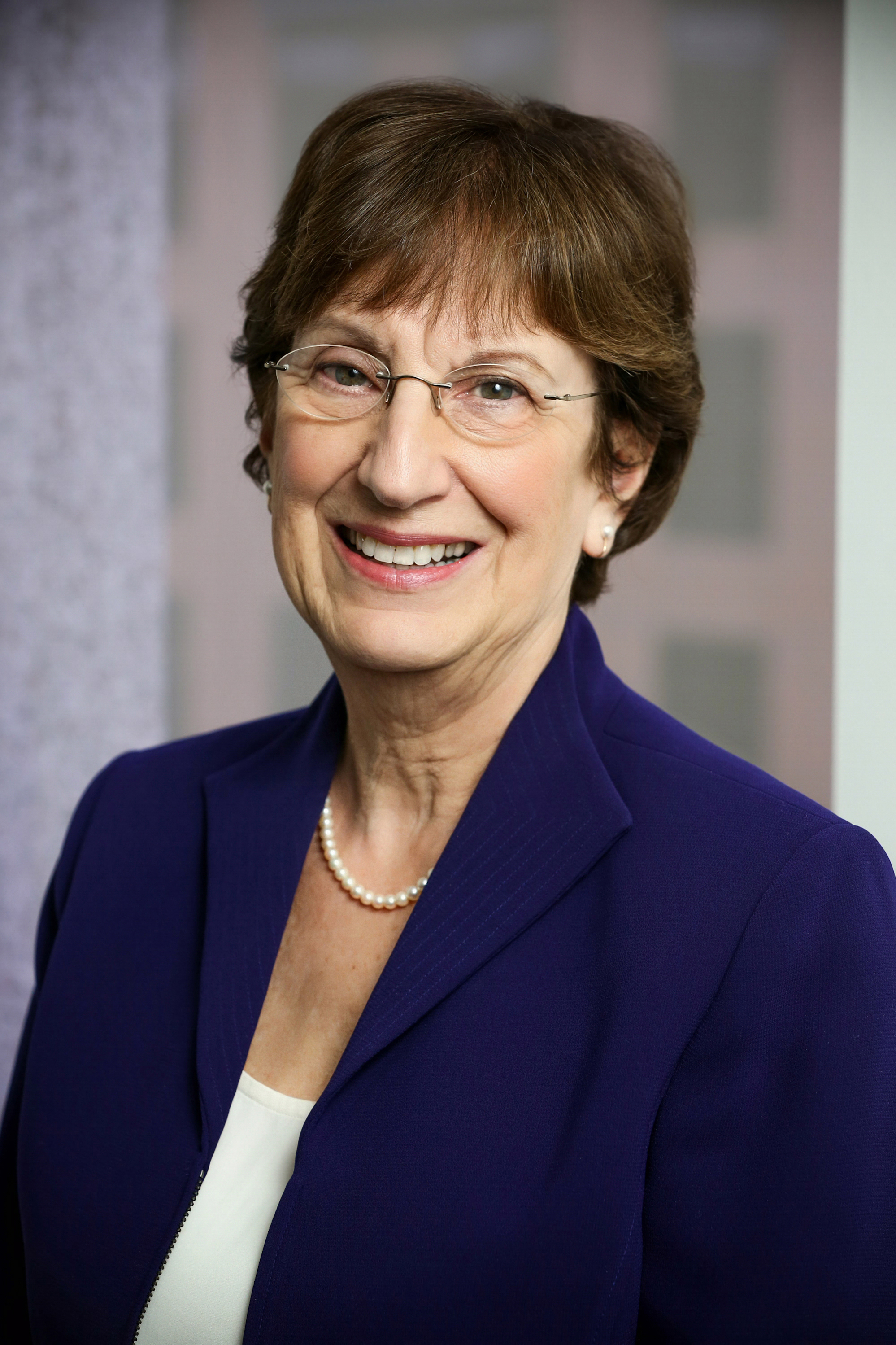
For more than three decades, Elizabeth Boris has worked to shed light on how nonprofits operate and the role they play in civil society. She has served as vice president for research at the Council on Foundations, and she founded the Aspen Institute’s Nonprofit Sector Research Fund to support research into philanthropy and nonprofits.
Most recently, she was director of the Center on Nonprofits and Philanthropy, a research department of the Urban Institute that she started in 1996. The center houses the National Center for Charitable Statistics, the largest research database on nonprofits.
After stepping down from the center in December, she now splits her time between the Urban Institute, where she is a fellow, and at Georgetown University, where she is the Waldemar A. Nielsen Chair in Philanthropy at the McCourt School of Public Policy.
Ms. Boris recently sat down with The Chronicle to talk about the role that research plays in supporting nonprofit work. The following has been edited for brevity and clarity:
What have you learned about the breadth and scope of the nonprofit sector since you launched the Center on Nonprofits and Philanthropy?
First of all, we know the nonprofit sector is diverse — there are many different components to it. We have an appreciation for the pluralism of our democratic system, of the initiatives folks can take to address any issue. We here at the Urban Institute have the collected 990 data, which has jump-started a lot of research at the academic level. Three hundred or so universities now have some sort of course.
The sector has become more visible. It contributes more than 5 percent to GDP and employs more than 10 percent of the labor force. Once you can get this kind of information out there, it begins to take shape that it’s an important part of the economy. We know, for example, that whole communities are anchored by a nonprofit organization. We know a lot more about their finances and their accountability.
If you keep track in the news, there are many more stories about people starting a nonprofit or starting a foundation and what they’re trying to accomplish. Both the good and the bad. It’s become a part of American life in both a positive and negative sense over the past 20 years.
Have nonprofits leveraged that visibility to have more of a voice in the creation of policy?
There’s more visibility at the state level, thanks to the state associations of nonprofits. At the national level, the major actors who are sector-wide are Independent Sector and the Council on Foundations. The council keeps pushing its foundation-related issues, and Independent Sector has a group of provisions about the sector as a whole. But I don’t see a lot of hard-hitting agendas for the nonprofit sector. It seems to be mostly a “don’t hurt us, and there are a few little things I’d like to achieve” attitude, but I don’t think it’s hard charging.
Where is the sector-wide advocacy? Colleges and universities have their own very-well-paid lobbyists. Hospitals have their own, Americans for the Arts does something for the arts, but there isn’t a hard-charging sector-wide agenda.
How would you assess the current legislative climate on Capitol Hill as it relates to nonprofits?
The tenor is anti-endowment. We need much better education in talking about the value of endowments. We’ve had them for a very long time, since the Revolution. Colleges and universities have always had them. I raised an endowment for the center through a challenge grant so when times became tough we could continue doing research and keep providing people the data they need.
Endowments are a really important safety valve for organizations. With them, they can count on revenue every year. In the foundation world, there’s a feeling they ought to get the money out there more quickly. But if you think about it, a $10 million endowment five years ago could spin off $500,000 a year and still have money for the next crisis.
What has it been like to lead fundraising efforts in addition to defining the center’s research priorities?
It was tough, but I had help. I was vice president for research at the Council on Foundations for 12 years, so I knew a lot of foundations. I wasn’t a neophyte. There was a thought that we were a sector without a research base. We were a sector without an intellectual tradition.
As we started to fund scholars to do research, people started to see value. Our own civil society was becoming a beacon in the 1980s for folks after the fall of the Berlin Wall. A lot of folks from Eastern Europe started coming here and saying, “We want a civil society like yours.” We were “civil society?” We began appreciating our own roots. I think I had a good story to tell.
There aren’t many funders left in this area. When I started, we could count on quite a few large foundations. Ford was involved, and Packard was involved. We had big funders. Some of them have become more focused, and helping them see the relationship of this basic work to their own goals is harder.
At the moment, there’s the Gates foundation, the Mott foundation, a little bit from Hewlett, and a little bit from Surdna. There aren’t foundations funding the basic work we do on research.
Has the center’s research led to policy victories?
We don’t aim our research to push back against legislation, but sometimes we notice a problem, an issue that seems to be misunderstood. We did a big study of foundation administrative expenses. People were saying, these foundations aren’t channeling money to grantees the way they should, so we did a dispassionate study looking at the 990 private-foundation data. Many of the smaller foundations have no staff at all, so they have virtually no overhead. The big ones, with some exceptions, are pretty modest. We put that data out there and let people draw their own conclusions.
More recently, it was donor-advised funds that made people anxious on Capitol Hill. We did a national survey of community foundations to see if donors were involved in the foundation or if they were just parking the money. We were able to get a sense that the donors were pretty involved in community foundations once they started donor-advised funds. Trying to get some research around some of these anecdotes that are thrown around can be really valuable.
Americans have not increased their giving dramatically, as a percentage of GDP, for decades. Can research help increase philanthropy?
In our fundraising effectiveness study, we used anonymous fundraiser data. We can begin to analyze the patterns with a goal of understanding what we can do to raise the level of giving. So far, we have a lot of churn in fundraising. Nonprofits secure a donor in one year and lose them the next. We’ve never been able to track that. It’s cheaper to keep a donor than to keep trying to get them year after year. We’re on to some research about retaining donors. Some others are picking up that ball. Research can really help
What is your own approach to charity?
Education and opportunity are things I’m passionate about. I have a scholarship fund for underserved girls at my college. I was a scholarship student myself. I benefited from the American Association of University Women, the Rotary International, and the National Society of Colonial Dames.
That helped me to get a start, to get an education. I want to do the same for others.
Note: A previous version of this article mistakenly referred to the Center on Nonprofits and Philanthropy as the Center on Philanthropy and Nonprofits.