March 20, 2011 | Read Time: 6 minutes
Oasis Center and Stars Nashville both work with troubled youths, so on one level the two Nashville charities are natural competitors.
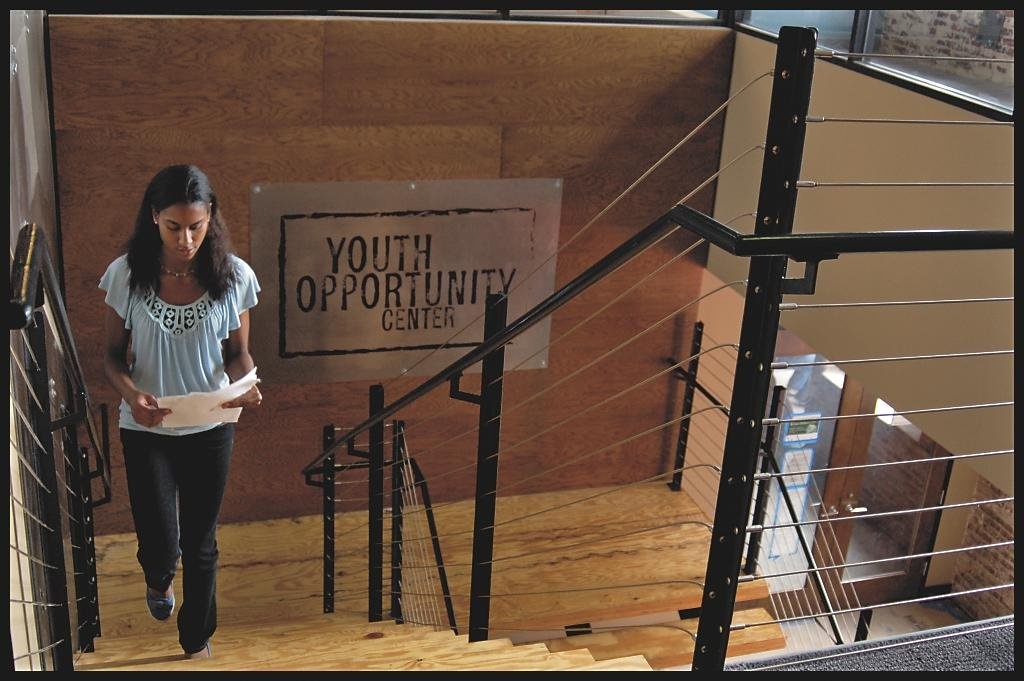
But they are also collaborators. The two organizations jointly raised $8-million for the facility that they share, and they have deepened their bonds since moving into the building in February 2009. The two charities share a receptionist, meeting rooms, audiovisual equipment, and an information-technology coordinator.
The sharing has led to a combined savings of $270,000, says Hal Cato, Oasis Center’s president. Now they’re looking to get even closer, contemplating tie-ups in areas that most charities never even consider, including finance, human resources, marketing, development, and program evaluation.
“We’ve been able to see some pretty quick wins, and that has given the boards of both organizations the incentive to keep going,” Mr. Cato says. “Now we’re willing to put the bigger-ticket areas on the table.”
The partnership between the charities exemplifies a trend that the Bridgespan Group, a nonprofit consulting organization in Boston, noticed in its latest survey of how charity leaders have coped with the economic downturn and the tepid recovery.
Bridgespan, which has been conducting the surveys since late 2008, found that 73 percent of the more than 100 charities that responded to the survey in November 2010 are increasing the number of people they serve, while only half of the charities have increased their revenue.
“When we started doing interviews with people about how they were able to increase services despite the still-tight revenue situation, what we found was this idea of collaboration as a means of meeting that increased demand,” says Sarah Sable, a Bridgespan consultant and a co-author of a report on the survey. Some 61 percent of the organizations said they had developed effective collaboration efforts with other organizations over the past year, according to the survey.
Not an ‘Act of Desperation’
For Oasis and Stars, the partnership has helped increase the number of clients they serve, in addition to saving the charities money. The building that the two charities share also houses several smaller charities and agencies that help young people with employment, college applications, health and mental health, and mentoring.
“It used to take a kid days and days of navigating a pretty bad public transportation system to get services,” Mr. Cato says. “Now it’s all in one spot.”
Historically, many charities have considered collaboration and mergers as “acts of desperation,” says Alan Tuck, a Bridgespan partner, and a co-author of the report. But the Bridgespan experts say many of the charities that are collaborating today are doing so as a way to increase their reach without adding to their costs.
“Now we’re seeing collaborations more as acts of strategy,” Mr. Tuck says. “We have a lot of very complex problems in the nonprofit sector and new comprehensive solutions to them, and you can’t do it all within one organization.”
High-Level Employees
Some organizations seek out partners when expanding into new areas. The Internationals Network for Public Schools, a network of high schools for newly arrived immigrants who are learning English, decided last year that it wanted to develop an advocacy arm.
The New York charity knew it could broaden its impact if it could persuade city, state, and federal education agencies to rewrite regulations to better meet the needs of English-language learners, says Claire Sylvan, the network’s executive director.
But Ms. Sylvan realized the organization had neither the expertise to start an advocacy campaign on its own nor the extra money to add a new advocacy division.
A donor encouraged the network to work with the New York Immigration Coalition, a membership organization to which the Internationals Network already belonged.
Experts at the immigration coalition have helped the staff at the Internationals network navigate legal hurdles, design the group’s advocacy message, and identify which decision makers to approach first. The partnership is also a logical one for the coalition, which has a goal of getting more immigrant children prepared for college.
Ms. Sylvan and Chung-Wha Hong, executive director of the immigration coalition, recently traveled to Albany, New York’s capital, to meet with legislators and state education officials.
Chief executives need not be intimately involved in every partnership, Mr. Tuck says, but it would be foolish to make a relatively low-level employee the point person in a partnership.
“Organizations need to really commit to collaborations,” he says. “Everyone at a meeting needs to be able to make decisions, or at the very least have the cellphone number for the boss.”
Better Donor Pitches
By collaborating, charities can also offer a more complete set of services that might make their pitches to donors more likely to succeed, the Bridgespan experts say.
Ravenswood Family Health Center, a community health center in impoverished East Palo Alto, Calif., teamed up with other local charities in 2006 to advise county officials on how to carry out a new state law designed to help people with mental illnesses.
The charities in what became known as the East Palo Alto Mental Health Advisory Group now hold two mental-health awareness events each year, and they often apply for grants together, says Luisa Buada, Ravenswood’s chief executive.
The success of the partnership has inspired other collaborative efforts. Ravenswood is now developing a counseling project with the local Boys & Girls Club to help teenagers suffering stress as a result of growing up in households where crack cocaine has been prevalent.
Ms. Buada says its alliance not only expands the health center’s impact but also raises its profile with donors. The nonprofit center raised $3-million last year. This year, Ravenswood is shooting to raise $4-million—a third of its $12-million budget.
“The collaborations send a positive signal to philanthropists,” Ms. Buada says. “They want to give to something that is going to be successful.”
Ms. Sable points out that collaborations must be sincere—if partnerships are established just to win money, grant makers will probably detect the hollowness of the effort.
For the East Palo Alto Mental Health Advisory Group, she notes, “the groups were saying, ‘What can we do to better increase services to clients?’”
Focus on Strengths
The experts say charities that have identified where they truly excel may make the best collaborators.
PHI, a charity in New York that works to improve home health care, evolved out of a home health-care group and works closely with another such organization in Philadelphia. Several years ago, some of its supporters encouraged PHI to explore creating similar operations in other communities.
But Steve Dawson, PHI’s president, says the charity realized as the economic crisis began to hit that instead of creating competing organizations in other communities, it should focus on its strength, which is teaching a set of skills—such as “active listening” and learning how to manage emotions—that would benefit home health workers in those other groups.
As PHI began to focus on these coaching skills, it became a partner rather than a competitor to groups touting their own care-delivery systems. For example, the Green House Project, which seeks to replace conventional nursing homes with smaller, homelike environments, has hired PHI to train its staff.
This collaborative approach allows PHI to expand its reach more rapidly—it’s now working with 30 care providers in a dozen states—and also provides the charity with a new revenue source.
“We provide the key that unlocks our partners’ own models of care,” Mr. Dawson says.