Financial Needs Can Hinder Charities From Helping the Needy, Says Scholar

By Caroline Bermudez
Contributor
September 16, 2012 | Read Time: 5 minutes
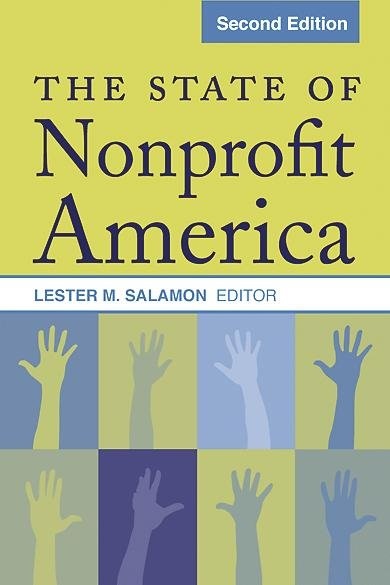
Charities are under intense pressure to deliver their services to increasing numbers of people, often creating a tension between a nonprofit’s mission and its survival, says Lester Salamon, in the second edition of a book he has edited, The State of Nonprofit America. In an interview, Mr. Salamon, a professor of civil-society studies at the Johns Hopkins University, discussed the nonprofit climate:
What are the main challenges facing nonprofits?
Four impulses are pulling the sector in different directions: volunteerism; professionalism; civic activism; and commercialism and its next of kin, managerialism.
The book tells the story of the overwhelming dominance of the commercialism and managerialism impulse in today’s nonprofit sector.
The move toward commercialism is slowly pulling the sector away from those other impulses, and that is a prescription for trouble because if the sector doesn’t remain true to its core characteristics, such as civic activism, then it will lose its hold on the American public.
Can you explain more about the characteristics of the nonprofit world?
We ended up identifying seven key adjectives of this sector that we think are at the core of what makes it special: caring, effective, empowering, enriching, productive, reliable, and responsive.
If I had to pick out a few of those, I would emphasize caring, empowering, and enriching. They’re at the heart of what is really distinctive about the sector.
Are you concerned that nonprofits are moving away from helping the poor?
I do think it’s a problem. Nonprofits, at the end of the day, have to survive, and as government cutbacks occur and they turn more to fees and charges, there is an enormous risk they are making decisions that move them away from the most needy people. We see a very substantial growth of nonprofits in the suburbs, for example, which is partly an indication of that. Market forces are pretty substantial.
How will nonprofits cope with state budgets that will remain sharply reduced even after the economy improves?
There’s a fundamental misunderstanding in the minds of political leaders, the public at large, and even, to some extent, in the media of the real financing of the nonprofit sector and the importance that government funding has come to play in that, and the great strength that has for our country. There’s a failure to appreciate it and see it as a positive.
There’s still this very naïve belief that philanthropy is the major source of support, and if it’s not, then it should be. People believe, in the face of all evidence to the contrary, that this is feasible. The decisions that are made are frequently made without a good base of understanding of what the reality is.
There’s a real need for the nonprofit sector to revitalize its commitment to the central values that the sector embodies, and beyond that, to educate the population about them.
What are other misunderstandings that persist about nonprofits?
The public does not have any sense that this is an economic sector, an economic force. It has enormous levels of employment. The nonprofit sector is the third-largest work force of any industry in the country.
I don’t think people understand that it has been a dynamic element in the economy, that it’s growing, that it’s a job creator.
Philanthropy, important though it is, is only about 10 percent of the revenue overall of the operating organizations in the sector.
You note that charitable giving has been stuck at 2 percent of Americans’ personal income. How should the tax system change to increase giving?
People making contributions should get a reduction in their tax bill—not in their taxable income—for all or a portion of the charitable contributions that they make. What this would do is to democratize the value of the charitable contribution for everybody.
Right now if you’re in a high-income tax bracket, the tax-related value of your gift is much higher than for somebody in a lower tax bracket. This [change that I propose] would say a dollar of giving by a rich person is going to have the same tax consequence as a dollar of giving by a poor person.
The change could also create a tax-induced incentive for people who don’t itemize their deductions. It would broaden the base and get people to think again about charitable giving.
What can be done to better help nonprofits grow?
To improve the way government-nonprofit partnerships work. These partnerships have evolved in an ad hoc fashion, without a lot of thought. We don’t have a concept that justifies them and they don’t work all that well. There are all sorts of delays and confusions about what the form of assistance should be.
One of the reasons nonprofits are getting beaten in field after field by for-profits is a lack of sufficient access to capital, not to income but things like building facilities, improving technology, strategic planning. Some fields invented ways to generate capital for nonprofits, particularly in the field of low-income housing; there’s a low-income housing tax credit. I’m in favor of doing something similar for a much broader array of nonprofits to facilitate their access to credit.
What do you find admirable about nonprofits?
They’re fighters and they’re innovators. They’re very entrepreneurial, despite the fact that they’re frequently accused of being something else. They are doing everything they can to avoid cutting into the functions that they’re performing.
In the for-profit market, when the reimbursement rates for Medicaid go down, it’s frequently the case that the for-profits just exit. The nonprofits seem to stay and fight.