Funding for Small Nonprofits: State Surpluses Lead to Creative Thinking and Advocacy

By Alex Daniels
Senior Editor, Foundations
March 2, 2023 | Read Time: 6 minutes
As nonprofits in Maryland look at the billions of dollars the state budget has in surplus, they’re pushing an idea that would help the smallest charities in the state tap into a $100 million a year fund to expand their work
Nonprofit advocates nationwide are watching what happens in Maryland. That’s because state budgets across the country are the healthiest they have been in years, and adoption of the idea being pushed in Maryland could prompt others states to act. In many states, nonprofit advocates are also hoping that they can persuade lawmakers to build on what they learned during the pandemic, when many governments awarded funding to nonprofits hurt by Covid closures and more.
Even though state budgets are flush, some efforts to help nonprofits gain access to state funds have been stymied. Last year, amid a major nonprofit fraud scandal, lawmakers in Minnesota bottled up legislation calling for a fund.
In Maryland, Heather Iliff, president of Maryland Nonprofits, a membership organization, says the $100 million grant fund her members are pushing would help ensure a more equitable distribution of charitable dollars.
Maryland already steers millions of dollars to nonprofits, but most of that money goes to organizations with budgets well over $5 million a year, she says. Most government support, as well as philanthropic dollars go mainly to large organizations that tend to be led by white people, she says.
The proposed fund that Iliff’s group supports would only provide grants to organizations with budgets less than $10 million. Smaller groups would qualify to receive larger grants on a sliding scale. Doing so, Iliff says, would help ensure that nonprofits led by people of color get a greater share of grant dollars.
More than 600 nonprofits have thrown their support behind the legislation. Iliff hopes that is enough to draw the attention of lawmakers who are being inundated with requests for a slice of the state’s budget surplus.
“Who’s going to get funded? It’s going to be the organizations that have lobbyists. It’s going to be the organizations that have connections. It’s going to be the organizations that know how to work the system,” she said. “Those are not the small and midsized nonprofits led by people of color, for the most part.”
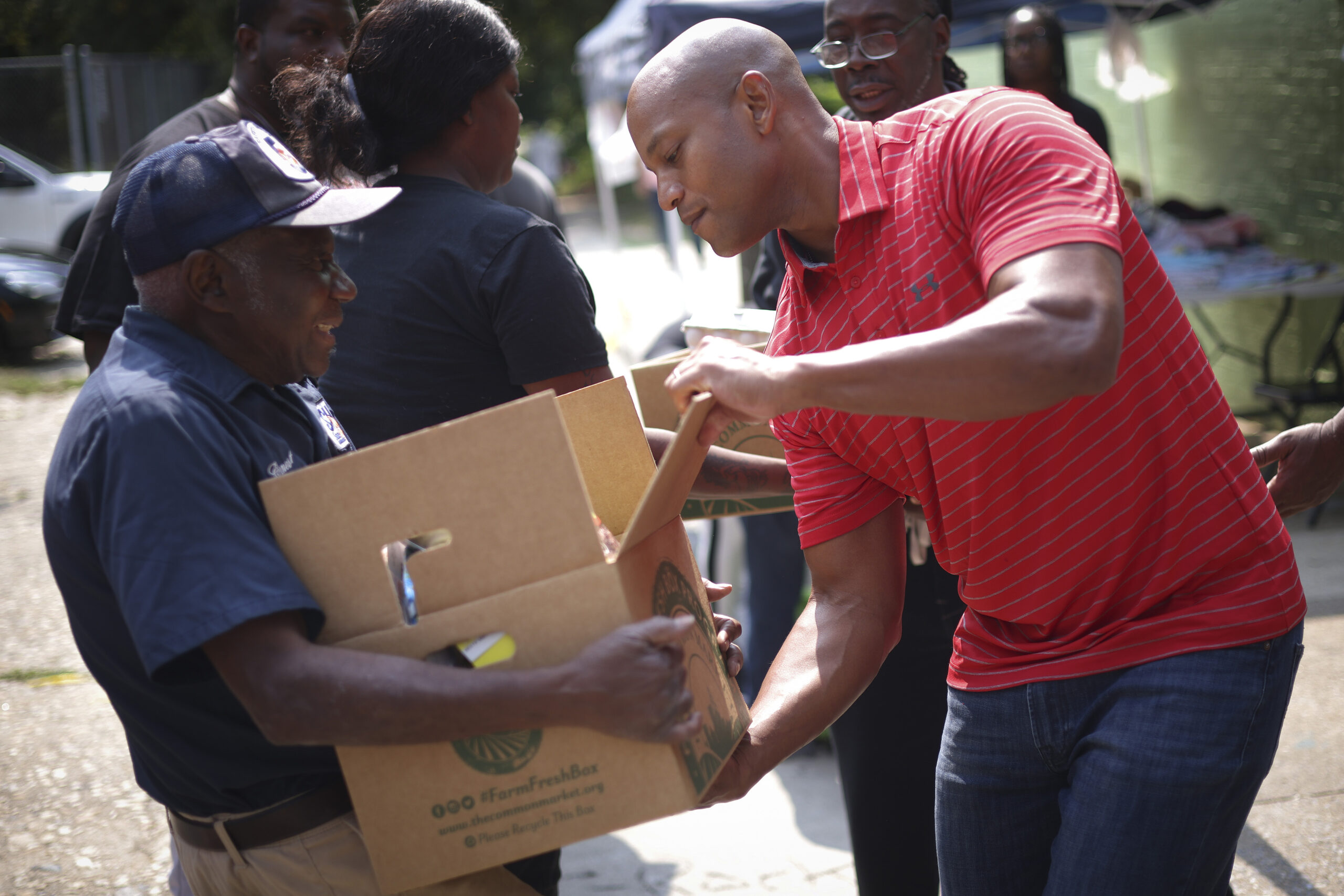
A big reason Maryland’s nonprofits are hopeful is that the state is flush. Maryland has $2.5 billion stowed away in its rainy-day fund, and its general fund has a balance approaching $1 billion. Another reason for their optimism: Newly installed Gov. Wes Moore has nonprofit bona fides as the former chief executive of the Robin Hood Foundation.
In Governor Moore, nonprofits have an ally, said Jeffrey Moore chief strategy officer at Independent Sector, a national membership group of nonprofits and grant makers. (The Moores are not related.)
“They have a governor in place who fundamentally understands the sector,” he says.
If the effort passes, “it will be a really interesting telltale sign that folks are increasingly paying attention to the health and well-being of this sector.”
Governor Moore has not said whether he will support the legislation, which will be the focus of a March 9 committee hearing in the Maryland General Assembly.
According to a statement emailed by his spokesman, “Governor Moore believes that service will save our state, and he values Maryland Nonprofits’ commitment to service organizations and to improving the quality of life for all Marylanders. ”
Cash on Hand
Across the country, states entered the year with a lot of cash on hand. Rainy-day budgets, which are set aside for pressing spending needs or to pay for tax cuts, tripled in the aggregate over the past two years, according to the National Association of State Budget Officers. Including those funds, states in total have amassed almost $343 billion more than needed to cover their projected spending.
During his time in office, Maryland’s former governor, Republican Larry Hogan, argued for using the rainy-day fund to absorb reductions in highway and bridge tolls, among other things. As he prepared to leave Annapolis in December, Hogan recommended leaving the fund largely intact, out of concern that the broader economy and the state’s fiscal health were in jeopardy.
Making the Case Now
It’s not clear how long state budget surpluses will be the norm. States benefited over the past few years from large infusions of Covid-related federal grants and strong corporate tax revenues, according to the state budget officers group.
All the more reason nonprofits should make their case right now, says David Thompson, vice president of public policy at the National Council of Nonprofits. Usually when nonprofits ask state policymakers for funding, “they show us the hand” and say the state lacks the resources, he says. Now, says Thompson, they can’t do that because state budgets are in such a strong position.
Nonprofits can also benefit from the good will they generated among state lawmakers during the past three years as they responded to the pandemic, Thompson says.
“At the moment, there’s a respect and appreciation for nonprofits,” he says. “They know nonprofits are going to step up.”
But just as a state’s finances can quickly sour, trust in nonprofits can also evaporate, as nonprofit leaders in Minnesota know full well.
Last year that state’s nonprofit umbrella organization, the Minnesota Council of Nonprofits, tried to get lawmakers to approve a fund similar to the one proposed in Maryland. The state’s budget was so flush, with a $9 billion surplus, that they quadrupled their original request and persuaded lawmakers to draw up legislation calling for a $200 million fund.
Before any action was taken on the bill, the U.S. Department of Justice charged 47 people in a $250 million fraud case, alleging that a Minnesota group, Feeding Our Future, posed as a nonprofit to steal Covid-related federal child-nutrition payments.
The investigation into Feeding Our Future killed any chances the nonprofit fund had of being signed into law, according to Marie Ellis, public-policy director of the Minnesota Council of Nonprofits.
“Nonprofits rely on trust,” she says. “That trust was very shaken. And so the momentum that we had built up for this great proposal really waned in the wake of that scandal.”
The Feeding Our Future scam bilked federal dollars meant for legitimate charitable work. But a Minnesota audit of state grant programs released in February found state agencies guilty of “pervasive noncompliance” in how state grants are accounted for.
That should give state lawmakers across the country pause when considering grant funds to provide general operating support to nonprofits, says Bill Glahn, adjunct policy fellow at the Center for the American Experiment, a conservative Minnesota think tank.
“We’ve always given nonprofits and charities the benefit of the doubt,” he says. “But it’s an incredibly bad idea to do these grant programs for nonprofits without some kind of oversight to make sure that taxpayers are actually getting some benefit for these hundreds of millions of dollars going out the door.”