
January 5, 2016 | Read Time: 1 minute
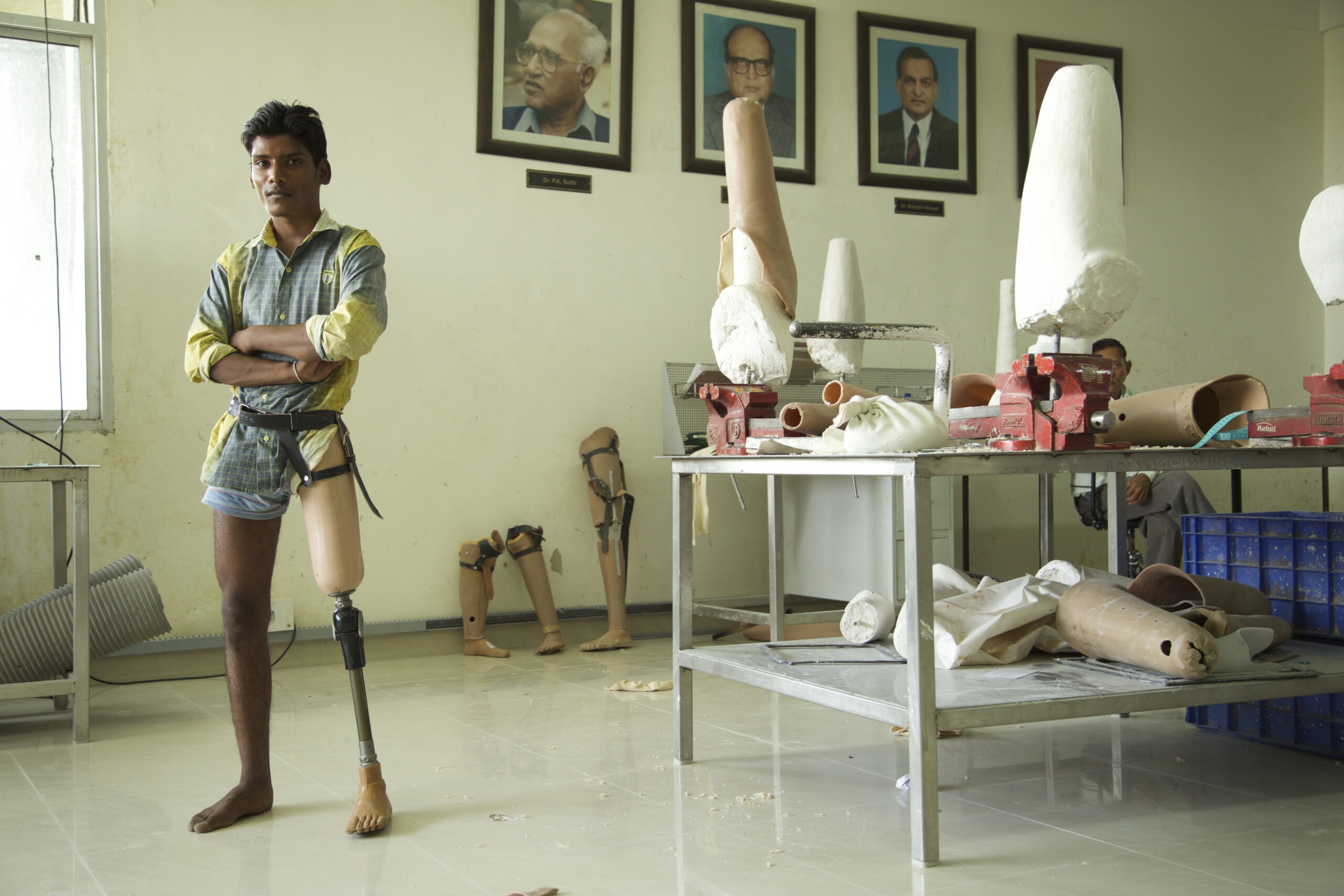
In developing countries, most poor amputees who lose their legs receive prosthetics with single-axis knee joints — similar to a door hinge — that are unstable and can buckle.
D-Rev, a nonprofit that designs low-cost, high-quality medical technologies, wants to do better. Last month, after six years of development, it introduced the ReMotion knee, which mimics the way people naturally walk, allowing amputees to move freely, kneel, squat, and ride a bicycle. The price is just $80, compared with similar artificial knees that cost $1,500 or more.
“You have very well-trained doctors, for the most part, and they’re working in decent facilities,” Krista Donaldson, chief executive of D-Rev, says of hospitals in low-income countries. “But what’s really lacking is quality devices.”
Another D-Rev product took on the problem of jaundice, which affects nearly one out of every five infants in the developing world and can lead to brain damage or death. Treatment is easy — shining intense blue light onto babies’ skin — but the phototherapy devices cost upwards of $3,000.
They did, that is, before D-Rev developed Brilliance, a $400 device that’s been used to treat more than 100,000 babies in 15 countries.
D-Rev, which has an annual budget of $1.6 million, uses charitable dollars to develop medical products and measure their impact, but the group expects sales to fuel expansion once a device hits the market.
Says Ms. Donaldson, “If it’s well designed, it will keep scaling on its own.”