May 29, 2013 | Read Time: 4 minutes
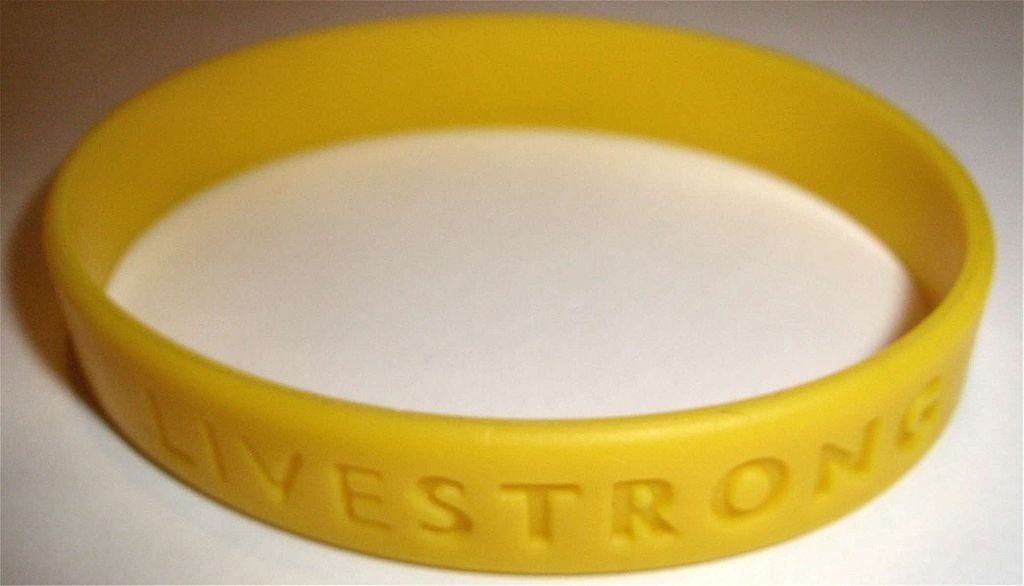
Livestrong faces a new challenge now that Nike, which has been a major source of marketing muscle and charitable donations by creating the famous yellow wristband, has said that 2013 is the last year it will make sports apparel or other products to raise money for the nonprofit.
The charity and outside fundraising experts say they think the organization will survive the loss of the benefactor who helped it grow into a multimillion-dollar organization. But everyone agrees that today’s news means it faces a steeper climb as it recovers from the admission from its founder, Lance Armstrong, that he used performance-enhancing drugs to win the Tour de France and other cycling events.
Though the charity won’t disclose how much Nike’s products generated, the group gets nearly a quarter of its revenue from licensing its name and getting royalties on products from commercial sponsors.
Nike will continue to provide cash to the organization, it said, and its decision does not prevent Livestrong from continuing to create and raise money with the yellow wristbands.
Robust Fundraising
Katherine McLane, a Livestrong Foundation spokeswoman, said the charity was “deeply grateful to Nike for a very fruitful nine-year partnership.”
She said the charity knew it would face the departure of longtime benefactors and would need to find new ways to attract revenue and perhaps adjust to smaller budgets. “We are not the foundation we were a year ago. We’ll likely never be again.”
However, she added, the foundation ended 2012 in strong financial shape.
So far this year, she said, the charity has attracted $16.5-million in revenue, $500,000 above projections but lower than the $17-million it had raised by this point in 2012.
“Given recent events, this was a strong performance,” she said.
In 2012, the foundation raised $48-million, with nearly half coming from 116,000 individuals worldwide. That total was down about 3 percent from 2011. The foundation generated $11.5-million in royalties and license fees.
Fundraising experts say they hope that such fees came from many companies, not mainly from Nike.
“We counsel against any charity being too reliant on any single source and spreading the revenue base as broadly as possible as quickly as possible,” said Robert Carter, chairman of the Association of Fundraising Professionals. “When you’re in bed with a corporation, you have to be prepared for them to go away.”
He said if the foundation has a strong endowment that it would be able to weather whatever hit it takes in donations from Nike’s announcement. Livestrong reported that it had $112-million in total assets in 2012 and an unrestricted endowment of $24-million.
“That could mean the Nike sponsorship might not mean as much as it could have,” Mr. Carter said.
Defining the Mission
Nike is not the only company that has licensed the Livestrong brand. Other companies include Oakley, Johnson Health Tech, Thinksport, and Demand Media.
But it is clear that Nike has been the Livestrong Foundation’s marquee corporate partner. The group says it has distributed 87 million of the wristbands Nike created to signal support of Livestrong’s work to help people with cancer.
Several experts say Nike’s departure, along with Mr. Armstrong’s, means the foundation must define more clearly just how it assists cancer survivors.
That will take time, says Andrea McManus, president of the Development Group.
“They’re going to have to re-engineer their brand as an autonomous and independent organization that can stand on its own,” Ms. McManus said.
“Nike pulling out is like the founder of an organization leaving,” she said. But, she noted, “most organizations live beyond their founders.”
Impact on Individual Donors
Nike’s decision could be important not just for the dollars it attracted but because of the stamp of approval its support has provided.
The company’s decision might deter not just other corporations but also individuals who give, experts said.
Art Taylor, president of the Better Business Bureau Wise Giving Alliance, said he hoped that wouldn’t be the case, however.
“The corporation may not feel that a continued involvement with the foundation is going to further its mission,” he said. “But that has very little to do with whether the foundation is furthering its mission.”
Ms. McManus, the fundraising consultant, is also worried about the signal that Nike sent by dropping most of its ties to the charity.
Donors will probably give less because of Nike’s move, she says. “People can’t help but interpret that in a negative way,” she said. “That’s human nature.”
Raymund Flandez contributed to this article. Send an e-mail to Doug Donovan.