June 4, 2013 | Read Time: 6 minutes
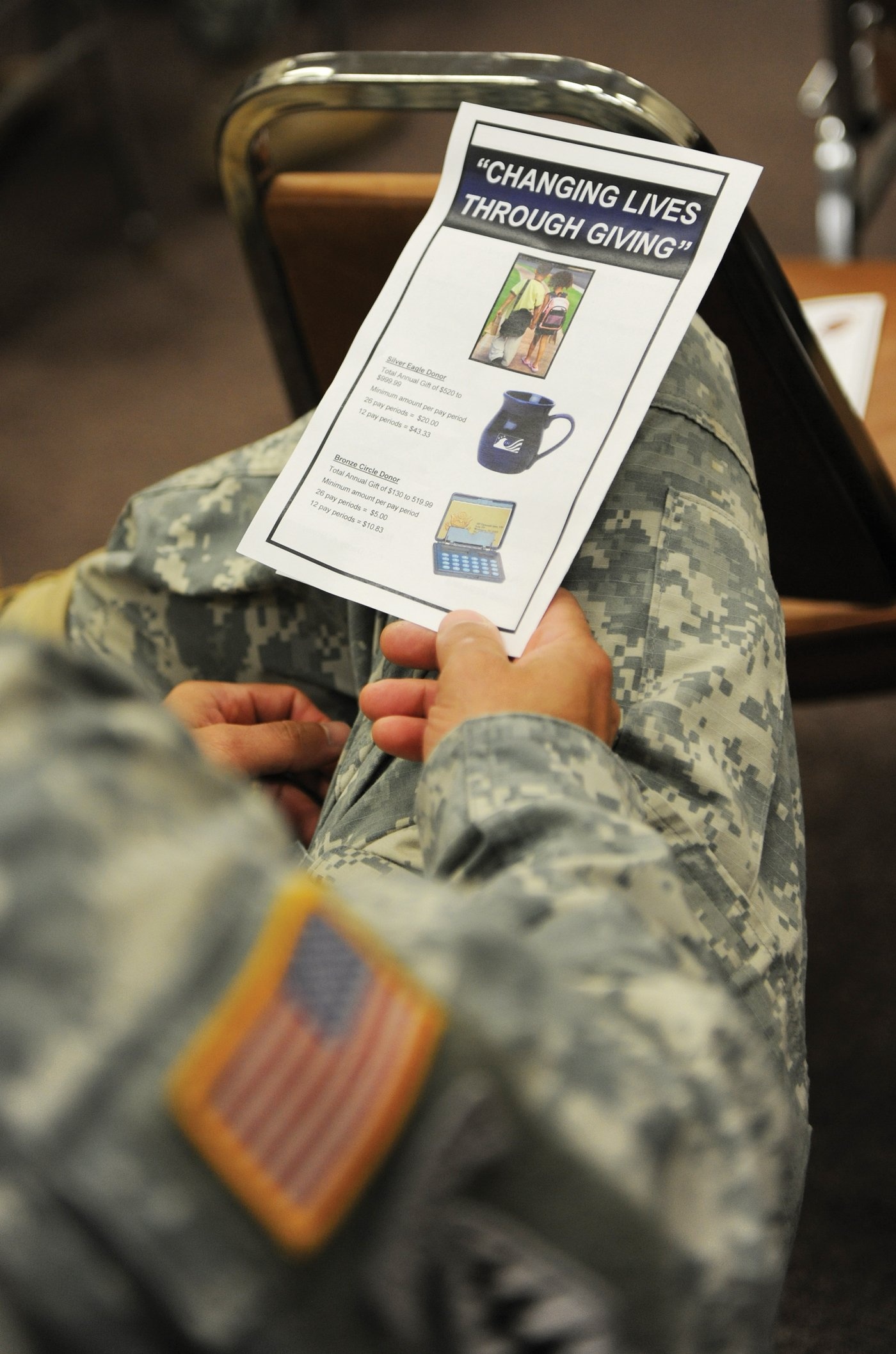
An Obama administration plan to overhaul the federal government’s charity drive has angered nonprofits that say the changes would be a major blow to an effort that raised $258-million last year for nearly 25,000 groups.
The Combined Federal Campaign has been a reliable source of annual revenue for charities nationwide since it began in 1961.
But the federal agency that oversees it wants to adopt a new online-only giving approach and other changes by next year to cut costs and guarantee that every penny an employee donates goes to charity.
One of the U.S. Office of Personnel Management’s most controversial changes, which are open for feedback until the end of the day Friday, revolves around its desire to eliminate what charities say is a critical element to the campaign’s success: paper.
The federal agency wants all gifts submitted online or by electronic payroll deductions—banning gifts of cash, checks, and money orders.
It also proposes to stop printing the annual directory of eligible charities and pledge forms distributed to federal offices and military bases across the nation and world. Both would be available in electronic formats.
Seeking Congressional Help
Those and other changes have galvanized opposition among some of the nation’s largest nonprofits, which are recruiting Congressional support.
“If it doesn’t totally decimate the campaign, it will create a major drop in giving that will have a huge impact on the nonprofit sector,” said Steve Delfin, president of America’s Charities, a Chantilly, Va., organization that assists 115 charities solicit through the campaign.
America’s Charities, which has led the protests against the changes, has been joined by other organizations involved in running campaigns to solicit federal workers, including Community Health Charities, EarthShare, Global Impact, and United Way Worldwide. Other groups that are opposing the changes include Independent Sector and YMCA of the USA.
Among the overhaul ideas that are getting charities’ attention:
• Nonprofits would be charged a nonrefundable annual fee if they apply to be included in the directory of charities that federal workers see every year—even those groups that are rejected.
• The 184 local campaigns overseen by federal employees would be eliminated. Today, employees volunteer their time to pick the nonprofit contractors that handle day-to-day management—mostly local United Ways but also members of umbrella charity groups like Community Health Charities, EarthShare, and Global Impact.
• Regional campaigns would replace local efforts, which would share back-office functions run by the Office of Personnel Management.
• Organizations that assist charities in soliciting through the Combined Federal Campaign could not pay expenses directly out of the donations they collect and distribute to their clients.
The Office of Personnel Management would not comment on the proposed changes. But in a news release about the Federal Register posting outlining the commission’s recommended changes and seeking public views, it said that the changes seek to “ensure that 100 percent of the money employees donate goes directly to the charities of their choice.
”The ideas for the changes came from a committee that was appointed two years ago to examine the campaign after it reached its 50th year of operation in 2011. Among the people who were included on the committee were several officials of nonprofits that are key players in the drive, but representatives of those groups say that most of their concerns have been ignored.
At the time the commission was created, donations were declining from a high in 2009 of $282.6-million. Last year, just $258-million was collected. It’s not just total dollars that are dropping but the share of government workers who give: In 1967, 85.6 percent of employees gave through the campaign; in 2010, the number had fallen to a quarter.
Nonrefundable Fee
Some charities are concerned that many nonprofits will stop seeking gifts from the campaign because of the nonrefundable fee charged to any group that wants to solicit. The proposal does not say how the fee will be calculated, but if it is meant to cover the costs of running all of the local campaigns, it could be significant. The national campaign operates with about a 10-percent overhead cost, or $25.8-million last year.
“We are very uncomfortable with the application fee,” said Marshall Strauss, chief executive of the Workplace Giving Alliance and a member of the commission that helped craft the proposals. “The government is creating a hurdle that will discourage the participation of many thousands of charities.”
The elimination of paper, meanwhile, will drive away employees who give by cash, check, or money order, said Thomas Bognanno, president of Community Health Charities, an organization that assists groups like the American Cancer Society and the American Heart Association solicit federal workers in the campaign.
In the 2012 campaign, 20.8 percent of pledges, or $53.84-million, were made electronically. Cash accounted for more than 10 percent, or $27.05-million.
“The changes go against all fundraising experience that you meet the donor where the donor wants to be as opposed to accomplishing an administrative efficiency,” said Mr. Strauss.
No Local Campaigns
The number of employees who give could also drop because of the plan to eliminate the 184 local campaigns, nonprofit leaders say.
That change has attracted the attention of two Congressmen: Rep. Dave Reichert, a Republican of Washington, and Rep. John Campbell, a Republican of California. They wrote a letter last month to Obama administration officials complaining that proposed changes would “disproportionately harm local charities at the community level and eliminate vital services.”
“These proposals represent drastic changes that could reduce CFC annual giving by millions, further erode employee participation, and eliminate local control and local-giving influence in favor of a Washington-based campaign run by [the Office of Personnel Management],” their letter states.
Steve Taylor, senior vice president of public policy for United Way Worldwide, said one reason the government campaigns succeed is the involvement of local employees.
“Like anyone who gives to charity, they are motivated to giving back to the community,” Mr. Taylor said. “So when you do something like disconnect the campaign from the community by creating a regional body that runs it instead of a local body, you’re going to undermine the campaign itself and you’re going to undermine the employees.”
The nonprofit managers, such as the local United Way, often hold events to introduce employees to charities that work in their communities.
The new rules would prohibit paying entertainment expenses for such events, including food.
“They’re going to do away with every event. They’re going to discourage everyone from getting together,” Mr. Bognanno said. “Fundraising doesn’t operate that way.”
Greater Oversight
Charities do support some of the changes the government suggests, such as greater use of technology, better oversight of the locally run campaigns, streamlining the application process, and changing the campaign to an October-to-January schedule instead of today’s September through December schedule.
“There’s room for improvement,” Mr. Delfin said. “However, the cure is going to kill the patient.”
What has been most frustrating to critics, he says, is that the Office of Personnel Management has not provided any feedback when critics have raised concerns.
“Commission members were not given sufficient opportunity to work among themselves to evaluate different proposals,” Mr. Strauss said. “There are multiple commission members who are dismayed that some of the proposals went beyond what the commission recommended.”