A New York charity aims to transform spirit of support that followed September 11 into a national day of volunteerism
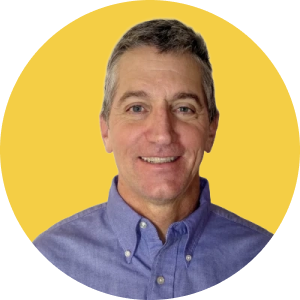
David Paine grew up on Long Island and spent his early career in Manhattan. On September 11, 2001, he
ALSO SEE:
Assisting Terrorism’s Other Victims
Simple Steps Can Help Charities Plan for Disasters
Disaster Planning: Resources for Nonprofit Officials
September 11 Donations: How Much Charities Have Raised and Distributed
Majority of Funds Raised After September 11 Have Been Distributed
Ford Report Analyzes 9/11 Response
was in Irvine, Calif., where he heads a 50-person public-relations company, watching in horror as the twin towers of the World Trade Center toppled.
“I felt a sense of helplessness, and a desire to do something,” Mr. Paine says. Ten days after the terrorist attacks, players on the New York Mets baseball team donated nearly $500,000, the equivalent of one day’s pay, to the relief effort — and a light went on in Mr. Paine’s head. Wouldn’t it be great if everyone did the same?
That idea — commemorating the day by helping charities — has evolved into a quest to turn September 11 into a national day of service.
One Day’s Pay is a New York charity headed by Mr. Paine that seeks to harness the spirit of the attacks’ aftermath, when vast numbers of Americans donated money to the relief effort and flocked to ground zero to volunteer. The charity encourages people to visit the One Day’s Pay Web site (http://onedayspay.org), register their pledge to volunteer on September 11, and use the site’s links to find volunteering opportunities.
Publicity Campaign
One Day’s Pay held its first national press conference last month, and as of mid-August some 65,000 people had pledged on the Web site to volunteer. The group has even bigger plans for next year. It is working on a large publicity campaign — featuring billboards, national-television spots, and Internet advertising. And it would like to see September 11 designated a voluntary national day of service, although it has not yet approached Congress about the idea. The charity also plans to hire its first full-time employees, including an executive director and a small support staff, which will require raising much more money than it raised in the past year.
By 2010, the charity hopes that 30 million people will do good deeds on September 11. And Mr. Paine, the charity’s president, believes that if One Day’s Pay can get people who do not ordinarily volunteer to do so on that single day, the effort could over time greatly expand the number of people who volunteer throughout the year. “We’re thinking big, but there’s reason to do that here,” he says. “We have good justification to think we can be successful.”
Mr. Paine has no previous experience heading a charity, but he is an active volunteer. He coached a Little League baseball team for several years and serves on the board of an educational foundation near his home in Newport Beach, Calif., and on an advisory board for the local United Way. He’s not sure what he’ll be doing on September 11 this year, but he expects to volunteer at a charity he has not worked with before. Last year, he helped kids work on arts-and-crafts projects at a center for abused children.
The outpouring of support immediately following the terrorist attacks has been well documented. In a survey of more than 1,000 Americans a few months after the attacks, Independent Sector, a coalition of charities and grant makers, found that 70 percent had had some charitable involvement in response to September 11. And more-recent surveys show that the commitment to volunteer work remains high. A 2002 survey of 2,500 people by Yankelovich Partners, in Norwalk, Conn., found that three-quarters said they believed “everybody should donate some time for volunteer work.”
One Day’s Pay has strong support among the survivors of the more than 3,000 people who were killed in the attacks, according to Mr. Paine. Alice Hoglan, whose son, Mark Bingham, died on the hijacked United Air Lines flight that crashed in Pennsylvania, is one of five people on the charity’s board of directors who have relatives who died on September 11.
“Turning September 11 into a national day of service is a wonderful concept,” Ms. Hoglan says. “It should be a day of work and effort — that’s much more appropriate than making it a day off from work.”
The charity’s organizers say they have no interest in turning September 11 into a holiday. And while they would love to see companies give employees the option of taking the day off to volunteer, they say they’d be satisfied with other approaches that result in less time away from work.
“There are endless ways that corporate America can play a role in this without having to shut down,” says Jay S. Winuk, the group’s vice president. “A company could decide to have the Red Cross come and do a major blood drive, or it could set up a spot in a common area where employees could donate canned food.”
Mr. Winuk’s brother, Glenn J. Winuk, a Manhattan lawyer and volunteer firefighter, died trying to save those trapped in the World Trade Center’s South Tower. “One Day’s Pay is meant to encourage people to help the next guy, and that very much is what my brother and the many others who were lost that day were all about,” Mr. Winuk says.
Raising Money
As the charity prepares for its 2004 marketing blitz, it will also need to get serious about fund raising. Over the past year, the charity got by on cash gifts of $30,000, although Mr. Paine values donated services by printers, graphic designers, Web designers, and advertisers at nearly $300,000. “Every time we asked somebody to help us, they said yes,” he says.
The charity will need far greater financial support for its national advertising campaign, and Mr. Paine knows that obtaining grants from foundations and corporations could be a challenge because One Day’s Pay doesn’t support a specific cause, aside from encouraging more volunteerism.
“One hopes they’ll see the value and the potential of this,” Mr. Paine says. “You have to have the vision to see a day in this country when 100 million people get up in the morning and, as a part of national ritual, they do something good for someone else on that day. We’re hoping that we find some forward-thinking organizations that will support us.”
The charity is trying to keep its costs down by collaborating with organizations that already match volunteers with charities. Visitors to its Web site can locate one of the more than 400 volunteer centers in the Points of Light Foundation and Volunteer Center National Network, and can identify volunteering activities in their local area through Servenet.org. In many cities and towns, no volunteering opportunities are listed on the sites, but Mr. Paine says the important thing is simply to do something good for someone else, even if that means donating clothes to a homeless shelter or writing a check to a charity.
Servenet.org is operated by Youth Service America, a charity that aims to increase volunteerism rates among youths (which rose steadily from below 50 percent in the early 1950s to 67 percent in the late 1990s, according to Independent Sector). Steven A. Culbertson, chief executive officer of Youth Service America, views One Day’s Pay as a way for young people to “finally get a chance to do something positive” in response to September 11.
“Young people aren’t old enough to write checks, give blood, or enlist in the armed services,” he says, “but they do have extraordinary creativity and idealism to bring to the problem-solving table in America.”
Mr. Culbertson says that the time to designate September 11 as a day of national service is now — while the tragedy and heroic response of that day are still fresh in people’s minds.
December 7, 1941 — the day the Japanese struck Pearl Harbor — “was a huge event that rocked the world,” he says. “Now, it’s an asterisk on the Today show. One of the benefits of One Day’s Pay will be that it’s a permanent marker that will continue to engage people forever.”