Why the Nonprofit World’s Future Dependson a Willingness to Experiment

By Caroline Bermudez
Contributor
May 30, 2011 | Read Time: 3 minutes
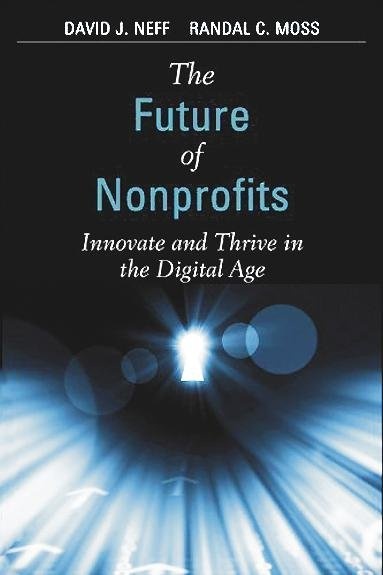
Successful nonprofits must encourage employees to experiment with new ideas, loosen their management structures, and better tailor their approaches to the needs of donors, say the authors of a new book, The Future of Nonprofits: Innovate and Thrive in the Digital Age.
David J. Neff, founder and chief executive of Lights. Camera. Help., a nonprofit in Austin, Tex., that helps other charities use film and video to tell their stories, and Randal C. Moss, social-media marketing manager at MeadWestvaco, a packaging company in Richmond, Va., talk about their book in an interview with The Chronicle:
What are the most promising social-media tools for nonprofits?
Mr. Neff: I think YouTube is highly underused by nonprofits. YouTube has a very active nonprofit program where you get special perks. The fact that people are actively using it as a search engine and nonprofits aren’t on there is a big hole in that tool kit. For me, things like [the location-based social networks] Gowalla and Foursquare are big, especially for nonprofits to do a lot of events.
You write that fund raising is becoming increasingly personalized. How is that going to shape technology?
Mr. Moss: Personalization is going to come to a point where the nonprofit organization says, Here’s a platform: You do whatever you want to do to raise money. The personalization is going to become how the individual activates their network to raise funds and awareness in a way that they are comfortable and their network is comfortable. That’s what life is becoming—it’s much more granular because of social-media and digital technology, so the tools are.
What charities do you think are successfully using social media?
Mr. Neff: Beverly Robertson [national director of Pregnancy & Newborn Health Education Center at the March of Dimes] is doing Spanish blogs and Spanish Twitter and this awesome Hispanic outreach that I don’t really see any other organizations doing. Mobile Loaves & Fishes is a great nonprofit in Austin, Tex., doing campaigns involving video and getting the word out and showing what homeless people look like. They have a strong, charismatic presence on social media. Another great one is Best Friends Animal Society. They have hundreds of thousands of people on their Facebook fans page and they’re constantly engaging them around animal adoption.
And what mistakes are you seeing?
Mr. Neff: You can’t ask people to come to a party where no one’s there. You see a lot of organizations jumping the gun by joining social networks without a strategy. We love the use of interns to handle social media, but you definitely need to train them and hook them up with experts who already have an established presence. But a lot of places that I see treat it as an intern’s job.
Mr. Moss: I don’t think that a traditional director of marketing in a nonprofit organization has any business working in and around social media. Social media moves faster, reacts quicker, and engages people in a much different way than traditional marketing does, and because of that, it takes a different personality, perspective, and skill set to be able to manage the multiple social-media channels in real time, where a traditional marketing manager is used to launching campaigns, waiting for the metrics, taking the feedback, and then making adjustments to the next campaign.
Mr. Neff: In the nonprofit world, we’re very, very scared to get rid of people. Sometimes times change and people need to change. The big problem with nonprofits is that they hire all these people in their 20s and 30s because they have smart and good ideas and then they say no to all those ideas. And that’s why those people leave the nonprofit sector and they go work somewhere else.