March 26, 2020 | Read Time: 7 minutes
Fred Rogers was a good, kind, and wise man. The apple didn’t fall far from the tree; during difficult times he would recall his mom’s wise words:
“When I was a boy and I would see scary things in the news, my mother would say to me, ‘Look for the helpers. You will always find people who are helping.’ To this day, especially in times of disaster, I remember my mother’s words, and I am always comforted that there are still so many helpers, so many caring people in the world.”
Well, my friends, the helpers need our help.
Let me introduce you to some of the helpers I’m thinking about. These are three of the thousands of nonprofit superheroes who are a part of the Nonprofit Leadership Lab, a membership site with content and community for leaders of small nonprofits.
- My friend Kim runs a school in North Carolina. She is working 24/7 trying to keep students and staff members safe, developing an online curriculum, and fielding texts at all hours from understandably frantic parents.
- Jean Rosenbaum runs Gifted Wishes in Portland, Ore. The group is a bit like the Make A Wish foundation but local, oh-so-simple, and without celebrities. Fifty dollars allows Jean to provide a “dementia pet,” a special therapeutic stuffed animal, to a dementia patient. For this small organization with no cash reserve, cancellation of its gala presents an existential threat.
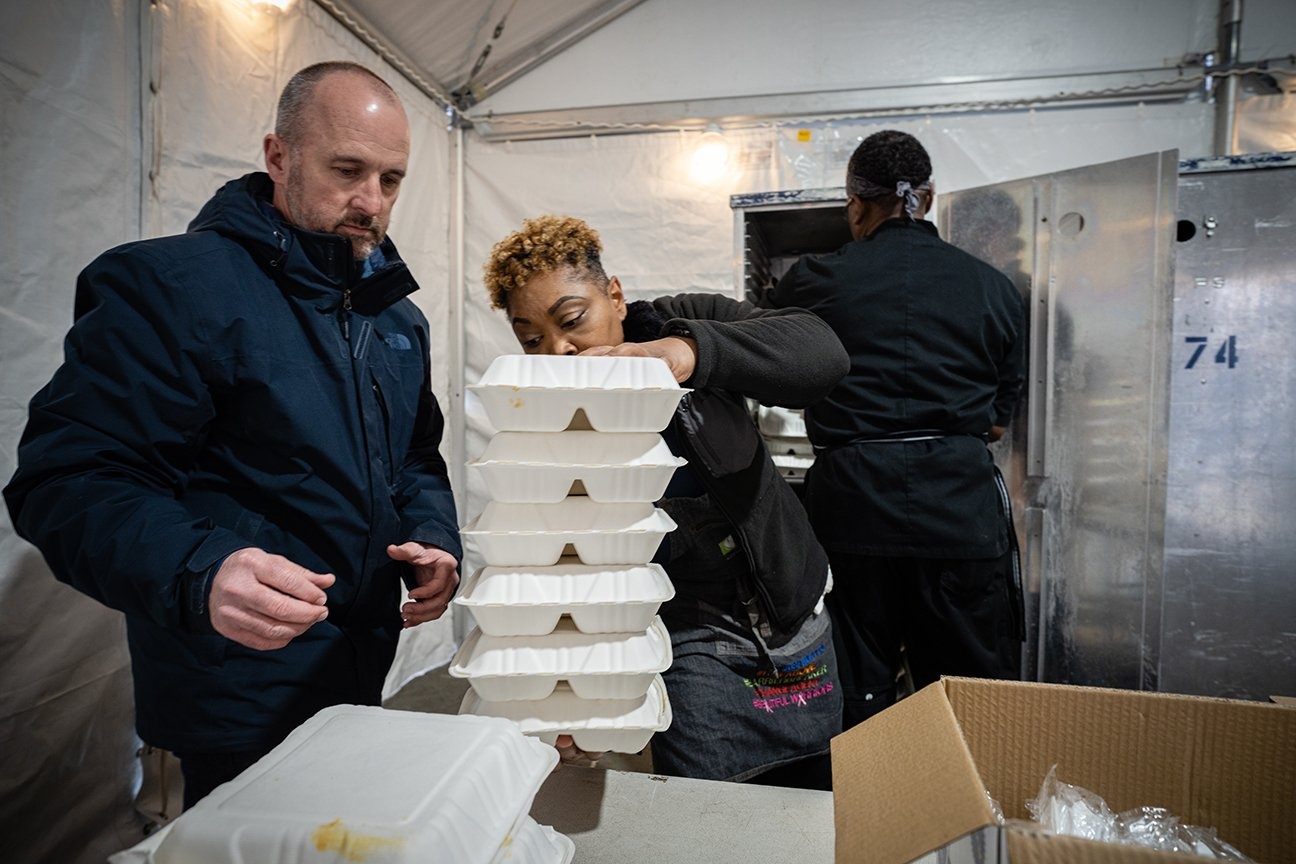
- Shawna McMahon leads Immanuel Community Services in Seattle, which offers meals and hot showers to homeless people, and a community food bank. As folks wrestle over toilet paper at Costco and hoard food and cleaning supplies, many of Shawna’s clients urgently need food just as volunteers are staying home out of fear of contracting the virus.
I could go on. Consider this: There are 1.5 million nonprofits in the United States alone. The 2019 nonprofit employment report shows that nonprofits are responsible for 12.3 million jobs, placing it behind the retail and food industries and just above American manufacturing. The nonprofit sector injects $984 billion into the U.S. economy.
The majority of those 1.5 million organizations (66.7 percent) have annual operating budgets below $500,000. These organizations are highly vulnerable. Half of those nonprofits have less than a month’s cash reserve, and 8 percent are technically insolvent, meaning that liabilities exceed assets.
Shawna, Kim, and Jean represent hundreds of thousands of nonprofits across this country that are in trouble. They need us. I don’t have all the answers, but here are three ways we can help the helpers. You may disagree or find some too “outside the box,” but frightening times call for uniquely generous measures, and conversation and debate should be important now.
Redirect Your Giving. Nonprofits are canceling fundraisers left and right. Gifted Wishes, for example, raises the bulk of its small budget from its annual gala, which is now postponed until the fall. Organizations like this need money now, and a small amount goes a long way. Whether you live in Camden, N.J., or Chicago, organizations like this surround you: They are hurting financially, but their clients are counting on them. Consider making a small gift to a local organization now. Look at nonprofits in your community, pick one, visit its website, and hit the donate button.
What about your giving to your alma mater? If you make regular contributions to your alma mater like I do, perhaps it’s time to redirect. Fordham University has meant so much to me; my daughter is also an alum. But Fordham has a massive endowment, so I’ve been thinking that it’s time for a short-term redirect to a group such as Jazz House Kids in Montclair, N.J. Its work is important and at risk.
Here’s one that’s hard for me: political giving. The outcome of the 2020 election means everything to me and my family. And yet . . . Perhaps it’s time to turn that spigot off? There are millions of small-dollar donors and many who have “maxed” out with a $2,800 gift to a candidate. What if we all stopped and just agreed to engage in our own kind of “campaign-finance reform” by redirecting that money elsewhere, at least for the next few months? I know these are hard choices; they’re hard for me, too. But this is how we need to be thinking. Not a soul is living life in a “business as usual” way, and maybe this is an opportunity to question our charitable-giving decisions.
Help a Nonprofit Get Creative. Tens of thousands of advocacy groups push for legal or legislative change, mobilize citizens to act, and educate the public. These organizations are thinking about different ways to deliver their mission, and innovative thinking can offer light in the darkness.
For instance, a professional association that offers symposia to its members talked about the need for a virtual symposium for years. When its upcoming gathering was canceled, it pulled folks together and designed that virtual symposium.
At a school outside of Baltimore, the high-school students work all year on a fundraising event for a cause they choose. It, too, has been canceled. But these kids were not to be dissuaded. They’ve started to meet virtually to brainstorm another way to do it. I can’t wait to see where they take this.
Perhaps you are working virtually, or if you are one of the lucky ones, you have paid time off. Think about ways you can help. Do you have expertise to share? Perhaps you could be part of a “kitchen cabinet” of folks working for local organizations to inform the media about the need for volunteers. Consider whether others in your network could help organizations in your community. Please don’t wait for the executive directors to call; they are in triage mode. Get on the phone, call them, and offer your services.
Become Part of a New Army of Volunteers. I understand that people are afraid; I am, too. I am over 60 and have a chronic respiratory condition. I have a big fat bull’s-eye on my behind. Lots of us do. And we have to be careful.
But think for a moment about doctors, nurses, and other health care workers. They’re afraid, but they can’t self-quarantine. Who among us is at home (high school, college students), healthy, at a lower risk, and willing to be good neighbors? If we all hibernate, who will be there for the needy folks who are not hospitalized?
For example, the congregation of B’nai Jeshrun in New York City is closed, and services are being livestreamed. However, its homeless shelter remains open. Volunteers are arriving every day to help. They are taking precautions, wearing gloves, but these folks are showing up. Good neighbors one and all.
What if high schools and colleges/universities included volunteerism as part of the remote curriculum? What if local business districts or state nonprofit associations could get the word out about organizations that needed people power?
I’ll tell you what if. Your local nonprofits might survive this pandemic. Your community would be stronger because it would be clear that you are all in this together. Members of this new army of volunteers would feel like they were doing something incredibly valuable. And that would make all of us who are hungry for leadership and hope a whole lot less hungry.
We can wrestle at Costco for toilet paper. Or we can choose a different path.
Mr. Rogers had a neighborhood. So, too, do we. Maybe, just maybe, we can think of the world less as a scary place and more as a neighborhood so we can stop thinking of ourselves as potential victims and more like good neighbors.
Helpers.
If you have other ideas on how to help local nonprofits, please share below or by email. Questions are welcome, too, and may be answered in a future article. If you want your question to be anonymous, simply indicate that in your email.