America’s Favorite Charities Are Shifting Their Fundraising Strategies

By Rasheeda Childress
Senior Editor, Fundraising

October 7, 2025 | Read Time: 12 minutes
It’s been half a decade of upheaval at the 100 biggest fundraising groups. What do their changing tactics tell us about the state of raising money today?
For many years, donors loved to hear from the girls and young women they supported through Plan International, an education charity that works globally. Child sponsorships fueled giving to the nearly century-old organization and helped make it a fundraising juggernaut.
But these are no ordinary times. Much of the nonprofit world is headed into the second half of the decade rattled by the shock waves of the first half: the pandemic, a volatile economy, steep declines in everyday giving, and most recently, steep cuts in government funding. In response, organizations are tweaking or even tearing up their fundraising playbooks, trying out new tactics and strategies.

At Plan International, donor sponsorships of individual children have been losing steam. Donors are interested in more community-based solutions. And like many nonprofits this year, the organization lost much of its government funding, which used to make up 40 percent of its revenue. Even before that, the organization began investing more in major gifts, hoping to secure more unrestricted dollars in particular. The goal is to meet donors where they are, says Katherine Williford, chief development officer for Plan International USA, the group’s American fundraising arm.
“Child sponsorship continues to be a really important pillar,” she says. “But we’re recognizing now that we’ve perhaps not invested as much time and energy in major donor fundraising as we could have.”
Fundraising Powerhouses
What are the biggest fundraising organizations? And what do their shifts in recent years illustrate about the fundraiser’s job in these tumultuous times?
The Chronicle set out to find answers through our America’s Favorite Charities project, which identifies the 100 organizations that raise the most in private support — cash and stock gifts only — from individuals, foundations, and companies. Groups on the list all raise hundreds of millions of dollars, if not billions. They range from the very old (including the 179-year-old Smithsonian Institution, which earned the No. 39 spot in our ranking) to the very young, like the 11-year-old Obama Foundation (No. 61). Plan International, which raises more than $600 million annually, was 14th on the list.
Organizations are ranked based on the average amount they raised annually from 2021 to 2023, the most recent year for which data is available for all groups. We analyzed three years of data to avoid the fluctuations caused by once-in-a-lifetime mega-gifts. To focus on groups for which donations are the primary fuel for charitable work — as opposed to those that rely heavily on earned income — we did not include medical centers, colleges, or universities, whose cash support accounted for less than 50 percent of revenue.
The 100 nonprofits on our list together raised more than $38 billion in 2023. That’s roughly one out of every 15 charitable dollars donated that year, which means those groups have ample opportunity to analyze giving trends and donor behavior.
While our dataset predates the second Trump administration, many organizations had already been shifting strategies, whether in response to the tumult of the early 2020s or the upending of traditional giving patterns. Even as many changed their fundamentals, they also preached a consistency that’s a golden rule of fundraising: At times like these, it’s critical to stay true to your organization’s mission and communicate clearly to donors how they can make a difference.
Planned Parenthood (No. 29) has seen a surge in gifts since the start of the second Trump administration. Donors know the organization is working to provide sexual and reproductive health care and access across the country, says Leora Hanser, the organization’s chief development officer.

While some nonprofits may worry what they say will make them a target, Hanser says it doesn’t work to be silent about your mission. “An organization that appears to be veering away or hiding in the shadows right now, I think it is going to be really hard for them to be out raising the dollars.”
A Volatile Time
Like nonprofits across the country, America’s Favorite Charities aren’t sure what’s going to happen next.
“It’s a real perfect storm of economic uncertainty and political volatility,” says Caite Gilmore, vice president of development at the Obama Foundation. “It’s left a lot of nonprofits struggling, and we are no exception. A lot of our major and corporate donors are in a wait-and-see posture.”
For Gilmore, that means spending more time listening. “Trying to understand the reasons behind the ‘not now,’” she says. “Then just being patient, staying connected with them, keeping them inspired, and staying relevant so that when the time is right and things settle, they will come back.”
That said, everyday and midlevel donors continue to provide support. The organization’s fundraisers are telling them about blended contributions that involve a cash gift now and a bequest commitment — “ways to really stretch a donor’s giving,” Gilmore says.
Feeding America (No. 24) lost federal funding that its network food banks counted on.
Finding the right mix of small-dollar donors and major supporters is a struggle.
“We don’t think that traditional philanthropy is an immediate replacement for broad cuts in federal funding and programs,” says Casey Marsh, chief development officer.
Still, the organization is looking for new ways to bring in money. It launched a community response fund for supporters to help offset funding gaps. Feeding America also plans to sell carbon credits to support its work to reduce food waste, a significant source of greenhouse gases.
“That’s an attempt to diversify funding and build long-term sustainability,” Marsh says. “We are not counting on that as a silver bullet that will result in funds that could replace our generous donors and partners. But it is a way to test and to learn and to explore possibilities from earned-income revenue models.”
Big Gifts vs. Small-Dollar Support
Many of the organizations on the list grapple with finding the right mix of small-dollar supporters and major donors.
Peer-to-peer fundraising is critical for the Michael J. Fox Foundation for Parkinson’s Research (No. 34). Many people hear the term “peer-to-peer fundraising” and automatically think walkathons or bicycle races. The Michael J. Fox Foundation does some of that, but it also encourages supporters to raise money on Facebook and plan “do-it-yourself” fundraisers that let them create their own events.
“They’re all different, but they put the power of the fundraiser in the hand of the individual who starts it,” says Lisa Boudreau, the group’s chief development officer. “It builds community in a really unique way.”

Case in point: A first-time fundraising family hosted a “Dancing in the Moonlight” party at their Cape Cod home and raised more than $200,000. Boudreau says there’s been an uptick in Facebook fundraising, raking in $10 million from that alone since 2020. The foundation encourages people close to the mission to rally friends and loved ones to the cause, often with small-dollar gifts.
“Last year we raised $203 million, and the median gift was $50,” Boudreau says. “We do attract a large swath of people giving relatively small dollars that add up. We have less than 100 people in our community who’ve given a million dollars over their lifetime.”
The Obama Foundation started in 2014 with a goal to raise $1.6 billion by the time the Obama Presidential Center opens in 2026. To get things off the ground, fundraisers focused their attention on big donors, says Gilmore, vice president of development.
After gaining some traction, the organization branched out. “It was really important to us that, like President Obama’s political campaigns, this capital campaign also be fueled by a lot of donors,” she says. “So donors of all backgrounds and geographies, making gifts of all sizes.”

Some organizations on the list, like the Nature Conservancy (No. 11), have made the decision to lean into big gifts.
The Nature Conservancy has a membership program in which grassroots donors can contribute via digital tools or direct mail or even by canvassing. But the lion’s share of dollars comes from folks with deep pockets. In 2024, the organization raised about $1.1 billion, of which $720 million came from major and principal gift donors.
The organization has boosted its fundraising by using analytics to determine which supporters are most likely to step up their giving.
“Because we’re large and we have a million members, we do pretty sophisticated data analytics on those members,” says Tom Neises, chief development officer at the Nature Conservancy. “We’ve built some of our own proprietary models on predictability, both for membership support and for likelihood of becoming a more significant supporter.”
Fundraising Dilemmas
A nonprofit can make the list of America’s Favorite Charities — or even top it — and still face fundraising challenges.
The list is based on organizations’ fundraising from 2021 to 2023, as they climbed out of the pandemic emergency. We compared those numbers with the three-year period heading into Covid-19, from 2018 to 2020, and found that the annual average giving to United Way Worldwide (No. 1) dropped 23 percent.
The organization historically relied on workplace giving campaigns that gave it access to company workers but not the ability to steward and connect with those employees outside the corporation — and those donors have fallen off in recent years, says Byron Garrett, chief revenue officer.
“We were over-indexed on the corporate side of how we were structured, and we had a lesser focus on individual giving,” Garrett says. “So we’ve restructured internally to be better positioned.”
That restructuring includes a focus on major gifts and a “laser-focused” annual gifts program to reach more individual donors outside their workplaces.
Meanwhile, the Wounded Warrior Project (No. 32) is looking for ways to broaden its support as its donor pool ages.
“We’ve known for years that the methods we used to bring in support for Wounded Warrior in the past are not necessarily going to work as well going forward,” says Chris Needles, chief development officer. The group has relied heavily on direct mail, and with increased costs and fewer younger donors responding, fundraisers have had to rethink their approach.
Tech plays a critical role in helping nonprofits on the list get the right message to the right donors.
“We’ve had to reposition our fundraising strategies toward more major gifts, planned giving, a midlevel giving strategy,” Needles says.
Blood Cancer United (No. 25) learned that its previous name — the Leukemia & Lymphoma Society — made it harder for the organization to connect with potential donors and rebranded in August.
“It felt like if you did not have leukemia and lymphoma — which are two of the larger types of blood cancer — that you didn’t feel like this was the place for you,” says Coker Powell, chief revenue officer.
The group’s research showed some people weren’t aware that leukemia and lymphoma were types of cancers and that people with blood cancers like myeloma didn’t see the organization as speaking to them. With the name change, the group hopes to reach more donors and more clearly articulate what it does.
“The ultimate goal is bringing more people into the organization who would consider being a donor,” Powell says. “That’s really the end game.”
A High-Tech Boost
Technology plays a critical role in helping America’s Favorite Charities get the right message to the right donors.
Islamic Relief USA (No. 85), a religious nonprofit that provides humanitarian aid, has used data to guide support to underfunded programs.
Many donors want to help with disasters overseas in countries with large Muslim populations, says CEO Ahmed Shehata. But when the group analyzed its donor information, it found supporters in one state were more keen to support U.S. efforts.

“By utilizing the data, it helped us to have a different message for the community in California,” Shehata says. The approach netted almost $20 million for programs the organization previously had to pay for out of its general fund.
World Central Kitchen (No. 41), the disaster-relief organization founded by celebrity chef José Andrés in 2010, is one of the newest nonprofits on our list. The group uses social media to provide constant updates to young donors, who love the immediacy of seeing what’s happening, says Tunde Wackman, chief development officer.
“They feel like their dollars are actually making a difference in the field,” she says. During disasters, she says, donors share information with friends and others, which leads to “rapid scaling” on digital channels.
Many donors first give to the Michael J. Fox Foundation through peer events.
“We tend to not go back to them aggressively,” Boudreau, the group’s chief development officer, says. “But we do steward them. We might every year send them something about our foundation, a reminder of who we are.”
The group keeps a robust database to make sure they know whom to contact and how often they’ve done so. Boudreau was reminded recently of the power of patient stewardship.
A donor gave $1,000 to a peer campaign in 2014, and the organization stayed in touch. “We hadn’t received a gift from that individual until two weeks ago, when that person’s family foundation sent us $1 million,” Boudreau said in August. “Obviously, that doesn’t happen all the time. But if not for our database of donors, we would not have probably stayed in touch with that person.”
Drew Lindsay and Nandita Raghuram contributed to this article.
__
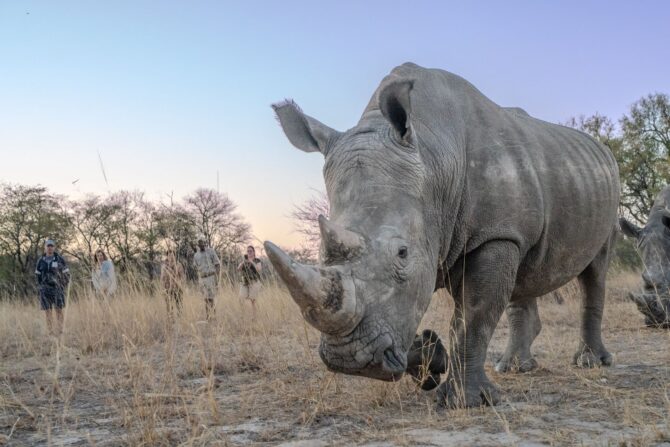
Image at top: Plan International (No. 14) raised $673 million.