Trump’s Order to Investigate Liberal Groups Is Likely to Face Legal Challenges
Some conservatives fear the president’s attacks on progressive foundations could come back to haunt them. “What might President AOC not like?”

By Alex Daniels
Senior Editor, Foundations

October 3, 2025 | Read Time: 7 minutes
A directive that President Trump signed last week calling for a broad offensive against domestic terrorism groups — and the foundations the White House alleges support them — are bound to face a thicket of legal and regulatory challenges, according to counterterrorism and nonprofit tax law experts.
In his September 25 memorandum, the president called for law enforcement agencies to establish a joint task force against domestic terrorism and urged them to use the Racketeer Influenced and Corrupt Organizations Act, or RICO laws, to prosecute the groups, as well as any organizations that fund them. The memorandum came on the heels of a New York Times report that the Department of Justice was calling on federal prosecutors to investigate the Open Society Foundations, the global philanthropy created by George Soros. The president has previously demanded that Soros, long a target of right-wing attacks, be thrown in jail.
The Open Society Foundations, joined by nearly 200 allies among largely progressive grant makers, vehemently denies it has supported terrorism. The organizations view the Trump order as an attempt to manufacture evidence against a political foe and silence those with different viewpoints.
The response from conservative philanthropy leaders has been more muted. The Philantrhropy Roundtable, a leading network for conservative donors and foundations, declined to comment. Lawson Bader, president of DonorsTrust, a donor-advised fund geared to conservative donors, is one of the few on the right who has voiced strenuous objection to the president’s effort.
At a minimum, the attack on progressive philanthropy should make donors of all ideologies uncomfortable, Bader said. His reaction reflects a libertarian viewpoint that if independent philanthropies are silenced — and kept from engaging in a robust debate reflecting many viewpoints — the government’s role in Americans’ lives will grow.
“Philanthropic freedom is a pretty sacrosanct concept” that should cross ideological lines, he said.
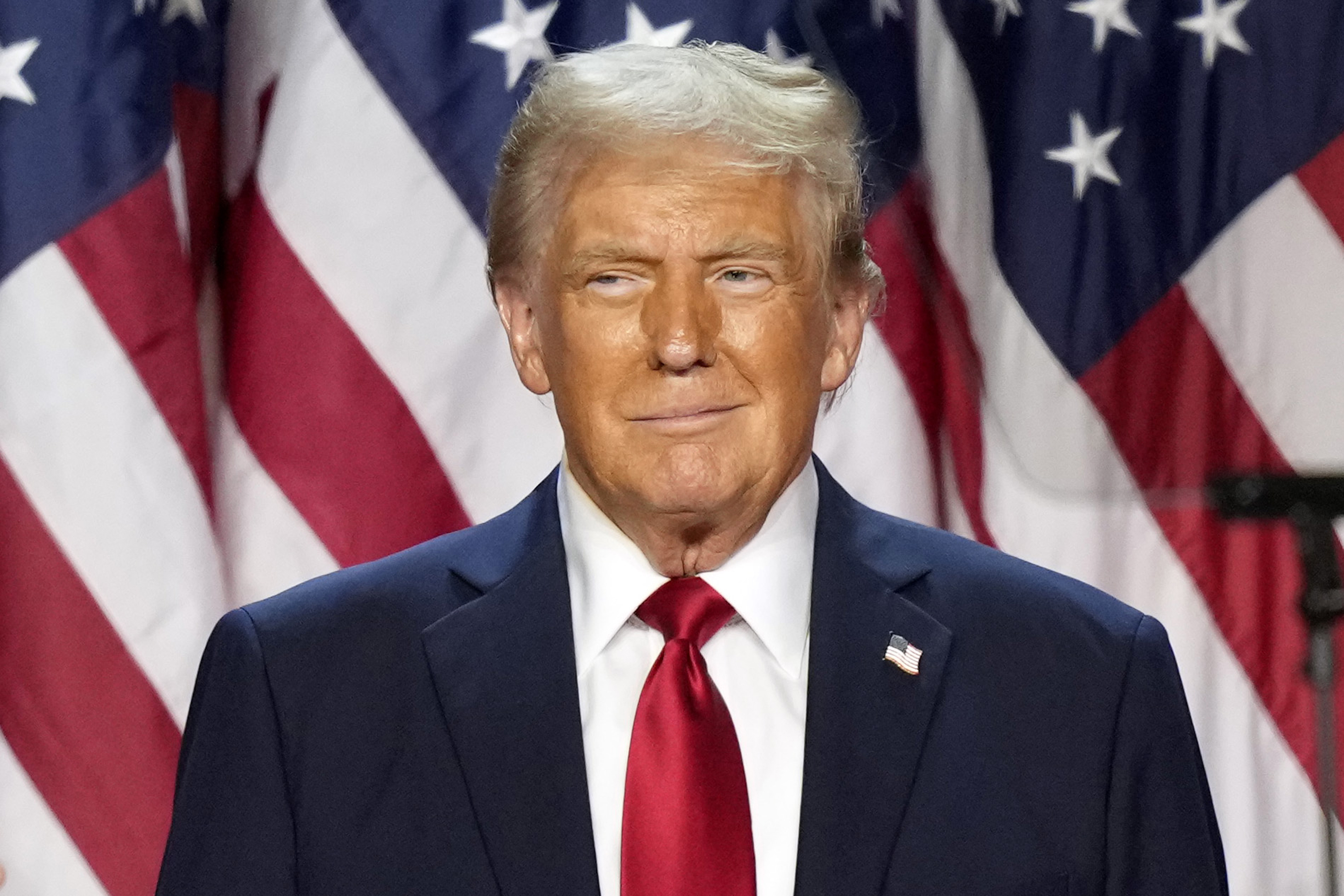
In addition to pushing for criminal investigations, Trump urged the Internal Revenue Service to revoke the tax-exempt status of organizations suspected of supporting terrorism — a process added to the agency’s arsenal to fight terrorism following the September 11, 2001, attacks and meant to root out foreign groups like al-Qaeda and Hamas. The order also directs the IRS to share any suspicious tax filings with the Department of Justice.
“This is a war on all fronts,” said Jeff Tenenbaum, a lawyer who represents nonprofits.
Under current law, the IRS can revoke a group’s tax-exempt status if it doesn’t provide tax filings for three straight years or after an extensive — and private — audit that can be challenged by the nonprofit. A third way is to invoke 501(p) of the tax code, which allows for immediate suspension of a group’s nonprofit status if it is designated as a terrorist group.
“It’s instantaneous,” Tenenbaum said. “There’s no right to go to court and challenge it. It doesn’t require an audit. We have seen the administration take some pretty aggressive interpretations of existing law, and I would not be shocked to see that done here.”
More Lawsuits
But taking that course of action would surely invite legal challenges, says Jason Blazakis, director of the Center on Terrorism, Extremism, and Counterterrorism at the Middlebury Institute of International Studies.
For more than a decade, Blazakis was director of the Counterterrorism Finance and Designations Office in the State Department’s Bureau of Counterterrorism. In that role, he helped determine which groups met the requirement for being designated a funder of terrorism. Pegging domestic groups, with a few exceptions for organizations that were clearly arms of foreign actors, was verboten, he said.
“It was always a no-go,” he said, explaining that 501(p) specifically addresses foreign groups and that going after domestic organizations would run afoul of the First Amendment, something Blazakis thinks would hold considerable sway in court.
“Even with the alignment of the courts today, I am very skeptical,” he said. “This is an issue that even conservatives are going to have significant concern about.”
Without an official terrorist designation, however, the Trump administration may go after the tax-exempt status of foundations it sees as adversaries, said Ellen Aprill, professor of tax law emerita at Loyola Law School Los Angeles.
She pointed to a March executive order in which Trump said the government would exclude people who work at organizations that help undocumented immigrants or transgender minors from qualifying for the Public Service Loan Forgiveness Program. The U.S. Department of Education followed up with a proposed regulation to enforce the executive order on the basis of the IRS’s “illegality doctrine,” which forbids taxpayer support for groups that substantially engage in illegal activities.
But Aprill said there isn’t a well-established definition of what “substantial” means. That lack of a clear definition protects a foundation if money it provided through a grant contributed, indirectly and without their guidance, to an illegal act.
Last week’s Trump memo is also troubling, according to Aprill, because it directs the IRS to provide the Department of Justice with tax information on groups or individuals it suspects might support violence. Under IRS code, the agency may share such data only in certain circumstances, such as to state tax agencies or under a court order.
Aprill is not confident the IRS will safeguard information nonprofits and donors file with the agency. She noted that the agency’s staffing has been gutted, following personnel cuts by DOGE earlier this year and droves of staffers leaving after DOGE attempted to gain access to taxpayer records.
Currently, the IRS does not have a permanent general counsel, and U.S. Treasury Secretary Scott Bessent, who earlier in his career worked for George Soros’s financial services firm, is in charge of the agency until a permanent commissioner can be confirmed by the Senate.
“The Treasury secretary is a pretty busy person,” Aprill said. “I don’t know how much oversight is possible.”
Board and Partisan Issues
Even if the Trump administration pulled the tax-emempt status of Open Society Foundations, its founder, George Soros, would still have options, said Leslie Lenkowsky, professor emeritus of public affairs and philanthropic studies at Indiana University. He could make direct gifts to charities or he could take actions that don’t qualify for favorable tax treatment, such as donating to a 501(c)(4) or investing in a mission-related business.
Perhaps a bigger menace, Lenkowsky said, is the possibility of being criminally charged under the RICO statutes, which could lead to the forfeiture of a foundation’s assets and zero out grant making.
That threat, he suggested, should set off alarm bells among foundation boards because trustees could be “roped in” and held responsible for illegal acts beyond their control. With RICO, established to catch members of the mafia, prosecutors can broadly interpret a person or organization’s involvement in an illegal scheme even when there is no direct evidence.
“It holds people liable for the actions of others who are several points removed,” he said. “You don’t have to have a smoking gun.”
Lenkowsky hopes more conservatives like him speak out against the administration’s effort. But he said donors on the right need to strike a delicate balance lest they spoil a chance to work on an issue, like education, where they agree with the administration’s aims.
DonorsTrust’s Bader agreed. He pointed out that during the debate this summer over broad tax policy, conservatives were essential in beating back a proposed excise tax increase on foundation investments. The proposal was stymied, Bader said, not through big public excoriations but through back channels.
Although the debate over domestic terrorism and targeting progressive foundations is much broader, Bader said he was aware of several conservative leaders representing think tanks and philanthropy who are privately making the case to elected officials.
“There’s a fine line between speaking publicly about something but also allowing that private conversation to take place,” he said.
Should leadership in D.C. change direction, and liberals like Democratic Rep. Alexandria Ocasio-Cortez ascend in power, Lenkowsky fears that Trump’s aggressive stance against progressive foundations will come back to haunt foundations that tilt to the right.
“We know what Trump doesn’t like,” he said. “What might President AOC not like?”