U. of Florida Spurs Big Gifts With a Sense of Urgency

By Drew Lindsay
Contributor
November 1, 2017 | Read Time: 4 minutes
The University of Florida’s most recent campaign is placing a big bet on big donors.
It is the institution’s fourth campaign in about three decades, and so far, each has roughly doubled the total raised from the one before — from nearly $392 million to $851 million to $1.7 billion. The new effort aims to continue this hot streak, with a goal of $3 billion or more.
Three years into the eight-year bid, Florida (No. 111) is well on its way. Even before the launch of the campaign’s public phase last month, Florida had raised more than $1.3 billion. Last year alone, it netted 73 gifts or pledges of $1 million or more.
The engine behind the continued hypergrowth is a mix of moxie — a pitch to donors that they can help save the world — and a promise that their money will be put to work fast.
Typically, a university raises money based on the needs and priorities of its individual colleges and units. Florida’s campaign is doing that, but it is also pitching donors on plans to tap multiple parts of the campus and tackle big societal issues — what Tom Mitchell, the university’s vice president for development, calls “grand challenges.”
Florida’s first challenge is focused on early-childhood development and learning. “Starting Ahead, Staying Ahead” opened with a February convening of more than 100 scholars, advocates, and policy makers. Now donors are being asked to fund five colleges at the university to pursue interdisciplinary programs and research that aim to ensure that children are ready for kindergarten.
This emphasis on impact has attracted donors who aren’t alumni and who otherwise would have little reason to give to the university, Mr. Mitchell says. “They have passion about the challenge that you’re trying to solve,” he says. “It really has very little to do with them giving to your university; it has more to do with them giving through your university.”
The second of what will be several campaign challenges may focus on “mysteries of the brain.” It would fund work at the university’s hospital, medical school, and colleges of engineering and liberal arts, among others.
Incentive Funds
Florida has also found success in a new tactic that adds immediacy and competition to the often slow-moving process of raising funds for endowed department chairs and professors.
Faculty often do not receive their endowment funding immediately after a gift is made; donors sometimes fulfill pledges over several years, and funding for the professor’s work increases incrementally as the gift’s principal grows and spins off more interest.

- Philanthropy 400 Special Report: Top Charities Appeal to Impatient, Policy-Minded Donors
- Fidelity Charitable Tops United Way for 2nd Year in a Row in the Philanthropy 400
- Social-Service Groups Fight to Reverse a Slide in Donations
- Digital Connection to Children Helps Compassion International Retain Donors
Florida’s provost office established a fund that awards faculty members full funding on the very day donors sign their gift agreement. On an endowed gift of $1 million, for instance, the professor would immediately receive $40,000, or 4 percent of the gift, regardless of how long the donor takes to make good on his pledge. That full funding is guaranteed for up to three years.
University officials say this scheme is spurring interest among donors, particularly at a time when college endowments are facing scrutiny outside higher education. Contributors like that their pledge triggers the release of other money that has instant impact on researchers’ work.
The provost is making only limited funds available, so both fundraisers and donors have reason to move fast. “It provides a sense of urgency,” says Cammy Abernathy, dean of the university’s engineering school. “It gives people a reason to say, ‘I’m going to do it now as opposed to waiting until I accumulate the money.’ ”
Ms. Abernathy says the prospect of getting full endowment funding immediately also has helped her attract top-flight researchers. “If you have an idea and you have to wait three years to test it out, you’re probably too late,” she says.
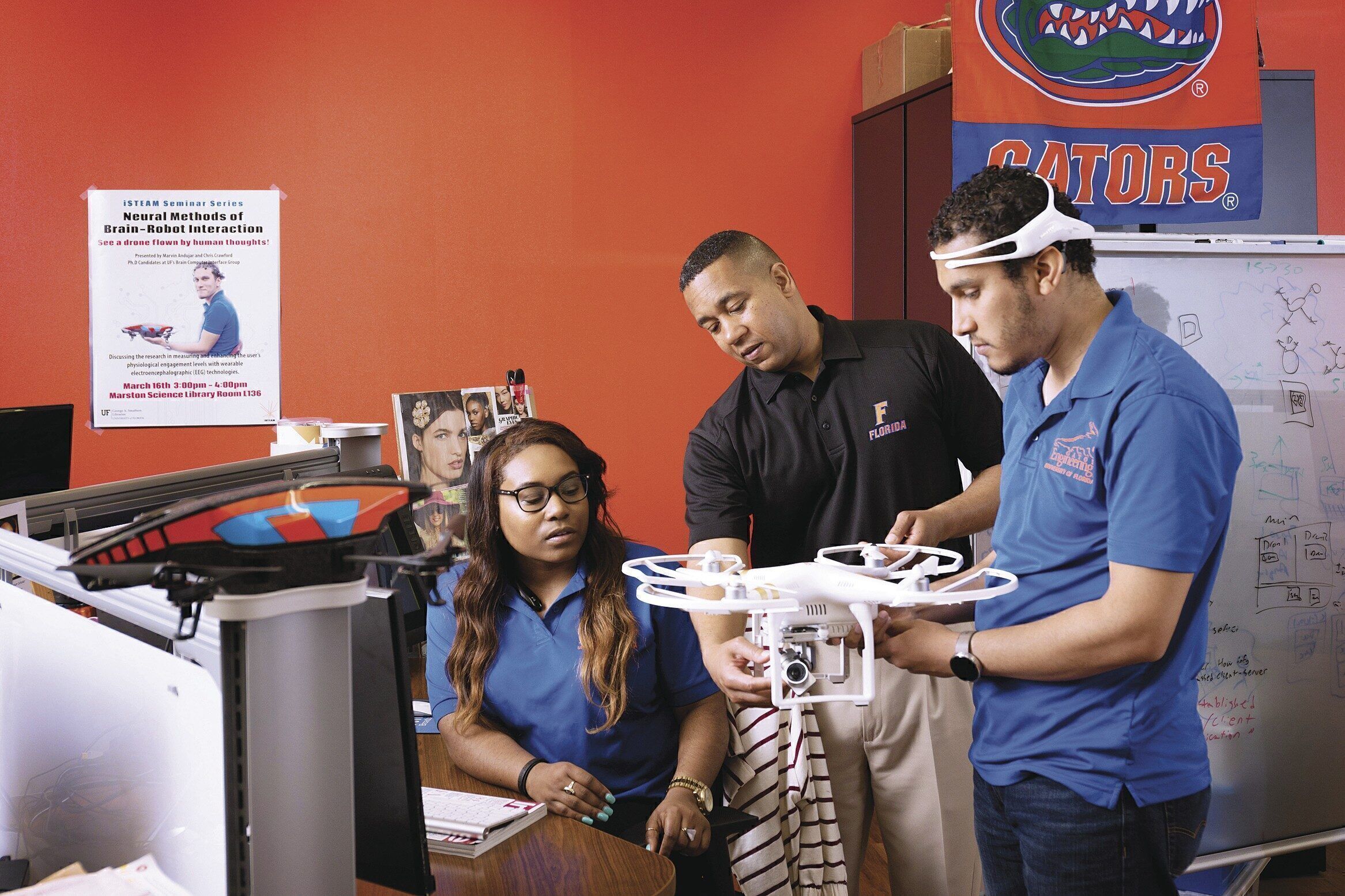
One of Florida’s prized faculty recruits is computer scientist Juan Gilbert, who was lured from Clemson University three years ago. Mr. Gilbert, an expert in brain-controlled robotics, got special funding from his endowed chair that helped his work with New Hampshire officials to test a voting machine he designed for people with disabilities. That machine is now used statewide.
“The future of voting in the United States now goes through the University of Florida,” he says.