Arthur M. Blank Foundation President Fay Twersky Set to Retire
Twersky shepherded the Blank family through a period of accelerating and rethinking some of its grant making.

By Maria Di Mento
Senior Editor
May 19, 2026 | Read Time: 6 minutes
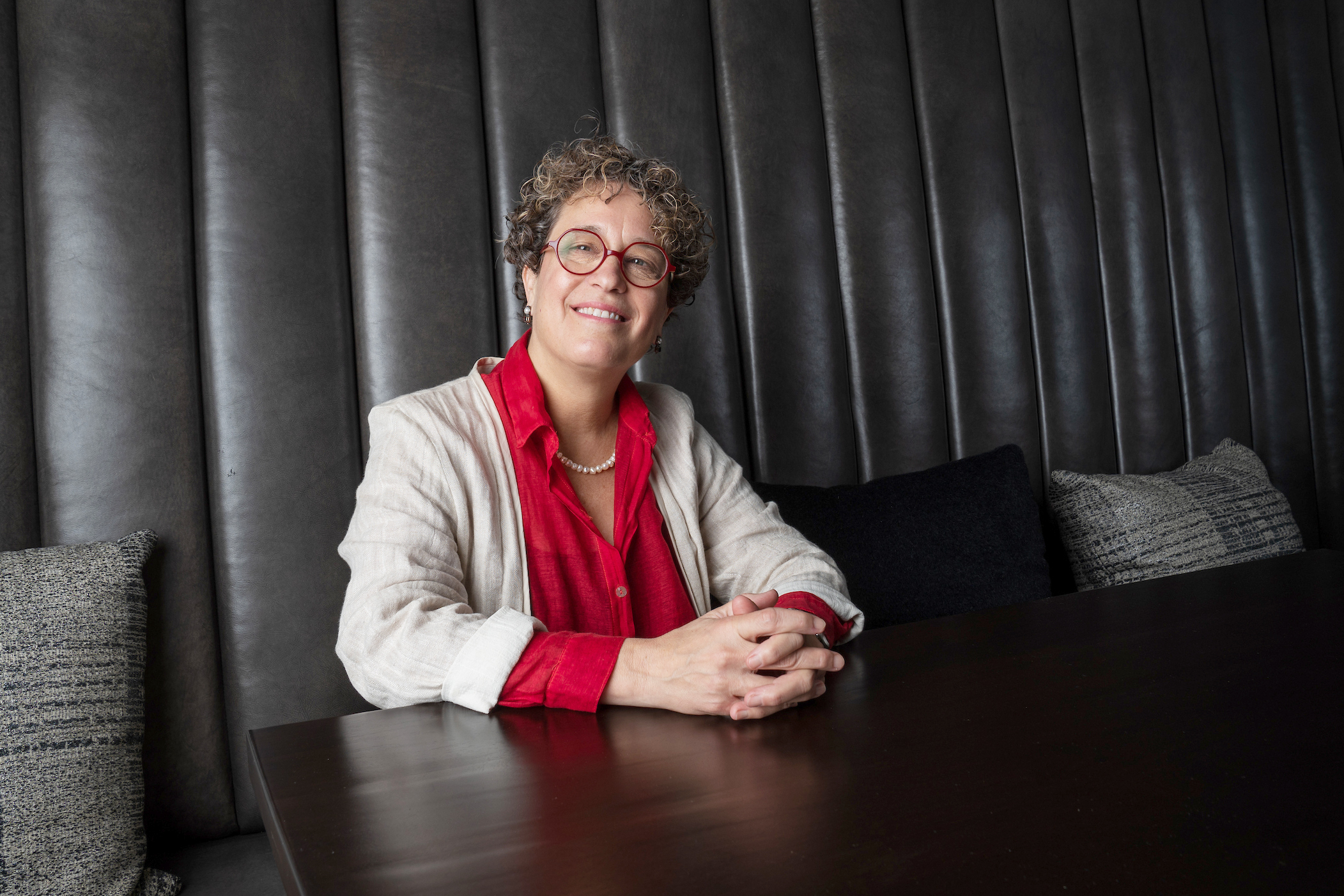
After a long career in leadership positions at some of the most consequential foundations in the country, Fay Twersky, president of the Arthur M. Blank Family Foundation, is retiring, the foundation announced on Tuesday. Twersky has served as president of the Blank Foundation since February 2021, when she was hired to help the Atlanta billionaire and his grown children ramp up their grant making. Twersky told the Chronicle she does not plan to step down until the Blank Foundation finds a suitable replacement, which could take anywhere from six months to a year.
After more than five years leading the Blank Foundation, Twersky said the grant maker is in a strong position and carrying out the plans she helped put in place several years ago. Now the time is right to hand the reins of the Atlanta grant maker to a new leader.
During her time at the foundation, Twersky led the family through a process of intense learning about different causes that helped them ultimately choose five core giving areas — democracy, the environment, mental health and well-being, youth development, and efforts to help families in Atlanta’s Westside neighborhoods, considered the cradle of the Civil Rights movement, thrive. She also hired experts to lead the new focus areas.
“One of Fay’s greatest strengths has been her ability to truly understand me, my family, and the spirit of our family foundation,” Arthur Blank wrote in an email. “She knows philanthropy is deeply personal, and she honors that in every decision she makes. At the same time, she has helped us evolve, while encouraging us to think more boldly and deepen our commitment to the communities we serve.”
A Billionaire’s Family Foundation
The 83-year-old Blank started the foundation in 1995. It does not have an endowment; instead, Blank puts money into the foundation each year to give away. To date, the grant maker has disbursed more than $1.5 billion to nonprofits, primarily in Georgia and Montana.
Blank co-founded the Home Depot chain of home-improvement stores in 1978 and retired from the company as co-chairman in 2001. He owns the Atlanta Falcons football team, PGA Tour Superstore, several resorts, and other businesses. Blank signed the Giving Pledge in 2012 and said in 2020 that he planned to give 99 percent of his considerable fortune to his foundation. Forbes pegs Blank’s wealth at roughly $10 billion.
When he hired Twersky in late 2020, Blank told the Chronicle he was impressed with her deep background working for foundations he considered “game changers” and her accomplishments at those organizations. He wrote in an email this week that his family’s foundation is now “stronger and better prepared for the future because of her.”
The foundation has given multi-million dollar grants to a range of causes, including last year a 10-year, $50 million commitment to Atlanta HBCU gap scholarships, which aim to increase the number of students graduating from historically Black colleges and universities in Atlanta. In 2024, it awarded grants of $1 million or more to a community wellness center in Montana, clean energy solutions for Native American tribes, the Atlanta Police Foundation’s controversial training center, and the National Center for Civil and Human Rights in Atlanta, among others. In 2020, it announced a $200 million gift to Children’s Healthcare of Atlanta to help create the Arthur M. Blank Hospital.
Bringing Foundation Leaders Together
Before becoming president of the Blank Foundation, Twersky spent 10 years at the William and Flora Hewlett Foundation, where she helped launch Hewlett’s Effective Philanthropy Group, which guides Hewlett’s grant making strategy and evaluation and leads its efforts to build a stronger philanthropic sector.
It was also at Hewlett where in 2014 she created the Fund for Shared Insight, a pooled fund that brought together dozens of foundations, including Ford, Hilton, Packard, and others. The fund, which ends its work next month, gave a total of $41.2 million in grants to help foundations and their grantees develop “feedback loops” to learn more about the people they serve and to share grant making lessons with other foundations.
Twersky was masterful at bringing foundation leaders together, keeping them on track, and giving them the space they needed to design the effort, said Hilary Pennington, who was Twersky’s co-chair the first year of the program.
“Very often when people do foundation collaborations, the one who starts it has all the ideas and it’s pretty well baked before they invite anybody else in, and she’s the opposite of that,” said Pennington, a former Ford Foundation executive. “She has an idea and a very clear vision, but she brings everyone in to co-create, and she has genuine respect for everyone around the table and an understanding of different motivations. All of those things made her really effective.”
Serving Community
Before joining Hewlett, Twersky served as an adviser to the managing director of the Rothschild Family Foundation, and she was a member of the leadership team at the Gates Foundation, where she co-founded YouthTruth, a national survey project that gives school students a chance to provide feedback to help education funders and school leaders make better decisions.
Twersky has an acute awareness that wealthy donors and foundations are surrounded by people who are inclined to tell them what they want to hear, said Phil Buchanan, president of the Center for Effective Philanthropy, who worked with Twersky on the creation of YouthTruth. She viewed that kind of insularity as an impediment to good grant making. Twersky, he said, has a gift for bringing people with different desires and ideas together to talk in a way that gets them out of their own bubbles and aligned on common goals.
“She is somebody who’s very good at hearing multiple perspectives in the course of a conversation, really listening, and then saying back to folks what the common threads are in a way that makes them feel like there are common threads that maybe they hadn’t noticed before,” Buchanan said. “She’s good at finding the common ground among diverse people with diverse perspectives.”
Twersky has always enjoyed bringing grant makers and philanthropists with different viewpoints together to find commonalities. Any foundation leader needs to be able to understand donors’ and grant makers’ different perspectives — the ideas that animate their giving — and help them collaborate with family members or colleagues to support the causes they care about, she said.
“I’ve always strived to balance serving the family and really understanding what are their animating values and passions and how can I help bring those to life but also serving community and making sure that we’re listening to community, responding to their needs, understanding the issues we’re working on, so always balancing all sides,” Twersky said. “I think that’s what any leader in a family foundation has to do to be successful.”
Note: The Arthur M. Blank Foundation, Ford Foundation, William and Flora Hewlett Foundation, and Conrad N. Hilton Foundation are financial supporters of the Chronicle of Philanthropy.