3 lessons from 9/11 that can help philanthropy defend democracy
Funders were slow to stand with communities under attack, trapped by silos, and focused on safety rather than helping communities flourish. Those mistakes are repeating now.

By Dimple Abichandani
Contributor
September 11, 2026 | Read Time: 6 minutes
Twenty-five years ago, I was walking into a Brooklyn subway station in a jet-lagged haze when a woman grabbed my arm, yelling, “Don’t go. Terrorists have flown planes into the World Trade Center.” I assumed she was crazy.
I had just returned from the World Conference on Racism in Durban, South Africa. I had gone there to learn more about the social movements that were fighting for economic, social, and cultural rights — rights that the United States had been slow to embrace. I returned inspired and hopeful that we could forge a new path toward these rights at home.
The next morning the world changed.
The attacks on 9/11 killed nearly 3,000 people, and in New York City, it seemed that we all knew someone lost that day. In the days, months, and years that followed, we lost so much more as the “war on terror” rolled back human rights that we in the United States had long taken for granted. For Black, African, Middle Eastern, Muslim, and South Asian communities, the impact of this erosion was profound.
Today many experts agree that America’s democracy is in decline. What is less often understood is the extent to which this decline has its roots in the post-9/11 period. As we mark this 25th anniversary of the devastating attacks in New York, Pennsylvania, and Washington, D.C., here are three lessons from philanthropy’s response that can strengthen our work today to secure and protect a multiracial democracy:
We missed a critical window to stand with and fund communities under attack.
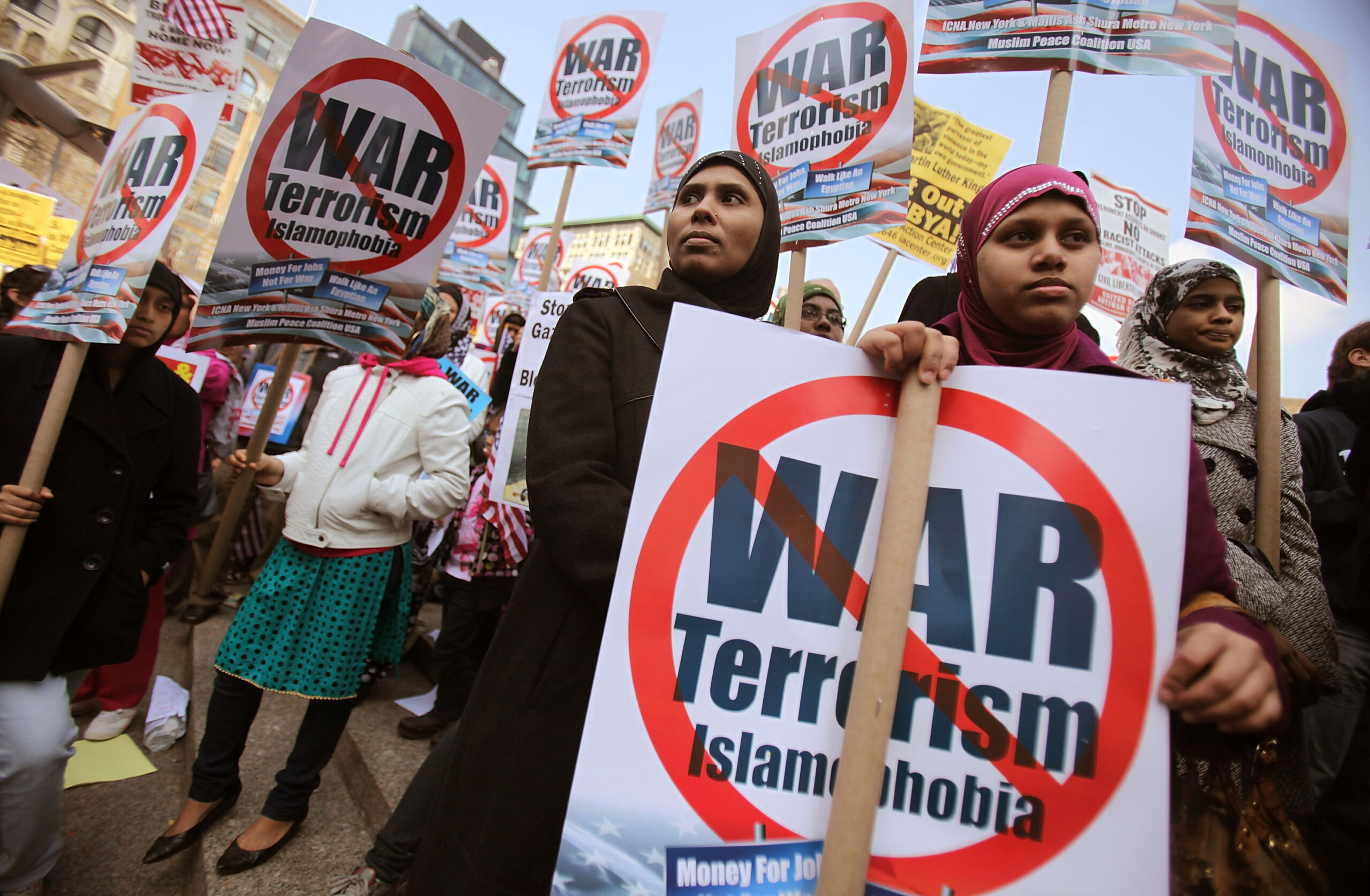
In the wake of 9/11, anti-Muslim hate crimes reported to the FBI jumped 17-fold, and advocacy groups tracked thousands of incidents of harassment, discrimination, and violence against Arabs, Muslims, Sikhs, and South Asians. War on terror policies treated our communities as suspect — subjecting us to surveillance, criminalization, and scrutiny. The federal government even froze the assets of some Muslim charities, chilling giving by American Muslims in accordance with their faith.
Large national funders gave to legal and policy organizations defending civil liberties, but few invested in organizations supporting communities targeted by the post-9/11 backlash. An exception was the Bay Area collaborative Civic Engagement Fund established in 2006 by Asian Americans/Pacific Islanders in Philanthropy to fund organizations that worked to aid people affected by war on terror policies and hate. It was not until seven years after the 9/11 attacks that I was hired to build the first national pooled fund, the Rise Together Fund, to support Black, African, Arab, Middle Eastern, Muslim, and South Asian organizations. While national funders were waiting to act, the crisis for people across the United States was intensifying.
We can still see the ripple effects of this underinvestment. Two decades after the war on terror began, its infrastructure persists: the surveillance systems, the legal groundwork, the politics of “othering.” Today these tools have been repurposed and used against immigrants, protesters, nonprofits, and foundations. Then and now, the fastest way to deny someone due process and human rights is to label them a “terrorist.” A sign of rising authoritarianism today is the expansion of post-9/11 anti-terrorism laws to chill protected free speech and dissent.
Policies enacted after the 2001 attacks threatened not just the safety of Muslims or Sikhs but the safety of everyone. Providing early funding to organizations that serve anyone whose rights and freedoms are targeted will stem a tide of hatred that is headed for all of us.
Philanthropy’s silos kept us from seeing and funding what was needed.
As funders, we too often see the world around us through the lens of our grant-making strategies and respond only to the needs that fit in our narrowly crafted silos.
As I was building the Rise Together Fund, I often heard from funders that our work was important but did not fit their existing grant-making portfolio. The racial justice funders sent me to the immigration funders, who suggested that I speak with the democracy funders, and on and on.
Meanwhile, right-wing activists were working to codify discrimination and hate, and by 2011, 26 states had introduced anti-Sharia law bills. These measures were testing whether Islamophobia could draw voters out to the polls. They found an answer in Oklahoma, when 70 percent of voters approved a ban on Sharia law. In December 2015, candidate Donald Trump called for a “total and complete shutdown of Muslims entering the United States.”
Philanthropy failed to see these connections between hate, immigration, racial justice, and our multiracial democracy. Donors saw a narrow issue related to Islamophobia rather than seeing a threat to pluralism and democracy itself.
Our democracy lives and dies at the margins. We must understand the times we’re in — and respond to them — by seeing and funding beyond our narrow program strategies, to the real needs of communities under attack. If we want a vibrant multiracial democracy, we must loosen the grip of our silos and move resources quickly when democracy comes under attack.
We funded for short-term safety when we should have funded for long-term flourishing.
In the early years of the Rise Together Fund, we became a de facto rapid-response fund because every breaking terror threat raised the likelihood of hate crimes and attacks. It was a heartbreaking time. If you had asked me then what success looked like, I would have said safety. My hope was that our funding increased the likelihood that people could go to school and fly and pray at a mosque or a gurdwara without fear of being profiled, surveilled, attacked, or killed.
Today, I look back and see my own failure of imagination. I understand now that safety is the floor and that our communities deserve to flourish. We need funding that moves organizations and the people they serve beyond dealing with crises to enabling them to build a thriving future. That means offering flexible, long-term funding, investing in young people, building leadership pipelines, bolstering narrative and culture change work, and, most important, financing community-led work that builds people’s power and voice in the decisions that shape their lives.
As a growing number of funders today look for ways to respond to attacks on U.S. democracy, we can take forward these lessons from the response to 9/11 and fund today with greater urgency, interconnectedness, and imagination. Doing so is essential to building a future that allows everyone to thrive.
Dimple Abichandani is a philanthropic adviser and the author of “A New Era of Philanthropy.” She was founding director of the Rise Together Fund, a donor collaborative that distributes funding to nonprofits fighting Islamaphobia.