
How Code.org is reinventing itself for the age of AI
The group notched huge wins for a decade before AI changed everything about computer science. Now the group has a new leader and a new name and is rethinking much of its work.

By Rebecca Koenig
Contributor

August 11, 2026 | Read Time: 12 minutes
Since its founding in 2013, Code.org has been a darling of tech leaders and big foundations. It launched with a video starring Bill Gates, Mark Zuckerberg, and other tech titans describing the promise of digital skills, and it raised $12 million in its first year.

Its influence since then has been profound. It helped change 300 policies across 50 states that expanded computer science education. It reports that its curricula and tools have reached more than 150 million students across 190 countries. Lessons tied to its Hour of Code campaign, a 60-minute introduction to computer science, have been completed 2 billion times, according to Hadi Partovi, a Microsoft alumnus who co-founded the nonprofit with his brother. (The pair put in $2 million of their own money; revenue surpassed $40 million in 2023.)
“We brought presidents and prime ministers, even the pope, celebrities, tech leaders, all to the table — but, most important, 3 million teachers — to say, ‘This should be taught in our schools,’” says Partovi, who is now the nonprofit’s board chair.
Donors endorsed the approach. Code.org raised funds from heavyweights like the Gates Foundation and Omidyar Network and corporations including Microsoft, Amazon, and Google. Harvard Business School published a case study on its growth.
But now AI threatens to upend that success. The increasingly ubiquitous technology has left educators uncertain how to proceed. Coding, once considered a clear career path to a better future for students and job seekers, is less of a sure thing, as tech firms cut staff by tens of thousands. Meanwhile, some experts are calling for a more critical and evidence-based approach to educating youths about technological change — one less influenced by tech companies that stand to profit from acquiring users.
All of this raises existential questions about Code.org’s mission and strategy, even as the group leans on the core principles that informed its previous successes. In 2025, it added more lessons about AI to its portfolio. In January 2026, as it shifted its strategy and aimed for stronger financial sustainability, it laid off 18 employees. The following month, it tapped a new chief executive to explore models for earning revenue. And in June, it announced a new name: CodeAI.
Today, the gusts of innovation once at Code.org’s back now are headwinds CodeAI has to overcome. Despite the uncertainty and changes in the tech world, it has already reached millions with its new AI materials. As it moves forward, it is hewing to a familiar notion: that kids should understand the digital world as well as they do the physical world to make them savvier, more responsible tech consumers.
CodeAI’s experience offers lessons for other nonprofits grappling with sweeping change. It is discovering that one era of success doesn’t guarantee another, especially as the public has become increasingly skeptical of AI. It’s also learning that a wave of innovation can suddenly populate a once-comfortable playing field with new competitors.
“We’re all beginners again,” Karim Meghji, the new CEO, says. “We have to be a little bit, in this moment, humble, and realize we don’t know everything there is to know and the field is moving very fast.”
Growing a movement
When Code.org started, scaling computer science education was the nonprofit’s central goal. Enrolling students in courses, signing up teachers for training, and changing state education policies were clear, quantifiable goals. There was “really almost no competition” for doing that work, Partovi recalls.
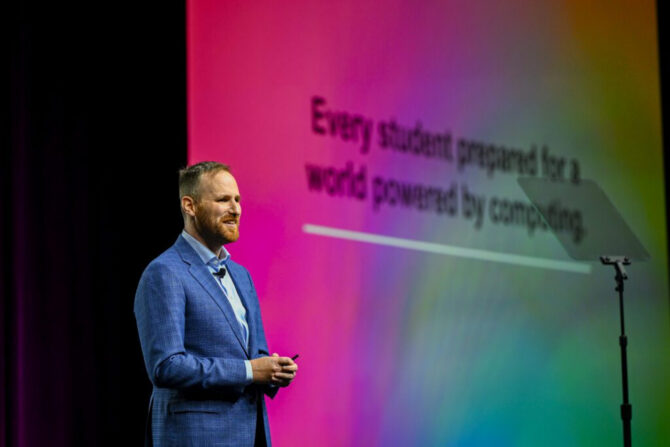
In 2010, when Jake Baskin started teaching computer science in a Chicago high school, he recalls being one of just a few such educators in the city’s public school system.
“It was lonely,” says Baskin, who later worked for Code.org and now is the executive director of the Computer Science Teachers Association. “There was no one else in my school who was teaching computer science. At that time, there were not even formal standards.”
To address this gap, Code.org ran marketing campaigns calling for more computer science education. It also lobbied for policies that required more instruction in schools, accomplishing both its advocacy mission and creating demand for new learning resources that it then provided largely free, backed by tech companies and donors.
Since its launch, computer science has become a mainstay of U.S. education. The share of public high schools offering foundational computer science courses increased from 35 percent in 2017 to 60 percent in 2025, according to Code.org. The number of computer science bachelor’s degrees from 2008 to 2024 increased fivefold, per a Washington Post analysis.
Yet some competitors questioned its efficacy. And critics were bothered by what they saw as a level of self-interest among the group’s corporate donors, which stood to benefit from an emergent wave of young tech workers or were interested in selling their products to schools. “What is the right level of exposure we should allow technology companies to have in our schools?” asks Justin Reich, associate professor and director of the Teaching Systems Lab at MIT, who studies the history of education technology.
As Code.org became dominant, questions of speed and growth revealed clashing priorities between the nonprofit’s donors and the teachers and students it proposed to support. The rapid scaling that gave it a competitive edge when it launched aligned well with the “move fast and break things” ethos of Silicon Valley. But that approach attracted criticism from within education.
Elizabeth Bacon, a former Code.org employee, now teaches computer science at a middle school in Los Angeles. When she joined the organization in 2016, she was excited to help it develop curricula that would quickly reach huge numbers of teachers and students. “I thought, ‘It can scale,’” she says. “I thought like a tech person, not like an education person.”
But now, as she wraps up her first year back in the classroom after years working in edtech, she’s grown disillusioned with lofty ideas about disrupting the status quo with solutions dreamed up by the tech world rather than by teachers.
“Scaling and efficiency: It oftentimes is an answer to an unwillingness to properly resource our schools,” she says. “Education is about relationships. It’s OK if I work really hard at a curriculum and it’s for the 20 kids in my classroom.”
She calls her former employer’s name change and embrace of AI as “a gift to the technology industry.”
Partovi, for his part, has said that his organization maintains an “independence layer” between schools and tech companies and makes it clear that “we are not a conduit for putting your technology into schools.”
AI disrupts … everything
By 2022, computer science education “was in a really strong place,” Baskin says. Then, seemingly overnight, everything changed. Artificial intelligence spread like a weed, threatening the premise of coding classes.
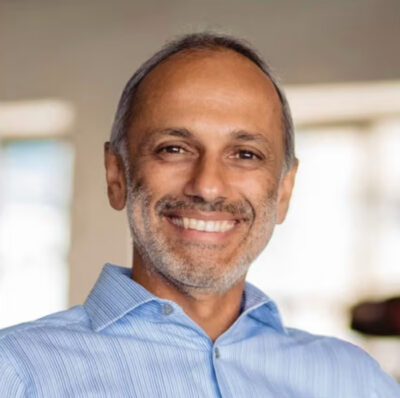
Suddenly, one key value proposition — that learning to code would result in solid careers — faltered, and some funders shifted strategies. The computer science-era of funding gave way to the AI-era of funding, Meghji says.
“What funders are doing is, they’re focused on the ‘urgent,’” Meghji says. “The ‘urgent’ being work-force skilling — ‘How do we take our high school students and postsecondary students and prepare them better for the world that they’re going to step into?’”
But it was hard to know how to teach about artificial intelligence. AI education was so freshly hatched, it didn’t have pedagogy, parameters, or even a name: Was it “AI literacy,” “digital fluency,” or “AI engineering”?
Code.org was “picking up AI at a moment that is different from when they were picking up computer science,” Reich says. “Do you know how to train a new engineer? The answer was yes. That knowledge is not codified for large language models yet.”
Code.org’s revenue peaked in 2023. That year was an outlier, the group says, thanks to six multiyear gift commitments as well as an influx of federal COVID-19 relief dollars. But by 2025, it reported only $25 million in revenue, closer to what it was bringing in at the beginning of the decade and $6.6 million less than it spent. A spokeswoman for the nonprofit said that it dipped into its reserves to create new courses about artificial intelligence, as well as AI-powered teaching-assistant and tutoring tools.
The group’s big supporters encouraged a new AI focus with all the goofy bravado of a mainstage tech product launch. In July 2025, during an interview with Partovi in front of a live audience, Microsoft vice chair and president Brad Smith pointed out Partovi’s hat bearing the Code.org logo. Smith put on a hat of his own. “The last 12 years have been about the Hour of Code,” Smith said — a reference to the phrase on his hat. Then Smith took off that hat to reveal another one hidden beneath it. “But the future involves the Hour of AI,” he said with a grin — those words displayed prominently on his second hat.
The hat switch foreshadowed bigger changes. Six months later, in January 2026, Code.org laid off about 14 percent of its staff. In February, Partovi passed the reins to Meghji, who had been the organization’s chief product officer.
The leadership change has not interrupted its close connection with Microsoft, says Patrick O’Steen, director of K-12 partnerships and community at Microsoft Elevate, a $4 billion initiative aimed at integrating AI into education, work-force programs, and nonprofits. The group’s new focus on AI literacy and AI fluency is “very much in line with our work here at Microsoft,” he says. “We’re excited to continue to be in partnership with them” through funding, technical support, and employee volunteering.
Microsoft gave Code.org more than $35 million over the past dozen years, according to the group. In July 2025, Microsoft announced plans to donate “more than $4 billion in cash and AI and cloud technology to K-12 schools, community and technical colleges, and nonprofits to help advance their missions” over five years. The company declined to say how much of that will go to CodeAI.
The Chronicle reached out to several other supporters of CodeAI. The Gates Foundation declined to comment, and representatives of the Omidyar Network did not respond to interview requests.
Despite a rich funding environment, Meghji still sees challenges: Demand for education gifts and grants more broadly has outpaced supply, he says. Plus, after 13 years, he adds, some funders expect self-sufficiency.
To that end, Meghji is experimenting with ideas for earning revenue. While the nonprofit historically offered curricula and other materials for free, it may now start selling a work-force-credential pathway with options for college credit; marketing a direct-to-consumer product for families to use at home; and offering school districts subscriptions to learning assessment data products. It is also making plans for staking out territory in schools in India, a significant edtech market.
“Given how fast things are moving, I’m also feeling like funders are not willing to make long-term bets,” Meghji says.
Swimming against the tide?
Funders who do bet on CodeAI are putting their dollars into new and revised curricula that combine how-to programming assignments with more conceptual lessons about how technology works and its implications.
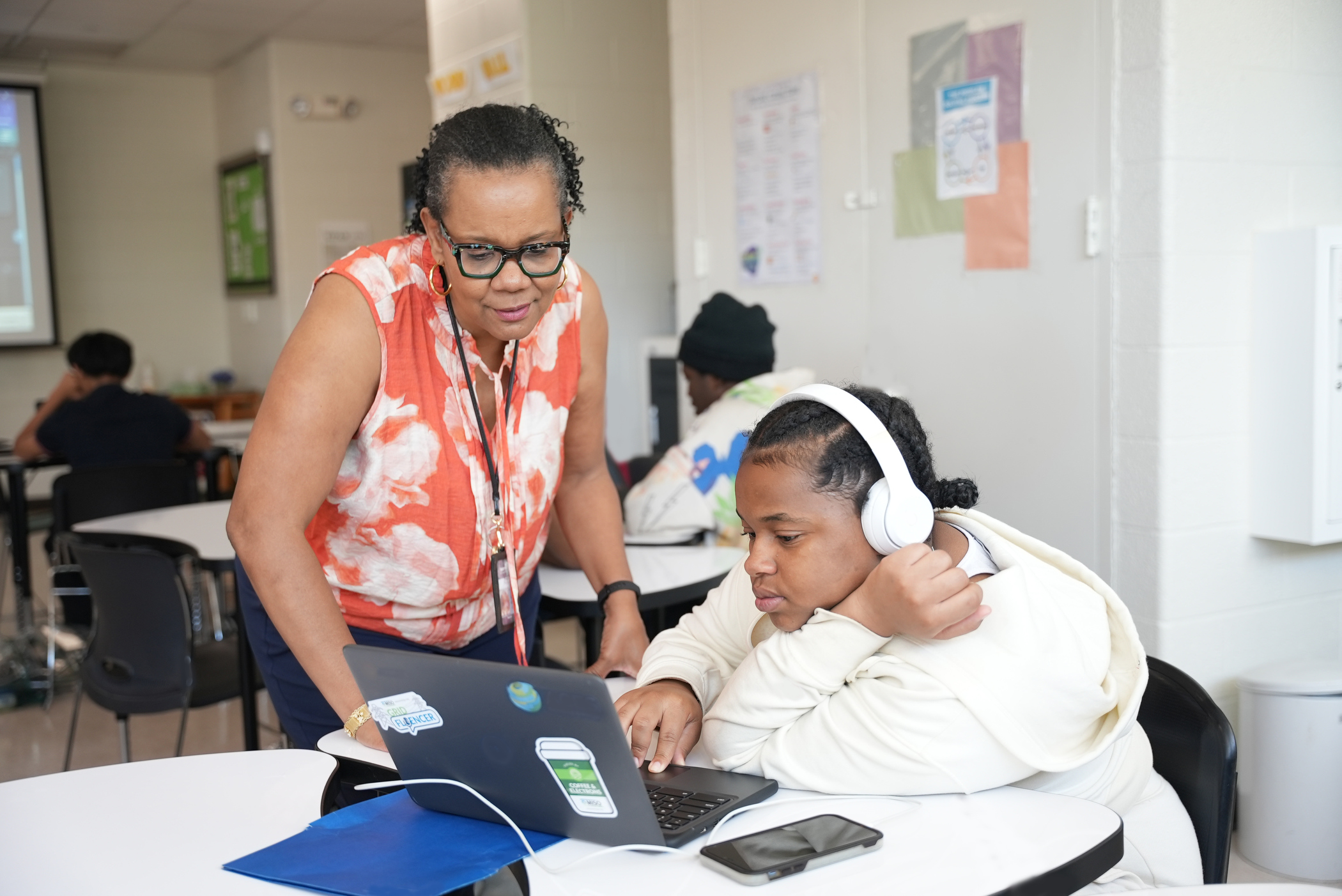
The AI Foundation’s full-year course teaches high school students about large language models and data, then assigns them to use “AI as a creative partner.” The AI Discoveries course, embedded with AI-powered tools for tutoring students and assisting educators, teaches middle schoolers how AI systems are trained, about bias and misinformation, and how to evaluate AI outputs.
As it creates these products, the group is adapting its approach. The social ramifications of technology used to make up a small share of its lessons. With AI, that has to be a much larger component. “I think having these conversions around ethics and responsible use are more important today than they’ve ever been,” Meghji says.
The nonprofit says more than 11.1 million students have used its AI curricula, and more than 36.7 million learners have participated in short activities for the Hour of AI campaign since it launched in June 2025.
CodeAI still has a policy and advocacy team but is re-evaluating its strategy. For example, the high school graduation requirements it championed for years may not be necessary to persuade leaders to prioritize AI lessons.
“With computer science, in many ways, that systemic change was necessary to push the system along,” Meghji says. “The reverse is happening with AI: The system is pulling AI education through.”
All of this comes at a time when the public is increasingly skeptical of AI and tech industry leaders. And there’s a backlash growing against technology in education, with a movement spreading to block the use of AI in classrooms. Plus, more experts are calling for greater accountability, demanding that education nonprofits and edtech companies back up their claims of impact with evidence of improved student outcomes. And the old concerns about donor self-interest are still in the air.
“In the shift from computer science education to this rush around AI education, there’s a much more clear product that is being sold — that needs to be interrogated as well,” Baskin says.
Meghji acknowledges that all of this makes adding “AI” to your education nonprofit’s name a bit of a gamble. “When people say the two words ‘AI’ and ‘education,’ that can mean 17 different things, and we have to be clear on what we mean and what we don’t mean,” he says.
For CodeAI, that means helping students to understand, create with, and even question the technology shaping their lives by educating them with curricula updated and delivered as quickly as AI is evolving. That speed and an increased focus on “the social ramifications and impact of technology” mark a change from the more practical way it taught coding to students.
“If we teach them the technical side,” Meghji says, “they’ll become creators of the technology; they’ll shape it. And we’ll find ourselves in a better place in terms of the world that we live in.”
Reporting for this article was underwritten by a Lilly Endowment grant to enhance public understanding of philanthropy. The Chronicle is solely responsible for the content. See more about the Chronicle, the grant, how our foundation-supported journalism works, and our gift-acceptance policy.