OpenAI Foundation pledges $100 million for medical care
The organization also launched a new department to use advanced AI to help nonprofits solve challenges around the world.

By Maria Di Mento
Senior Editor
August 13, 2026 | Read Time: 6 minutes
OpenAI Foundation is committing $100 million to create a new program that will use AI tools to ensure the latest medical treatments reach the patients who need them most, including those who cannot afford health insurance, the nonprofit announced on Thursday.
The new program, called Breakthroughs to Follow-Through, will work to create health-care infrastructure that can deliver the most advanced care and treatment to patients who need it most. The program is a partnership with the Common Health Coalition, a national nonprofit that brings together clinician groups, state health departments, hospitals, community organizations, and others that work together to connect people to health care.
The foundation also launched AI for Civil Society and Philanthropy, a division that will help nonprofits and others use AI to solve some of the world’s biggest challenges.
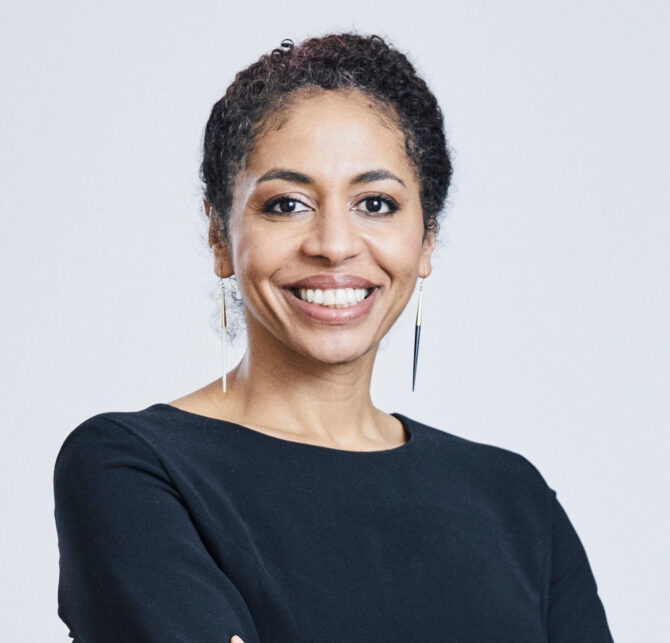
Anna Makanju, whom OpenAI Foundation hired in April to lead the AI for Civil Society and Philanthropy division, said the organization chose this program as the first of the new division’s projects because health care is “one of the areas where we see some of the most promise from these [AI] tools and significant evidence that they’re improving people’s health.”
The OpenAI Foundation is the world’s largest nonprofit. Its assets are based on its 26 percent equity stake in OpenAI, which gives it a current valuation of $180 billion. Though it is called a foundation, it is actually a nonprofit and so is not required to make grants. The group has faced criticism for the relatively small amount of money it has given away so far. However, because its assets are tied to its stake in the privately held company, it has less cash available for grant making than its valuation would suggest.
A $25 billion pledge
The first project of the breakthrough program, which will be overseen and operated by Common Health Coalition, will be directed at doubling hepatitis C cure rates over the next two years. It will start in Alabama, Illinois, Louisiana, and Massachusetts and then add more states in the next six months. Effective treatments for hepatitis C exist, but they’re reaching only a fraction of people who need them.
When left untreated, hepatitis C can lead to irreversible diseases like cirrhosis of the liver and the need for a liver transplant. That places a heavy burden on patients and the health system. Boosting access to treatment can trounce the domino effects of the infection, and it provides a good example of how philanthropic programs can improve people’s health and the health-care system, said Makanju.
The program will use generative AI and other tools to identify patients who have stopped receiving medical care and reconnect them to health care, to strengthen patient-care coordination, and to reduce health-care providers’ administrative workload. The foundation will eventually expand the program’s model to other health-care-related efforts such as preventing HIV, curing cancer, and tackling other diseases and conditions in the future. Leaders at Common Health Coalition plan to assess and measure the impact of the program as it progresses and grows over time.
“This is an ideal partnership because we can make a foundational investment that lets the Common Health Coalition build that infrastructure,” Makanju says. “Once it’s built, it can expand the number of people that can have access to existing interventions that aren’t reaching them.”
The program is the first of many the new division plans to roll out over the coming years and is part of the promise OpenAI Foundation leaders made in March to direct at least $1 billion over the next year across the life sciences and efforts to cure diseases, Makanju says. That $1 billion commitment is part of the $25 billion pledge the foundation’s leaders previously made to support efforts to use AI to accelerate health-care breakthroughs and practical technical solutions to make the most of AI’s benefits and curtail its risks.
In addition to this latest $100 million commitment, the foundation gave nearly $50 million through its People-First AI Fund to more than 200 civic engagement, work-force development, and AI literacy charities late last year. It plans to give another $50 million through the fund this year. Makanju said the foundation will be announcing a range of other new grants in the coming months.
Critics want OpenAI to do more
Critics of the foundation have a number of concerns about how it is structured. They worry that because its assets are tied to the value of the company, the nonprofit’s fortunes could tank if the company’s value tumbles. Many in the nonprofit sector also say the foundation is too closely tied to the company because most of the foundation’s board members also sit on the company’s board.

Members of Eyes on OpenAI Coalition, a watchdog and advocacy group made up of nonprofit leaders, foundations, civil-rights groups, and others, have been calling for the foundation to diversify its assets so it is less reliant on OpenAI’s fortunes.
The foundation’s new $100 million commitment to health care is encouraging and a positive development, said Orson Aguilar, CEO of LatinoProsperity and one of the coalition’s most vocal leaders. But he wants the foundation to go much further.
“Good grant making doesn’t resolve the larger governance question. We want an OpenAI Foundation with a true independent board, the freedom to fund organizations that may challenge OpenAI, and a meaningful commitment to put its enormous charitable resources to work every year,” said Aguliar. “If they were independent, we could see a lot more of these types of charitable activities.”
Aguilar also thinks the foundation hasn’t been transparent enough about its grant-making process and the nonprofits receiving grants. He said he would like to see more such information on the foundation’s website.
Makanju said her team plans to communicate in as much detail as it can about the division’s work and about the Breakthroughs to Follow-Through program. “I hope that this project and the way that we’re going to communicate about it will be responsive to people who have these concerns,” she says.
She wants the project to demonstrate that the group’s partners are determining how technology should be implemented and, she said, “This work is being done independently by the foundation based on priorities that are squarely focused on this mission of making sure that this technology benefits all of humanity.”