4 Ways Philanthropy Can Repair Civic Education
As the nation's 250th anniversary approaches, funders can draw on a proven Illinois model to help schools prepare the next generation of engaged citizens.

By Louise Dubé, Geri Mannion and Ambika Kapur
May 14, 2026 | Read Time: 6 minutes
Keep up with everything happening in The Commons by signing up for our monthly newsletter.
As the nation approaches the 250th anniversary of the Declaration of Independence, our democracy is under profound strain. Fortunately, we hold a powerful tool for democratic repair: placing civic learning back at the center of American education.

This is not a polarizing issue. Ninety-one percent of young people and 70 percent of adults support stronger civic education. Communities nationwide are mobilizing to make the 250th anniversary a moment of civic renewal.
If we act now, today’s kindergartners will graduate in 2038 — the Constitution’s 250th anniversary — as informed citizens ready to navigate both democracy and the economy in the AI age.
Philanthropy’s role is critical. Educators are democracy’s gardeners, but philanthropy prepares the soil, nourishing the networks, infrastructure, and imagination that allow civic renewal to grow.
A Case Study: The Illinois Approach
Illinois offers a strong model for how to build a well-functioning civic education infrastructure. In 2004, the Carnegie Corporation of New York, where Geri and Ambika work, and the Constitutional Rights Foundation Chicago launched the Illinois Civic Mission Coalition. With a modest $10,000 seed grant, they convened educators, funders, and government leaders to design a statewide system connecting classrooms, communities, and state policy to restore civic learning in schools. The Robert R. McCormick Foundation soon joined and later funded the coalition.
After a decade of organizing and advocacy, the coalition’s efforts led to the passage of the bipartisan 2015 Illinois Civic Education Law, which required high school civics courses to include discussion of current and controversial issues, service learning, and simulations of democratic practices such as elections. The program was expanded to middle schools in 2019.
Today a teacher-mentor program provides civic education training to 9,000 educators across the state. A network of 90 schools now participates in the Democracy Schools Initiative, which uses research-based approaches to strengthen the civics curriculum and build school cultures that nurture civic participation. A foundation-supported coalition of nonprofits, educators, and civic institutions is currently working to bring the approach to every K-12 classroom.
Research shows that students who receive civic learning of this kind are significantly more engaged in the democratic process: They are two to three times more likely to vote as young adults, 25 percent more trusting of other people and institutions, and far more likely to discuss controversial issues in a respectful manner. They are also more inclined to volunteer.
4 Ways Philanthropy Can Drive Civic Renewal
So what will it take for an Illinois-level civics education commitment to take hold in states nationwide? Momentum for civic learning is clearly growing. Since 2021, 34 states have adopted 56 pro-civics policies. In 2025 alone, 45 states considered nearly 200 civics bills,73 percent of which align with best practices for the field.
But implementation of these policies has proven more challenging. With the exception of Massachusetts, which paired its mandatory 2018 civics education law with a robust trust fund to support school programs, just 16 states provide dedicated funding for civic learning, and those investments are quite modest.

To ensure civics education policies create genuinely informed and engaged citizens, grant makers can start by focusing on these four areas.
Expanding access to quality civics education. Following the Illinois model, civic learning policies should set clear standards for instructional time, assessment, professional learning opportunities for teachers and recognition of student and school excellence in civics. That recognition should include support for programs that connect aspects of civic learning, such as critical thinking, communication, collaboration, and creativity, to workplace opportunities. All of these efforts should be backed by sufficient dollars to ensure they have a permanent place in classrooms.
Empowering educators. While the public supports stronger civics education by a wide margin, many educators say they feel unsafe teaching even basic elements of democracy because they fear a backlash, particularly from parents. In a recent survey of more than 2,000 civics teachers by iCivics, which Louise leads, nearly 53 percent said teaching fundamental civics concepts now feels difficult, and almost 59 percent said they are concerned about potential repercussions for teaching something the “wrong way.”
Illinois’s teacher-mentor network shows how such challenges can be addressed through the creation of a network of professional learning communities reaching thousands statewide. Under the program, teacher mentors are recruited from every region of the state and provided intensive professional development in how to instruct educators in teaching civics. They then assist with regional workshops that guide educators on implementing civics content in classrooms, including how to facilitate discussions of current and controversial issues in a polarized political environment.
Grant makers can support ongoing professional development through national training programs offered by organizations such as Harvard’s Democratic Knowledge Project, the Center for Civic Education, the Bill of Rights Institute, and the Jack Miller Center. Funders can also encourage collaboration through efforts like iCivics’ Educator Network, a group of several hundred teachers who meet regularly, share insights, and test products and resources. And foundations can help build evidence for the connection between civic knowledge and navigating the AI-driven economy. The skills civic learning develops are highly valued in workplaces, but little research has been done to understand how they encourage economic mobility.
Elevating civics in culture. Philanthropy can help make civic engagement visible, inspiring, and normal by extending civic learning into the culture itself, including by bolstering institutions such as libraries, museums, and local media. Funders like the Mellon Foundation, through its support of state humanities councils, and the Public Media Bridge Fund, with its investments in local public media, have stepped in to fill the gap left by federal funding cuts. But more is needed.
Public media plays a vital role in helping people stay informed and engaged in their communities, but ensuring young people have the skills to navigate that information landscape is critical. Media and digital literacy education provided by organizations such as the News Literacy Project and Poynter MediaWise are foundational to meaningful civic participation and should be expanded through foundation support. Philanthropy should also consider backing specific programming like “Civics Made Easy” on PBS, Sharon McMahon’s “America’s Government Teacher,” and Carl Azuz’s “The World A to Z,” which bring civics topics to a broader cultural audience.
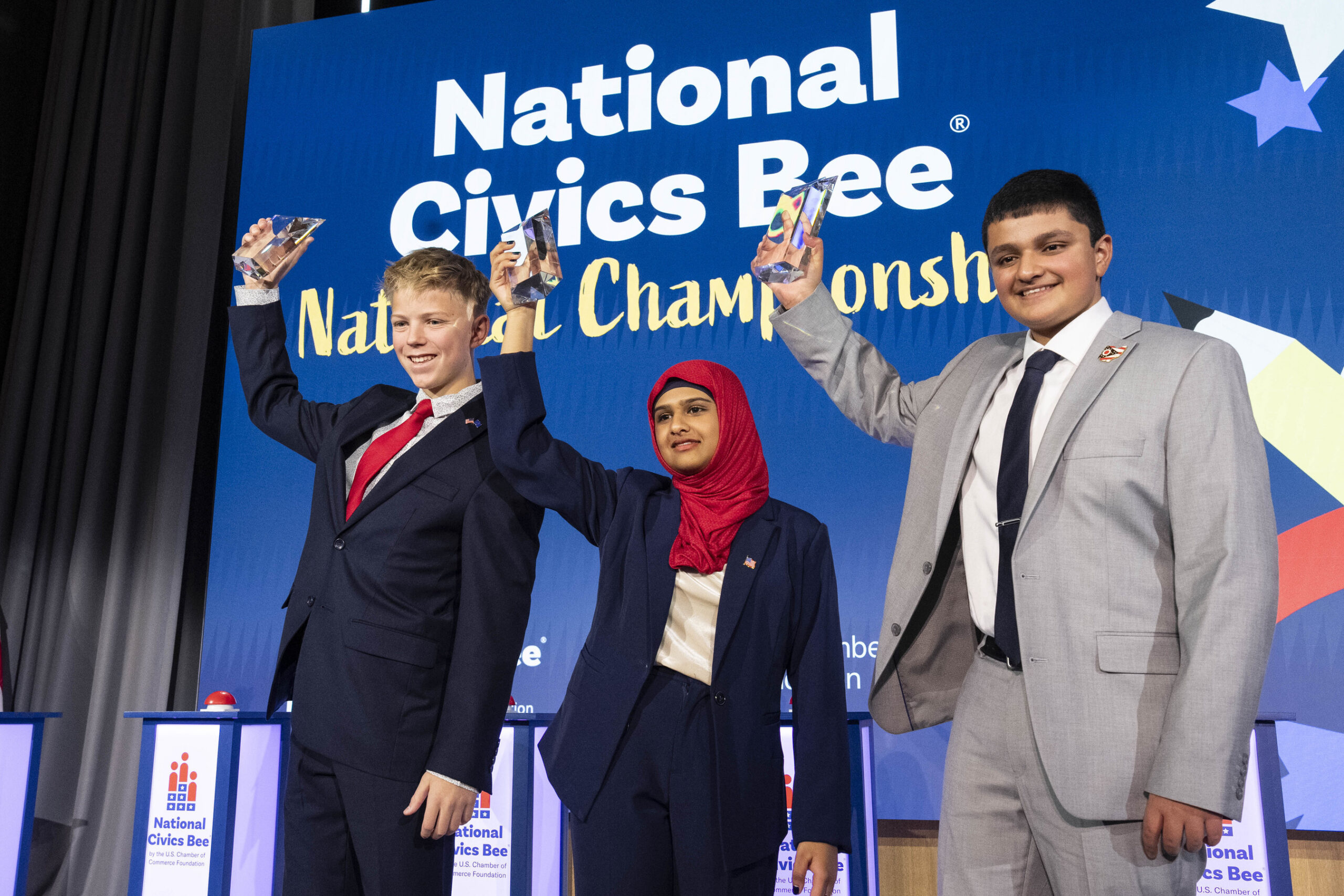
Additionally, new initiatives are bringing national and local leaders together to strengthen civic learning and engagement. The U.S. Chamber of Commerce Foundation’s National Civics Bee for middle schoolers now operates in all 50 states. Throughout the country, America 250 commissions are coordinating activities for the upcoming anniversary of the Declaration of Independence. They could serve as longer-term engines for local civic renewal if philanthropy invests in their capacity to connect classrooms, cultural institutions, and local government and business leaders.
Re-envisioning civics funding structures. Rather than being siloed into a “democracy” or “education” program, civic education should cut across funder priorities. That means recognizing civic learning and participation as the initial building blocks for change on virtually any issue and integrating them into a wide range of program areas.
When democracy feels fragile, civic learning is one of the most powerful repair mechanisms available. The next decade will test whether we can rebuild a shared sense of who we are as a nation. As iCivics founder, the late Justice Sandra Day O’Connor, said, “The skills and knowledge of citizenship are not handed down through the gene pool. … Every generation has to learn them.”
The Commons is financed in part with philanthropic support from the Arthur M. Blank Family Foundation, Einhorn Collaborative, and the Walton Family Foundation. None of our supporters have any control over or input into story selection, reporting, or editing, and they do not review articles before publication. See more about the Chronicle, the grants, how our foundation-supported journalism works, and our gift-acceptance policy.