Charities Failed to Halt a Runaway Fund-Raising Train
December 13, 2001 | Read Time: 6 minutes
To the Editor:
The leadership of our national charities, and national organizations of local charities and institutions, failed us miserably in the aftermath of September 11.
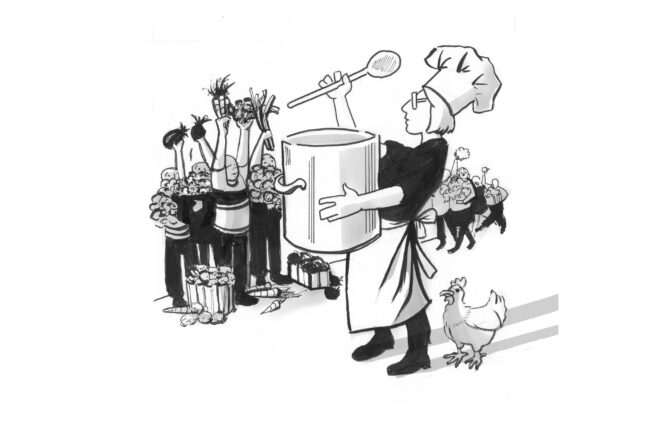
Within a week of the attacks, more than 100 organizations were raising funds for victim relief. Close to 200 ultimately joined the fund-raising feeding frenzy. Estimates are that nearly $1.5-billion was raised in under 60 days. We’ll never know the true total — nobody has it.
The premier organization in America for disaster relief, the American Red Cross, led the charge, with the media providing all the airtime necessary. The organization’s then-president announced the formation of the Liberty Fund to help people affected by the tragedies. In addition, it put out a call for blood, and an unprecedented amount of blood was donated.
At the same time, the United Way of New York City and the New York Community Trust formed the September 11th Fund. The national trade associations of both organizations put out the word to all member United Ways and community foundations, and encouraged the acceptance of donations to the fund.
About one-half of the total raised for relief was raised by the Red Cross and September 11th Fund.
In addition, a multitude of national organizations set up funds for the relief effort. More than a dozen faith-based relief funds got into the act. Funds for the families of firefighter and police victims were activated. Many corporations with employees in the World Trade Center established relief funds. Many other funds were created — some by existing organizations, and more by politicians, civil jurisdictions, newspapers, even professional sports teams.
It was a wonderful thing to see the outpouring of Americans who wanted to help. But we have been taken advantage of, with the active and passive consent of the leaders of established charities who know better.
The most responsible communication in the aftermath came from the American Red Cross when it announced it didn’t need more blood. The need for blood was limited to begin with, and the Red Cross collected truckloads beyond the need. But at least it told donors to stop.
No groups announced that the financial needs were fulfilled, and they still haven’t. Any of us can go online today to find that solicitations continue “for the victims.”
Don’t take these comments wrong. The tragedies of New York, the Pentagon, and Pennsylvania were terrible. The losses to the families affected are heart wrenching, and my sympathy couldn’t be stronger.
But this has been a runaway train. The total raised for disaster relief outran the need by the end of September. Where were the Red Cross and officials of the September 11th Fund when the need was fulfilled? I place the onus on these two because an announcement by either or both of them would have been enough to blunt the call for more money by the other 150-plus funds. Much more money was raised than was needed.
After much misguided media pressure, all of the money will now be spent on “9/11 victims” — misguided because the money not needed for this disaster could have been used in helping victims of the most recent airplane crash in New York, or a multitude of other disasters yet to occur.
Enter the Internal Revenue Service to multiply the mistakes. After political pressure motivated by the effect the many tax-exempt and non-tax-exempt organizations and funds would have on donors and recipients, the IRS ruled that money raised for the September 11 disaster is exempt from longstanding rules for charitable giving. Thus, in this instance, need is not a factor, according to the federal government. You can have a $1-million home, millions in life insurance, millions more in investments and other assets, and you still get your share of the take — tax free.
God and all of us love and respect our firefighters and police officers. However, we, through our federal government some years ago, provided a $250,000 death benefit to the families of these workers who lose their lives in the line of duty.
When a disaster happens, we want the people affected taken care of. But we don’t expect our contributions to be a financial windfall to anyone. We expect our established and respected charities to tell us what is needed, and when that need is handled.
After major balking by some organizations and funds, there now is some semblance of coordination of benefits to the victims’ families. But there are too many organizations and decision makers involved to make it as efficacious as it should be. Because of the lack of coordination, some will get more than “their share,” and others will get less.
It is my hope that a major lesson has been learned, by public officials, charitable organizations, and individual and corporate donors.
To accomplish a correct and responsible definition of the needs generated by a large disaster that motivates large numbers of donors, there must be a coordinated effort on the front end about what needs to be done — how much blood, how much money and materials, and how many of what kinds of volunteers and equipment are required to meet the resulting short- and long-term needs.
Cities, counties, states, and local charitable organizations should have a comprehensive and collaborative plan on how needs and commensurate services are determined, communicated, coordinated, and alleviated.
We have learned from the September 11 experience that we are not prepared as communities or a nation to address effectively and responsibly the aftermath of a major disaster. Let’s not let the lessons go unlearned. Our communities, our nation, and our donors deserve better than this free-for-all experience.
Robert G. Berning
President
Capital Area United Way
East Lansing, Mich.
***
To the Editor:
A few thoughts after reading “Red Cross’s Board Chairman Pledges to Repair Charity’s Image” (October 31): As a professional fund raiser, my first thought when hearing about the many wonderful efforts to raise funds to assist the victims of September 11 was, “How will these funds be distributed and accounted for?” As the weeks went by, and more fund-raising efforts were covered in the media, I looked in vain for information describing just how families and survivors would apply for and receive benefits.
Were the Red Cross and other charities so woefully lacking in foresight that they did not anticipate the problems, both practical and perceptual, involved in accounting for and distributing these funds? They should have been discussing and resolving these issues beginning September 12. They deserve to be embarrassed — they have done a disservice to victims, to donors, and to philanthropy in general.
Mary Gagliardo
Director of Development
Scripps Cancer Center
La Jolla, Calif.