Donors Need to Learn What Collaboration Really Means
March 8, 2001 | Read Time: 4 minutes
By SUSAN A. OSTRANDER
A while ago, I heard a top corporate executive talk about how his company had used what he called a “collaborative process” about where to donate its substantial annual gift. He talked about how employees at every level had a voice in the decision, and how well the dialogue succeeded in making everyone feel involved and excited about the cause finally chosen.
As I heard this story, I wondered why the “collaboration” was limited to only one side of the philanthropic relationship, the donor. Why were grass-roots advocates, neighborhood representatives, and nonprofit leaders absent from the dialogue? Why was the decision about where the money could best be invested determined by only one of the parties? How could the control over where the money went have been shared among all those involved?
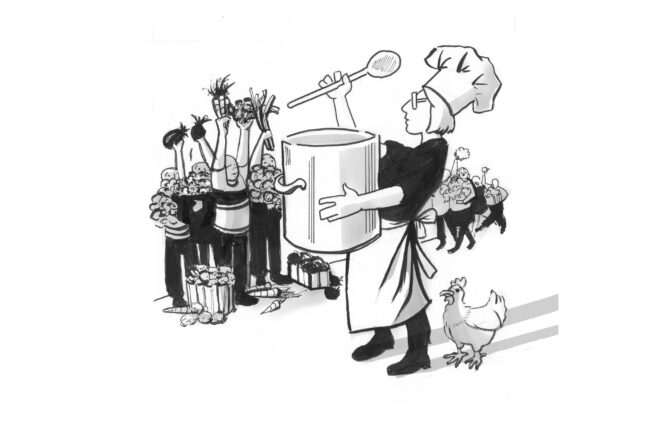
Good philanthropy requires sharing power over grant-making decisions, and so what some call collaborative is not collaborative at all. Strong and effective philanthropy requires donors to share decision-making control about where the money goes and how it is allocated. Grantees must work alongside donors in collaborative relationships, each bringing their particular knowledge and special resources to bear. Grantees also must be able to share their concerns and priorities in a frank dialogue with donors, using their experience to advocate for the people they serve and with whom they work.
Already, we’re seeing growing concern about the future of what some have called the “new” donor-controlled philanthropy, which is patterned after the worlds of venture capitalism and for-profit business. Much of that concern arises from the meltdown in technology stocks and the loss of capital available for new philanthropic projects. But the so-called new philanthropy also can’t work effectively for other reasons. It can’t work because it resembles a one-handed clap, with only half a relationship present: just half the knowledge needed to make wise choices, and half the resources required to build for the future
The same problem exists with an increasingly popular approach for donors called giving circles, through which donors with sizable sums of money come together and talk about the issues that matter to them and challenge one another to give more. Rarely do giving circles share control over money with grantees, so donors are giving away their dollars without gaining the knowledge potential recipients have to offer.
Some organizations and individuals practice a limited form of collaboration that is an improvement over exclusively donor-controlled efforts — but still not good enough. For example, a high-level philanthropic adviser told me recently that she spoke regularly with local charity leaders about their groups’ needs and priorities, and then passed on that information to her donor-clients to use as they decided where to send their gifts. This philanthropic adviser was acting as a bridge across the donor-recipient divide, but something vital was still missing: namely, the ability of the recipients to speak for themselves, based on their unique experience and knowledge.
True collaboration has been going on for a long time among some grant makers, who include local nonprofit groups, wealthy donors, and neighborhood leaders in their decision-making process. I’ve seen it most often at women’s funds and progressive foundations, like the 15 members of the Funding Exchange. At those organizations, major donors and people from nonprofit groups decide together where the money goes. Knowledge is shared. Power becomes a mutual resource.
How does the approach work? Many of the Funding Exchange’s member foundations, such as the Crossroads Fund, in Chicago, have created special allocation boards composed of major donors and knowledgeable people from the grass-roots constituencies that will receive the grants. Working together, they decide where the money goes.
At other foundations like the Haymarket People’s Fund, in Boston, and the Boston Women’s Fund, grant decisions are made entirely by people from grass-roots constituencies that are representative of the nonprofit groups that receive the grants.
What’s more, at many women’s funds and among members of the Funding Exchange, donors and grass-roots representatives serve together on boards that decide the overall direction of the funds.
For the more than 90 women’s funds around the United States and Canada, connecting donors and grantees is a major priority. In April, the annual meeting of the Women’s Funding Network, the national association of women’s funds, will devote a significant portion of the agenda to figuring out how to strengthen the bridge between donors and grantees.
In addition to the progressive and women’s funds, some individual donors have formed power-sharing partnerships with nonprofit groups. I have talked with donors who start their philanthropic projects by first going directly to the constituencies with whom they want to work, meeting with grass-roots leaders, and making it clear that the donor will not be calling the shots.
That sort of collaborative grant making, in which power is shared, needs to become common practice. Donors and grantees need to work together even when it is difficult. Otherwise, time and money are wasted while too many groups go without the support they need.
Susan A. Ostrander is a professor of sociology at Tufts University and co-chair of the national board of the Women’s Funding Network.