Failing to Help the Neediest
June 27, 2002 | Read Time: 3 minutes
To the Editor:
The phones at American Jewish World Service’s office have been busy, with callers still seeking information about our September 11 relief work. Many callers are low-income individuals, often immigrants, who lost jobs as a result of the terrorist attacks. We can refer some of them to the community-based organizations we have been helping, but many others are without funds and have not received any aid, and we are not providing any individual relief.
At the same time, a member of our senior staff, whose job was in no way threatened by the events of September 11, received a letter at his lower-Manhattan home informing him that he was eligible for financial assistance as a result of the “hardship” he had suffered. This is one example that despite all the money contributed and all the agencies promising to help every individual affected, aid is not reaching everyone and is not being distributed equitably.
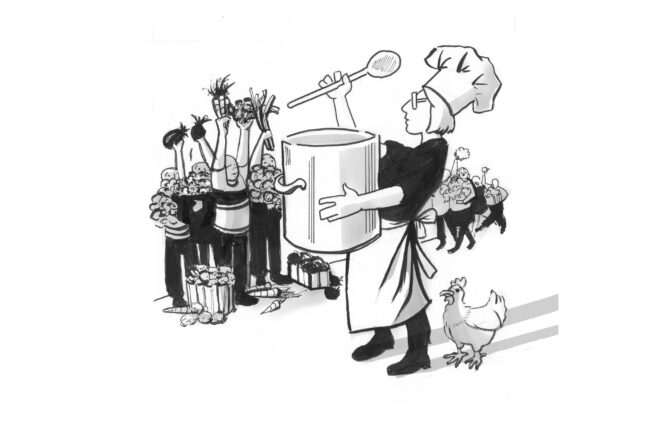
The events of September 11 brought out the best and worst of philanthropy in this country. The generosity of many Americans who dug deep because others had been killed or hurt and they themselves felt more vulnerable is commendable, but the way in which their gifts were handled by some of the large relief organizations is not. New York never was able to build the coordinated aid-distribution system that Attorney General Elliot Spitzer proposed. Too often money was spent without guidelines, leaving some of those most affected with no aid.
American Jewish World Service is assisting local grass-roots groups that are helping community members severely affected by the disaster but overlooked by government and international assistance. These community-based groups empower their members and bring long-lasting positive change to their communities and mitigate the impact of future disasters. We were both challenged and excited by the outpouring of support from our donors to do this kind of work locally, and we committed ourselves to working with those who seemed to be falling through the cracks in a very large and not very efficient system.
To this end, American Jewish World Service has made grants to 16 community-based organizations that are helping New Yorkers in dire need, many of whom the large groups and public agencies are apparently not reaching. Our grantees include unions providing health benefits to those who were left with no coverage just before the holidays, organizations working with undocumented immigrants and families afraid to come forward after the disaster, and a group helping Arab-Americans living in fear of backlash violence. Some of our grantees tried to get other help for their constituents but were told they were ineligible because they were not located south of 14th Street or because they were unwilling to share confidential client information.
Despite the best of intentions, many of the larger September 11 relief funds failed to adequately address the needs of those communities at greatest risk. The relief efforts provided an excellent example of the coordination problems so common after major disasters. We at American Jewish World Service are proud of the work we have done in helping reach marginalized individuals in communities too often left to fend for themselves. We hope that many of the larger relief funds will choose to refocus their efforts in order to do the same.
Ruth Messinger
President
American Jewish World Service
New York