Invisible, Essential, Ignored: Philanthropy’s Missing Asset
In today's political climate, the gritty work of creating big-tent coalitions is essential to notching wins on climate and other big issues.

By Eva Hernandez
Contributor
December 2, 2025 | Read Time: 6 minutes
- The biggest barrier to large-scale, enduring gains on climate and other critical issues? A lack of power.
- “Big tent” movements do not require participants to sacrifice their values. Rather they join in a shared vision rooted in a set of core values.
- Philanthropy should invest in building relationships and trust – uniting around core aims or principles and allowing room for disagreement outside those.
Keep up with everything happening in The Commons by signing up for our weekly newsletter.
I will never forget the first time I talked to Harvey Hayek. A fourth-generation pecan farmer in Central Texas, Harvey saw his orchard spoil before his eyes. After losing two-thirds of his crop, he began to suspect that waste and emissions from the nearby Fayette Power Project, a coal-fired power plant, were contaminating his pecans. After exhausting what seemed like every other possibility, he called the environmentalists.
I was an organizer with the Sierra Club and drove out with a few colleagues from our Austin headquarters to meet Harvey. What we saw was devastating — a seemingly barren field with dead trees and broken limbs. Over the next few months, Harvey brought neighbors to us to share their experiences, and we heard farmers up and down the Colorado River painfully report thousands of dead pecan trees.
Harvey invited us into his home, where we broke bread and met into the evenings. We held town halls and meetings in small towns, rallying support across cultural, economic, and political lines. In addition to sulfur dioxide pollution, which studies suggested was the culprit for the dead trees, the power plant was using exorbitant amounts of water. Under pressure, the city agreed to phase out its ownership in the plant and invest in cleaner energy sources.
While I have worked on campaigns before and since, that experience shaped me. It brought together an incredibly diverse group of actors — rural Texas farmers, organizers, air-quality scientists, urban environmentalists, geologists, journalists, government officials, college students, landowners — united around a commitment to basic public goods: clean air and clean water. As a young organizer cutting my teeth in the South, I learned quickly that the only way to make progress on environmental issues was to work to find common ground. Indeed, I found that connecting across ideological, cultural, and sectoral divides could be transformational. And yet without infrastructure and resources to hold these diverse coalitions together and give people a long-term home to lead together, they often falter.
Doing this work for 20 years now, I know through and through that the barrier to making large-scale, lasting gains on climate, conservation, and environmental health and justice is not a lack of science, technology, or even policy ideas. It is a lack of power. And to build power, we need strong, agile, and pluralistic movements that transcend politics — spaces where people come together and exercise collective influence not just once but again and again. Indeed, activists, scholars, and practitioners have made the case for generations that this is a prerequisite for durable change.
‘Big Tent’ Wins
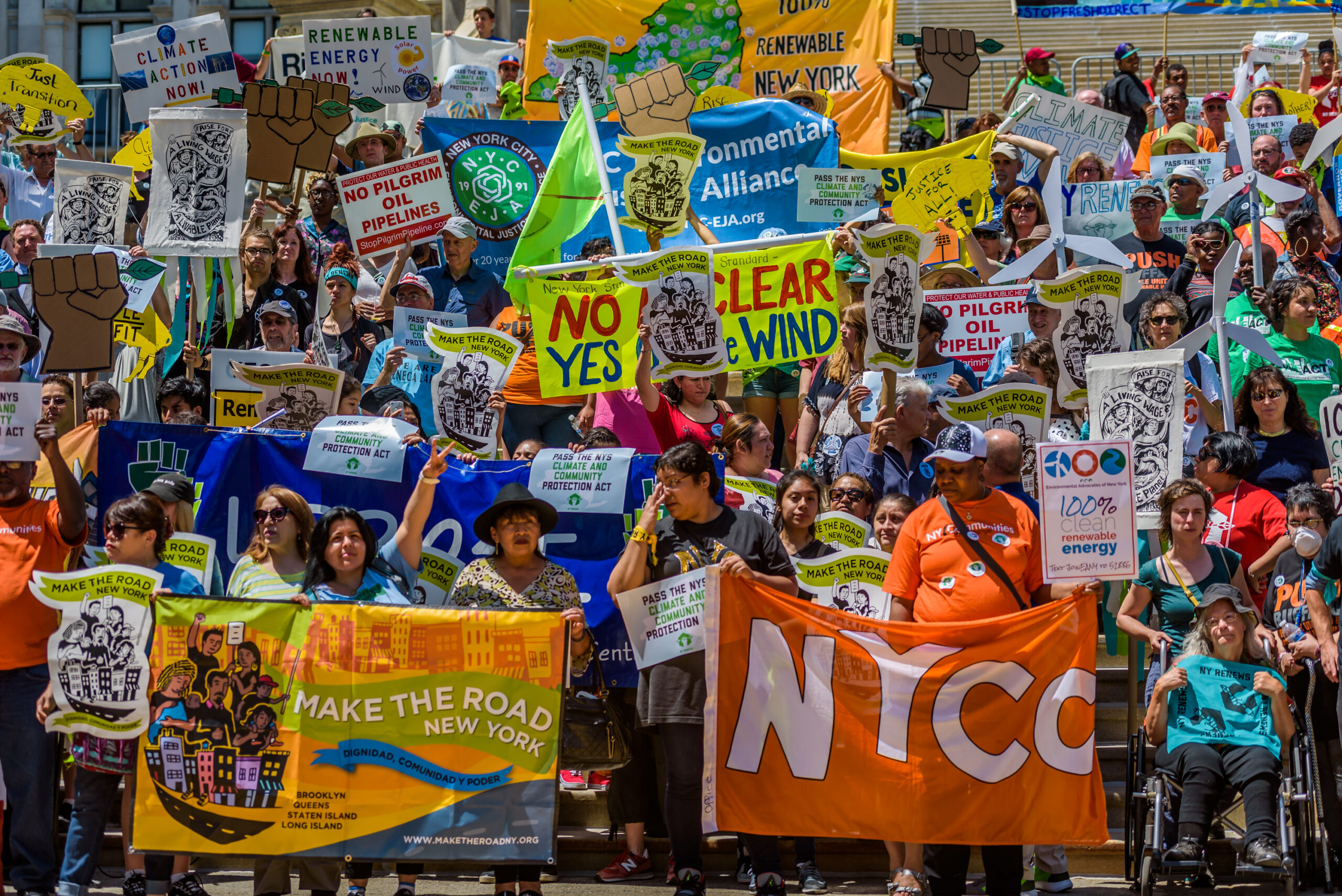
A pluralistic, “big-tent” movement does not require the sacrifice of values or a subset of voices in service of near-term wins; rather it puts forward a shared vision rooted in a set of core values and mutual understanding of power dynamics. It sets the table for a broader swath of our country to come together community by community, take leadership, and organize to build power that leads to change in the near- and long-term. As concepts like climate change and clean energy become increasingly politicized, the work of maintaining and expanding our tent becomes more challenging and more urgent. But it is happening in ways that should inspire hope and philanthropic investment.
In Virginia, environmental groups and affordable housing groups often stood on opposing sides of debates over renewable energy, with housing advocates worried about adding costs as people struggled to get basic shelter. Now these groups are coming together to build trust and find common ground to advance both climate and housing goals — lowering energy bills through efficiency, solar, and weatherization while reducing pollution from residential buildings, a major source of carbon emissions. In rural Washington, local organizers built a sophisticated narrative campaign rooted in the shared experiences and concerns of white and Latine communities to help defeat an anti-climate ballot initiative. They are now teaming up with rural groups across the country to collaborate on strategy to shift the narrative on what it means for rural communities to thrive.
This work — to build a more pluralistic environmental movement aligned around thriving, healthy communities and protecting our national commons — is often invisible, underfunded, and extremely difficult in today’s political climate. Progress can be slow, and outcomes are not always immediately tangible. Harvey’s story, for instance, doesn’t yet have a happy ending. Despite the city’s promise to phase down the Fayette Power Project, it is still in operation, thanks to fierce industry push-back, shifting priorities, and lack of funding to see the campaign through over the long term.
But philanthropy has to remember what’s possible: Our movement predecessors made transformational change by investing strategically in the foundations of people power.
The Time to Invest
What does philanthropic investment look like? It means resources to build relationships and trust — uniting around core aims or principles and allowing room for disagreement outside those. It’s building narratives grounded in issues that touch people’s lives, with accessible, inclusive language and stories that resonate across differences. It means investing in data, tools, and trainings that help target resources and mobilize constituencies at scale — and ensuring these tools can be used by national, regional and local movement participants. Critically, it means developing a pipeline of leaders who represent the diversity of our communities and who are equipped to lead across difference. And it means supporting the skill development and well-being of today’s leaders, who face enormous pressure.
This is the everyday work of building power, and the time to invest is now. Issues we care about are in the crosshairs, and the challenges ahead are daunting. The transition to clean energy is a case in point. The United Nations estimates we need as much as $4 trillion annually through 2050 to decarbonize our global economy, the biggest economic shift in history. To make that happen, we need change in policy, change in regulation, and change in how resources flow.
Imagine if philanthropy invested fully in the hidden infrastructure to make this scale of change happen. Progress is possible when people come together across divides, invest in one another, and persist with strategy and heart. Every day that power remains fragmented, every day that bridges go unbuilt, the divides in our country widen — and the chance to protect our communities, our environment, and our shared future slips further away. If we commit now not just to work across differences but also to invest deeply in collective power, we will succeed.
The Commons is financed in part with philanthropic support from the Arthur M. Blank Family Foundation, Einhorn Collaborative, and the Walton Family Foundation. None of our supporters have any control over or input into story selection, reporting, or editing, and they do not review articles before publication. See more about the Chronicle, the grants, how our foundation-supported journalism works, and our gift-acceptance policy.