Philanthropy Should Work With Biden to Declare Détente in the Education Wars

By Bruno V. Manno
Contributor
February 1, 2021 | Read Time: 6 minutes
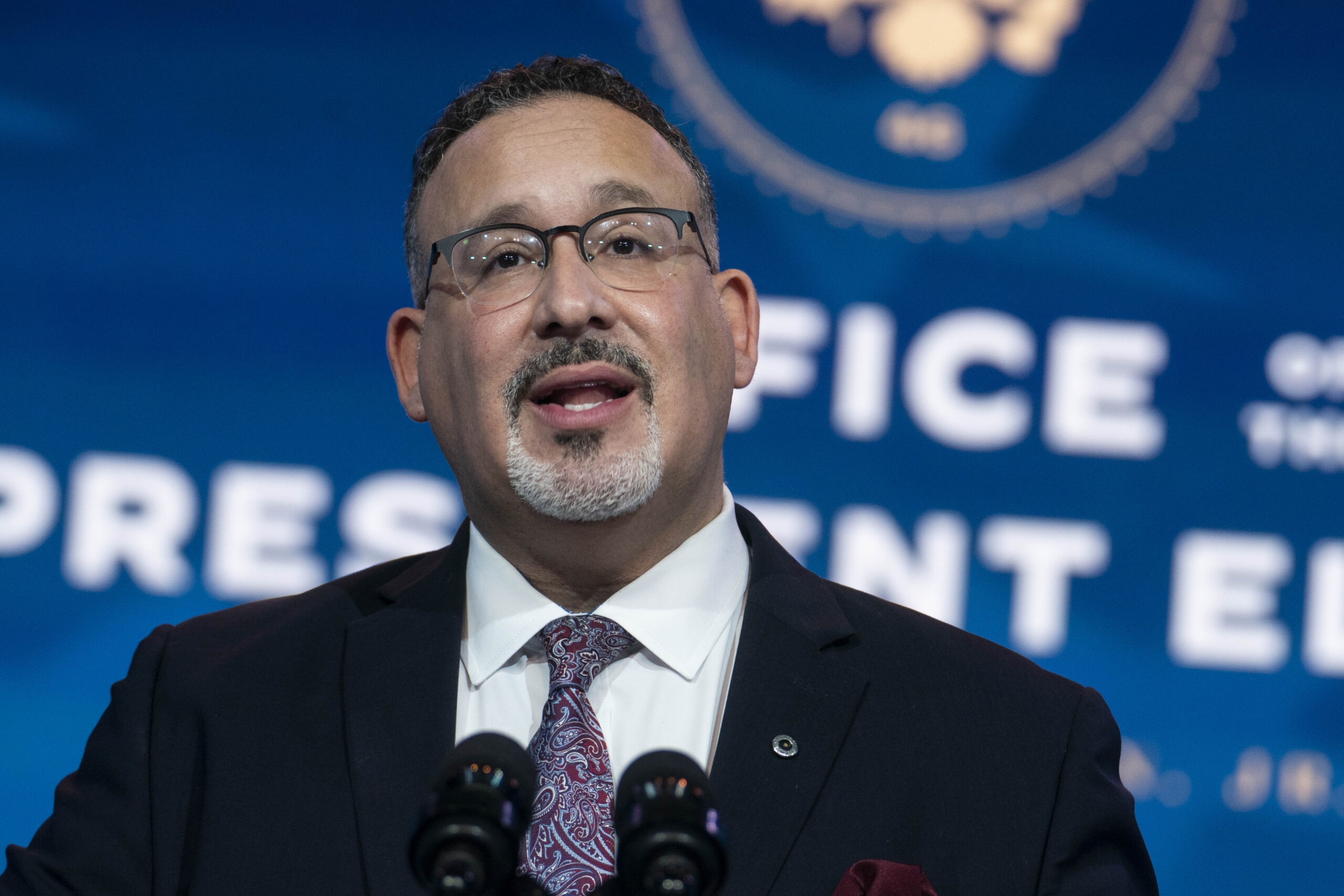
Covid-19 has created one of the most tumultuous periods ever for elementary and secondary education and the millions of vulnerable students and parents who depend on it. A daunting task awaits the Biden administration and education secretary nominee Miguel Cardona. But the school disruptions caused by the pandemic also present the new administration with an opening to call for détente in the so-called education wars and focus on doing everything possible to help students and families recover.
Such a détente should put front and center the work of many national and local foundations and their grantees who have supported an agenda linking education to career-opportunity programs. These programs connect schools and students with employers and work, creating alternatives to the “bachelor’s degree or bust” mind-set that characterizes so much of education today.
The goal is to ensure that all young people, regardless of their life circumstances, have multiple routes for acquiring knowledge and connecting to networks that lead to good jobs and careers. Inspired by the work of education grant makers and their partners, here is a guide to help the Biden administration along a more productive path for students.
Develop a new vocabulary and narrative for what education success means. For nearly three decades, government policy has focused on education standards, accountability, vouchers, charters, and other efforts to give parents more choices about where to send students. Rightfully supported by many donors, this approach produced what Stanford University education professor Thomas Dee calls “meaningful, though not transformational, improvements in student outcomes, especially among historically marginalized students.”
On the downside, it also created a test-scores agenda, leading many to link education success with quantifiable and technocratic endeavors such as adequate yearly student progress, teacher ratings, and closures of “underperforming” schools. Today’s education wars are an outgrowth of this agenda, pitting mostly centrist and bipartisan education advocates against those to their left and right who, for different reasons, oppose many of these changes.
It’s time to redefine what success means — in education and life in general. The American Success Index shows that most people perceive the societal view of success as focused on rank, prestige, and status. By contrast, their personal view of success focuses on relationships, specifically the networks and institutions that open doors to opportunity and provide what is known as “social capital.” Americans see schools as one of the key institutions for helping them make those connections and achieve success. Findings like these should be the basis for a new civic vocabulary and positive narrative on how schools must be at the center of community efforts to prepare young people for career opportunities and adult success.
Look to local education programs to guide what works. Federal education policy should follow the lead of nonprofits and schools working on the ground to connect education success to career opportunities. Starting in elementary and middle school, students participating in these programs learn about work and careers through activities such as guest speakers and field trips. In high school, mentorships and internships are integrated into classroom instruction. This exposure helps young people understand labor-market demands, giving them the soft skills, along with the academic and technical knowledge, to succeed in the workplace.
A strong model is Cristo Rey, a network of 37 Catholic high schools in 22 states that integrates four years of academics with work experience through its Corporate Work Study Program. A related nonprofit placement organization works with more than 3,500 nonprofits and private employers to place students one day a week in entry-level professional jobs. The participants, 98 percent of whom are students of color, earn 60 percent of their tuition through this employment, with 30 percent of the balance from philanthropic sources and 10 percent from a family contribution of about $1,000 on average. Nearly all 21,000 alumni of the program have gone on to a job, the military, or some form of postsecondary education.
These programs are typically designed in tandem with employers or industry associations that help set standards, define skills students need for a certificate and employment, and provide paid apprenticeships. Other groups, such as community foundations, chambers of commerce, community colleges, and larger nonprofits such as the Salvation Army and United Way assist with convening, planning, and social-support services for participants and their families.
An example is 3-DE, a public-private partnership created by Junior Achievement of Georgia in partnership with Atlanta businesses and Fulton County Schools. The six-week work placement begins in 11th grade in fields such as business and technology, marketing and management, and financial services.
Support policies that open doors to career-opportunity efforts. Flexible charter-school laws can facilitate these partnerships and should be supported by philanthropic organizations. For instance, a charter-school law adopted by 44 states and the District of Columbia allows elementary and secondary funds to go to programs that include postsecondary institutions, labor, and work-force groups. The Wiseburn Unified School District in Los Angeles County used just such a law to integrate the different funding sources needed to create Da Vinci Schools, which offers students career-opportunity programs with more than 100 business and nonprofit partners. Additional financial support for the charter-school network and related services are provided by numerous corporate and private foundations and other nonprofit partners, such as CASA of Los Angeles and the Boeing Corporation.
On the federal level, last year’s coronavirus relief package, known as the Cares Act, took a similar approach to school funds giving governors and education leaders great latitude in deciding how the money could best be put to use in their states. The Biden administration should consider similar approaches as part of its request for additional pandemic-related school funding.
The potential payoffs are enormous. Programs of this type help young people develop a broader sense of themselves and their place in the world. They do this in two ways. They provide students with the knowledge and networks essential for developing both an occupational identify (an awareness of oneself as a worker in a particular field) and a vocational self (an understanding of one’s abilities, personality, and values). Both are a key foundation for adult success and responsible citizenship.
Such goals should inform all policy debates about our nation’s students. This call for détente in the education wars can be a basis for creating coalitions of grant makers, government leaders, advocates, and others who have a stake in improving the schools. It provides an opportunity for the Biden administration and philanthropy to work together toward a shared goal: ensuring young people acquire the knowledge and networks they need to lead full and successful lives. So, let’s drop the war stance and help all children attain the educational opportunities they deserve.