The Best Grantee Results Are Invisible. Here’s How to See Them.
Many funders have bought into trust-based philanthropy but are missing a key ingredient: showing up.

By Devontá Dickey
Contributor

June 18, 2026 | Read Time: 6 minutes
Keep up with everything happening in The Commons by signing up for our monthly newsletter.
The fourth-grader told me without any fanfare, the way children share facts they’ve already moved on from. She reads nutrition labels now, she said. She checks serving sizes. And when she gets home, she teaches her siblings and parents to do the same.
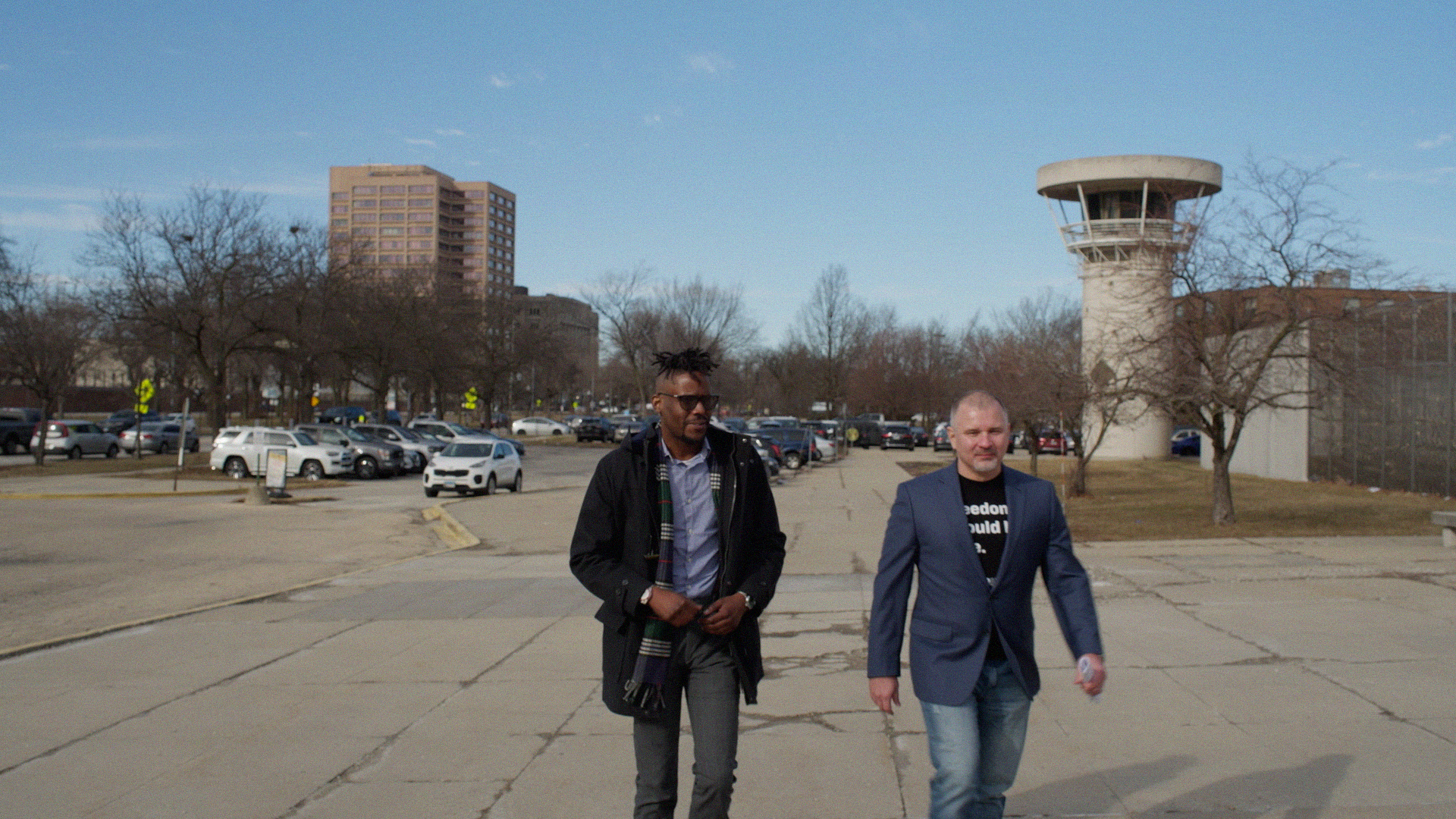
I was wrapping up a visit to Sunbeam School in Cleveland, Ohio, watching students cycle through a health science lab run by Hands-On Health, a program that operates inside elementary schools on the city’s east side. The nonprofit is a grantee of the Saint Luke’s Foundation, my employer, and I was there in my role as communications director to learn directly from their work, participate in their programming, and document their impact for broader audiences.
The student had just spent an hour measuring sugar content in drinks she recognized, analyzing what was in the foods she ate every day. The learning was practical and specific, and it had apparently already traveled home with her.
I drove back to my office thinking about how what I observed that afternoon could not be found in the documents Hands-On Health submitted to us. Part of my job is to understand what our grantees do: to translate their work into language that tells a coherent story about impact, and to help others understand why it matters. I read the reports. I review the outcomes data. I track the numbers.
Hands-On Health stood out. Its model of bringing pharmacy expertise into elementary school classrooms was distinctive enough that I wanted to move beyond the written materials and see its work firsthand.
Being in the room at Sunbeam School revealed something the reports couldn’t — not because they weren’t thoughtful and well executed, but because some things can only be seen when you’re present. The reporting infrastructure we’ve built in philanthropy is designed to capture what programs deliver. It was never designed to capture what happens after a student walks out the door and goes home.
An Evaluation Gap
That gap isn’t a failure of grantees or of program officers. It’s a structural feature of how evaluation works: We measure what we can access, within the timelines and formats we’ve established. But as we’ve become more sophisticated at measuring program outputs, we may have grown less attentive to what our evaluation systems are, by design, unable to see.
The founders of Hands-On Health, twin sisters Jessica and Jennifer Macklin, both doctors of pharmacy, built their program around a principle that sounds obvious once you hear it. As Jennifer told me: “We don’t guess what communities need. We step outside of the clinic walls and see it for ourselves, then respond in ways that are practical for everyday life.”
Their training is rooted in clinical expertise, evidence-based care, and the science of how interventions work inside the body. They deliberately brought that training into elementary school classrooms. It made me think about what it means to genuinely learn alongside the communities we fund.
The program’s outcomes are real and documented. According to the founders, more than 80 percent of students report trying new healthy foods after participating, and 90 percent report increased physical activity. But those numbers describe a transaction — what the program gave to students and what students reported in return. They don’t describe the girl who goes home and reorganizes how her family thinks about what’s on the label of a cereal box. They don’t describe the household where a 10-year-old has quietly become the person who speaks up about what’s missing from the grocery lists or should be taken off.
That kind of reach doesn’t fit in a column on a reporting template. It lives in the spaces between the data points — in kitchens, in grocery store aisles, at dinner tables where program officers never sit.
Philanthropic evaluation tends to reward what can be counted, because counting is how we communicate decisions to boards, to donors, to the communities we serve. But it has also produced a particular kind of knowledge: precise about outputs, quieter about the fuller texture of change. Prevention work is especially susceptible to this limitation. A program that shifts how a child thinks about food in third grade may not register in health outcome data until that child is 30.
The ripple effects, including the household conversations, the changed grocery lists, and the sibling who starts reading labels because an older sister came home curious, tend to fall outside our frameworks. This is not a criticism of evaluation practice. It is an invitation to ask what we might build alongside our existing frameworks that would help us to see and understand the impact of our work better.
Beyond the Vocabulary of Trust
Philanthropy has spent the last decade deepening its vocabulary around trust: trust-based grant making, proximate leadership, community-centered design. These conversations have produced real changes in how many foundations operate. But conditions alone don’t produce learning. Learning requires presence, and presence requires a different kind of intention than most grant-making structures are built to support.
That recognition pushed the Saint Luke’s Foundation to introduce learning sessions where the organizations we fund gather alongside foundation staff and board members, not to report, but to exchange knowledge and learn together. Organizations working in similar or complementary areas present their work, ask one another questions, and discover connections that isolated reporting relationships rarely produce. The result, we’ve found, is that some of the most useful insights about community change come not from formal reports, but from what organizations say to one another.
I raise this not as a model to replicate, but as one example of what’s possible when proximity is treated as a practice rather than a checkbox. The philanthropic sector already knows how to fund. The question worth asking is whether we’ve built the same rigor around how we learn.
The girl at Sunbeam School taught her family something that would never appear in a grant report. She became, in a very real sense, an extension of the program’s reach, carrying behavioral change into places our evaluation frameworks rarely follow.
I only know that because I was in the room.
Foundations invest in programs because we believe they change lives. The work of understanding how that change actually moves through households, through families, through communities, deserves the same investment we bring to everything else. Curiosity isn’t soft. It’s strategic.
The Commons is financed in part with philanthropic support from the Arthur M. Blank Family Foundation, Einhorn Collaborative, and the Walton Family Foundation. None of our supporters have any control over or input into story selection, reporting, or editing, and they do not review articles before publication. See more about the Chronicle, the grants, how our foundation-supported journalism works, and our gift-acceptance policy.