What Foreign Diplomacy Can Teach Funders About Race and Power
The same diplomatic protocols that help nations with different systems of governance work together could transform how grant makers assess, trust, and invest in Latino-led nonprofits.

By Melina Olmo
Contributor
May 21, 2026 | Read Time: 7 minutes
Keep up with everything happening in The Commons by signing up for our monthly newsletter.
The application was perfect. The budget was logical. The program model had been community-tested for nine years. But they didn’t get the grant.
The program officer’s feedback was brief: The nonprofit “lacked the organizational infrastructure” to manage funds at that level.
I have heard this story dozens of times in my years working in grants management for Latino organizations. Such funding verdicts, I’ve come to believe, reveal little about the nonprofit’s work and a great deal about funder blind spots — specifically their lack of diplomatic protocols for assessing groups by a different set of cultural norms.

Just 2 percent of all foundation dollars go to Latino-serving institutions, according to the Hispanic Federation. That isn’t because the work isn’t there, but because the guidelines used to evaluate that work weren’t built to navigate what is, at its core, a cross-cultural encounter.
Two Cultures. One Sector.
Consider what actually happens when a foundation and a Latino nonprofit enter a grant relationship.
On one side: a highly structured institutional culture with its own language, timelines, reporting, expectations, and definitions of organizational credibility. On the other: a community-rooted nonprofit whose infrastructure is relational, accountability flows to the neighborhood, and trust is built through years of showing up — not through documentation.
These are not a capable party and a deficient one. They are, in diplomatic terms, two distinct cultural entities, each with its own governance, values, and ways of building trust. And they have been asked to work together without any of the diplomatic tools that make cross-cultural relationships sustainable.
In international relations, two nations with different systems of governance would never be expected to collaborate effectively without diplomatic protocols, including structured frameworks for mutual recognition, sustained dialogue, and relationship-building that honors the legitimacy of both parties.
Yet in philanthropy, that isn’t the case. And then we wonder why the relationship defaults to a transaction.
What Cultural Diplomacy Offers
Cultural diplomacy — the practice of building constructive dialogue between parties that operate from unique cultural perspectives — offers philanthropy something it’s been missing: an approach to the funder-nonprofit relationship that honors both sides as equal partners.
In the context of grant management, this entails three fundamental shifts — all applicable to any foundation-grantee relationship encompassing divergent cultural norms.
Emphasize mutual recognition over evaluation. Before asking, “Is this nonprofit ready to receive our funding?” grant makers should invest in understanding the organizational culture of their grantees. This isn’t about lowering standards but about accurately assessing what they see. A collective decision-making process, for instance, is not a governance weakness but an alternative form of governance. A relational accountability structure in which an organization holds itself accountable through relationships and community trust, rather than formal reporting systems, is not an infrastructure gap but a different form of infrastructure.
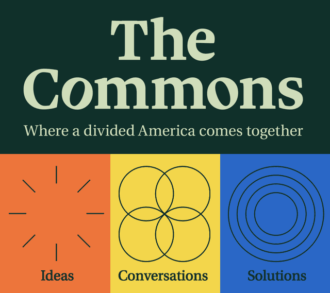
Consider the example of Instituto Nueva Escuela, a Puerto Rico-based nonprofit that works with public Montessori schools. The organization operates on what it calls “El Colectivo” — a horizontal governance model in which teachers, parents, and community leaders convene at “mesas redondas,” or “round tables,” to make decisions collectively. The organization doesn’t just enroll students — it enrolls families, including training and hiring parents as Montessori assistants. A funder trained to look for conventional hierarchy would miss this structure entirely.
The cost of not recognizing such cultural differences cuts both ways. While working in grants compliance for an international organization, I encountered a grantee operating in a geographically isolated community with no banking infrastructure. When payment was due, the grantee did what made sense in its context — it asked the community priest to travel by boat, carrying cash, to pay the workers on site. From a compliance standpoint, this was a serious red flag: an unauthorized third-party handling grant funds with no documentation trail. But the root cause was not negligence. It was a grant agreement designed without any understanding of where — and how — that community operated.
Prioritize sustained dialogue over transactional cycles. A grant relationship that begins and ends with a contract is not a partnership — it’s a cycle of compliance. Diplomacy teaches us that sustainable agreements between cultures are never built in a single negotiation but in the space between negotiations in which human relationships make trust possible.
Institutional trust evolves through ongoing dialogue across grant cycles and reporting periods. It is nurtured by funder actions, including offering multi-year general operating support to grantees as a starting condition for genuine partnership — not as a reward for proven organizations.
Funders can solidify that partnership by working with grantees to co-design grant reporting requirements. Before an agreement is signed, they should ask the grantee two questions: What data are you already collecting? What does success look like in this community? The reporting template can then be built around those answers, ensuring it meets compliance requirements and reflects the grantee’s actual work.
Stress mutual enrichment over capacity building. The diplomatic exchange between a grant maker and a Latino nonprofit is not one-directional. Funders gain something irreplaceable: authentic community access, culturally developed methodologies, and the kind of organizational wisdom that no consultant can manufacture. When both parties recognize this, the relationship stops being about dollars and starts being about partnership.
Here’s what this looks like in practice: In 2025, Fordham University’s Office of Community Affairs administered environmental grants to small community organizations in Puerto Rico through an Environmental Protection Agency fund. These were groups with deep neighborhood roots but limited institutional infrastructure. Rather than issuing a standard RFP and waiting to see who could navigate it, it held multiple orientation sessions, offered technical assistance during the proposal process, and provided translation support. In other words, it met organizations where they were. Not every grant cycle was completed — federal funding cuts intervened — but the initiative showed that when a funder invests in making access real, the organizations that have been doing the work all along finally get a seat at the table.
A Division Worth Naming
The divide between funders and Latino nonprofits, as well as many other organizations of color, is not ideological or about bad intentions. It is a cultural gap between two organizational worlds that have never been given the diplomatic tools to understand each other. The gap is most costly for community-based groups in rural areas with the deepest local roots and the least institutional infrastructure to navigate grant maker systems designed for a much different kind of organization.
Naming it as a cultural divide rather than a capacity gap changes everything. It shifts the question from “What does this organization need to fix?” to “What does this relationship need to work?” It moves both parties from evaluation mode into diplomatic mode where the goal is not compliance but partnership.
That shift doesn’t require dismantling the way the sector operates. It requires borrowing a framework that has navigated exactly this kind of challenge for centuries and applying it, deliberately and practically, to the daily work of grant making.
Cultural diplomacy is not a metaphor. It is a methodology. And philanthropy needs it now.
Melina Olmo is the founder of Cultura Diplomática and a grants management consultant based in Puerto Rico. She is the author of “Subvenciones: Construyendo Capacidad en el Tercer Sector”—a grants management guide for Latino nonprofit professionals.
The Commons is financed in part with philanthropic support from the Arthur M. Blank Family Foundation, Einhorn Collaborative, and the Walton Family Foundation. None of our supporters have any control over or input into story selection, reporting, or editing, and they do not review articles before publication. See more about the Chronicle, the grants, how our foundation-supported journalism works, and our gift-acceptance policy.