A Social-Media ‘Blitz’ Can Help Charities Draw New Supporters in a Hurry

By BRENNEN JENSEN
Contributor
August 19, 2012 | Read Time: 4 minutes
Grist, a nonprofit environmental news and commentary Web site in Seattle, has an annual budget of more than $2-million. When set against that figure, the $5,500 it raised from a special drive might seem like small potatoes.
But the charity considers its Power Hour campaign, based entirely on Twitter, a success because it attracted more than 25 new donors to its online giving site in just 60 minutes.
And thanks to “retweets”—supporters sending out the Grist appeal to their own Twitter followers—the charity figures that the effort reached as many as 800,000 Twitter accounts.
“The social-media component of our fundraising is fairly small, and Twitter is the hardest of all for soliciting donations because a tweet has such a tiny shelf life,” says Hanna Welch, Grist’s social-media producer. “But we got the idea of taking one hour with a small goal and just seeing if we could bang it out, like a telethon, in a sense.”
Microfundraising events like Grist’s may not bring in large amounts, but the excitement they create can help lure new donors who may contribute to more traditional fundraising drives, say experts. The approach can also raise an organization’s profile on social networks.
Influential Friends
Grist ran its first Power Hour appeal in February—fueled, Ms. Welch says, by a dedicated donor who has encouraged the charity to use a variety of methods to get donations, especially through social media.
Not knowing what to expect, and with no promotion or preparation, the group tweeted to its 80,000 followers: “It’s Power Hour @Grist! A mystery donor will give us $1k if 20 people donate in 1 hr. Any Amount!”
Sixty minutes later, the organization had raised 26 gifts, with 21 of those contributions coming from new donors. With the match, $1,338 was raised.
“We started thinking about how we could make it bigger and get more people to see it on a platform where things fly by in seconds,” Ms. Welch says.
Well in advance of the Power Hour in May, Ms. Welch reached out to “influential people who are friends of Grist,” such as Michael Pollan, the bestselling author and noted food activist, and Van Jones, the former White House “czar” for green jobs. Each was informed about the Power Hour and was given a special tweet to send to their followers during the hour.
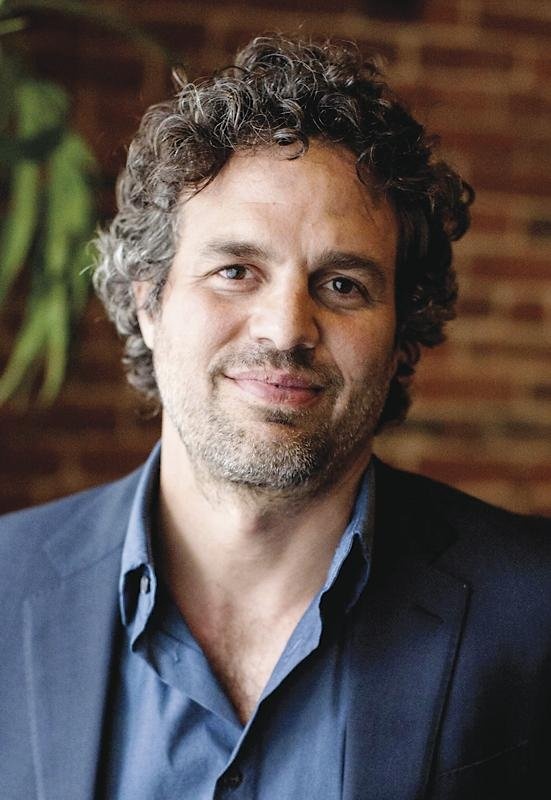
And in an effort to “get beyond our own choir,” Ms. Welch made similar appeals to other celebrities known to support environmental causes, such as the actors Daphne Zuniga and Mark Ruffalo.
“You have to reach out to influential people in your space,” Ms. Welch says. “But then there would be no point to contact a celebrity that didn’t do a lot on Twitter, so we kind of had to cross-reference who has a big Twitter following and who is someone we think can help us.”
Amy Peyrot, an associate at M+R Strategic Services, a consulting firm in New York, says the Power Hour was innovative, but she cautions that the approach has limitations. “It worked for Grist because they already have a large Twitter audience and it might not be re-creatable for every nonprofit,” she says.
Running a ‘Blitz’
This summer the UJA-Federation of New York, a charity that raises money for social-service and Jewish causes, also took to Twitter for a quickie fundraiser. The one-day campaign was called Mitzvah Monday, named for the Hebrew term for “good deed.”
“We referred to it as a blitz,” says Reisha Goldman, the charity’s online marketing manager.
“We had a matching donor offer to match each donation up to $1,500, with the ask being a low threshold amount of $10. For an organization of our size this is not a huge fundraising initiative, but the goal here was to engage new donors and make more people aware of our organization.”
Mitzvah Monday raised more than $10,000 from 101 donors, including 84 people who had not given to the organization before. The small amount of the suggested donation may have been one key to its success.
“What is most effective with social-media giving is a low-dollar ask and having a match, which helps give a real incentive,” Ms. Peyrot says. “In the end, you are getting a donor which you can integrate into all of your longer-form messaging.”
UJA was also clear about where supporters’ money would go: Mitzvah Monday donors who followed the link from the Twitter appeal to the donation Web page learned that their $10 would provide a hungry New Yorker with three hot meals.
“For someone who didn’t have the capacity to give a lot of money, we theorized that this would resonate with them and compel them to donate,” says Eric Steinmetz, UJA-NY’s director of digital marketing.
The charity also asked people to retweet about Mitzvah Monday.
“This was a test for us,” Mr. Steinmetz says. “We are looking at what elements were successful but are certainly contemplating another Mitzvah Monday.”