A Texas Nonprofit Borrows a Business Plan From the Technology World

By Eric Frazier
Contributor
August 19, 2012 | Read Time: 8 minutes
When Aaron Winston graduated from high school, he didn’t have many options.
Because of his autism, he knew his way of processing and communicating information wouldn’t work in the classroom routines of a typical university. And he knew he’d struggle to hold down most jobs.
So he mostly sat around his mother’s house playing video games. He volunteered at a food bank, stocking shelves. But that didn’t satisfy him.
“I was pretty bored,” recalls Mr. Winston, a resident of Dallas who is now 21. “I’d always told my mom I wanted to work in the video-game industry.”
That appeared difficult, if not impossible, until he found the NonPareil Institute, a four-year-old nonprofit technology firm that combines the idealistic zeal of a social-service charity with the entrepreneurial savvy of a tech start-up.
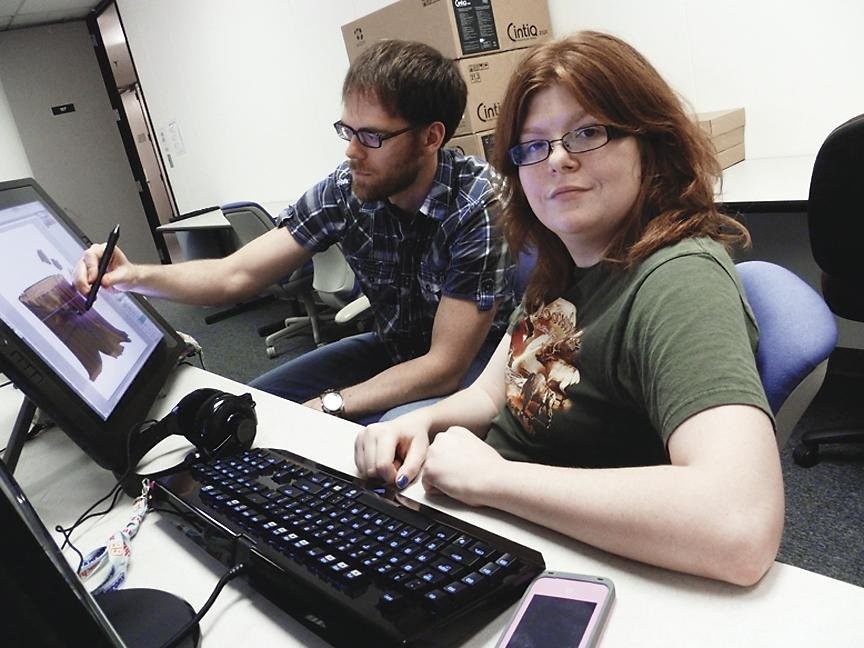
The institute, in Plano, Tex., has given Mr. Winston and more than 80 other autistic young adults training in video-game development, as well as a chance to put their creations on the market through the Apple and Android online stores.
Perhaps more important, the program gives the young adults a sense of purpose and a community of like-minded people at a time when they are no longer eligible for the services and programs that helped them as children.
“Most people don’t think these kids can do this kind of stuff, but they can do phenomenal things,” says Gary Moore, a former manager of a staffing company for the information-technology industry who serves as NonPareil’s president.
A Social Mission
NonPareil is one of a growing number of nonprofits that mix business goals with a social mission. And like many groups with a technology focus, it operates a lot more like a technology start-up firm than a traditional nonprofit when it comes to financing its operations.
NonPareil sees itself as a software firm that happens to be a charity, not the other way around. When Mr. Moore talks about his wildest dreams for the organization’s future, he mentions developing the next best-selling mobile game, not landing a major foundation grant.
“If you build the next Angry Birds, you don’t need a donor,” he says, referring to the wildly popular mobile game that has made tens of millions of dollars for its developer, Rovio. “We look at it as, the donors will give us the hand up, but we’ll eventually sustain ourselves.”
The inspiration for NonPareil came from Dan Selec, a former software-company manager.
His autistic son, like many youths on the autism spectrum, seemed happiest in a predictable daily routine and controlled environments. And he loved the computerized world of video games.
Mr. Selec had an idea: What if you could harness autistic people’s affinity for video games in a way that showed the world their talents?
Many excel in math. Their problem comes in communicating that intelligence to the broader world. Mr. Selec dreamed of creating a training center that would give them a chance to apply their skill.
In 2008, he joined forces with Mr. Moore, who was also wrestling questions about what kind of future his own autistic son would have. Because his son also loved video games, Mr. Moore was immediately excited by Mr. Selec’s idea.
“He can do some incredible things on the computer playing games,” Mr. Moore says of his 16-year-old son. “Anything digital he just gravitates to and can figure it out real quick. But he can’t tie his shoes.”
Together the two men started NonPareil, with Mr. Selec teaching a handful of autistic young adults around his dinner table.
Making the Case
Mr. Moore took charge of the marketing and fundraising. He had never before worked for a nonprofit, so he learned about fundraising as he went along, hoping NonPareil’s concept would be enough to make up for any shortcomings.
He talked to a few venture capitalists and a few foundations. The idea was well received, Mr. Moore says, but prospective donors wanted to wait and see how the fledgling enterprise developed before making any commitments.
“Autistic adults writing software, no one in the world is doing this on a company-level scale, at least not that we know of,” he says.
When they went to the Internal Revenue Service seeking tax-exempt status, Mr. Selec says, their outfit seemed so much like a tech start-up that the agency questioned whether NonPareil deserved the charity designation.
He says he had to explain that, given his students’ disabilities, there was no way that NonPareil could be expected to compete with typical software-development firms in the for-profit world, given the hectic pace that many of those companies require of developers.
“We had to go round and round with the IRS to explain that we needed the extra time,” Mr. Selec says. “Our guys might need a couple of days off when life falls in on them.”
An Anonymous Donor
NonPareil got nonprofit status. The word spread and interest grew. Within eight months, the center was teaching more than 50 students. Its first training center opened in 2010 on the campus of Southern Methodist University.
NonPareil opened the SMU center after Mr. Moore landed the organization’s first “angel” investor, almost by accident. The parent of a student involved in the program had been talking with Mr. Moore for months about the charity’s needs. After a series of breakfast and lunch meetings, the parent agreed to donate the $200,000 that NonPareil needed to lease classroom space and buy its first computers.
“We didn’t even know they had that capacity,” he says of the parent, who wants to remain anonymous.
Today, NonPareil has more than 80 students. The group is about to add another Texas location and a California training center.
“Our intent is to branch out and establish NonPareil training centers around the country,” Mr. Moore says. “There’s millions of adults out there with autism and very little hope for them to get gainful employment.”
Apps for Sale
Last year, the group’s annual budget grew to $650,000, and Mr. Selec expects it will top $1-million by year’s end. NonPareil now has eight full-time employees, with seven longtime students also serving as part-time instructors.
About two-thirds of the organization’s budget comes from tuition, Mr. Moore says. The rest comes mainly from donations offered by parents of students in the program.
Day to day, the organization operates much like a cross between a technical school, a software firm, and a charity. Students use software Mr. Selec designed that allows them to work on games or acquire training.
The software lets students work at their own pace, Mr. Selec says. It also collects data on their proficiency levels at various skills, which he uses in matching students to work together on specific projects.
NonPareil has three applications for sale through Apple’s online store and one through the Android store.
So far, fewer than a thousand of the group’s 99-cent games have been sold. Mr. Moore says he expects it will take several more years of training for the students to fully realize their potential.
Traditional Fundraising
He points to the effect the program is having on students like Aaron Winston, who is developing an iPhone game in which a player must help an ape in a spacesuit dodge asteroids, comets, and space junk.
Mr. Winston says his involvement with NonPareil gives him a place to go every day where he can be with people like him. He gets to do a job he loves, at a more deliberate pace that allows him to succeed.
“It’s given my life meaning,” he says. “It’s given me a future.”
Even with its focus on game development as a means of generating revenue, NonPareil needs more traditional sources of charitable dollars.
Mr. Moore and a full-time fundraiser work the phones and their contacts, looking for donors. Their task remains challenging, even as word spreads about NonPareil, says Mr. Moore.
“There’s this thing called the bad economy,” he notes. “And donors can be picky about their causes. We haven’t been around that long, we’re fairly new.”
To help make ends meet, NonPareil also runs some fundraising events. Its first, a soapbox derby with a local Rotary Club, raised about $7,000. Last fall, the group held its first annual golf tournament. It’s also planning a spring gala.
The organization’s golf tournament raised more than $30,000, “which people tell me is pretty good for the first time. What I’m finding is it takes a lot of time, effort, and people—volunteers,” says Mr. Moore. “I’m looking forward to the day our golf tournament raises $500,000, because I see other charities around here doing it. But they’re on their 28th annual tournament.”
NonPareil hasn’t caught the eye of major foundations yet, Mr. Selec says. With only three years of audited financial statements, he figures it must still look pretty new to grant makers.
“Eventually those dollars are going to come,” he says. “We’ve got a great model. I’m talking about helping people who haven’t been successful at anything else in their lives, and they’re helping to build software.”
5 Things Charities Can Learn From Tech Start-Ups
Dan Selec, chief executive of the NonPareil Institute, offers the following advice to nonprofits taken from the world of technology start-ups.
• Think big. When creating a group’s mission, keep far-reaching goals in mind. n Let the donor give the way he or she wants to give. Accept non-cash gifts, restricted gifts—whatever helps build the relationship.
• Innovate. Think of new and powerful ways to carry out the group’s mission.
• Hire the best people and take care of them. The business model should provide the resources to get and keep high-quality employees. Good workers will do a good job carrying out the mission.
• Show results. Measure the success of the charity’s work and share the data with donors.