Common Ground: Police and Teenagers Go From Strangers to Friends

By Rebecca Koenig
Contributor
September 6, 2016 | Read Time: 2 minutes
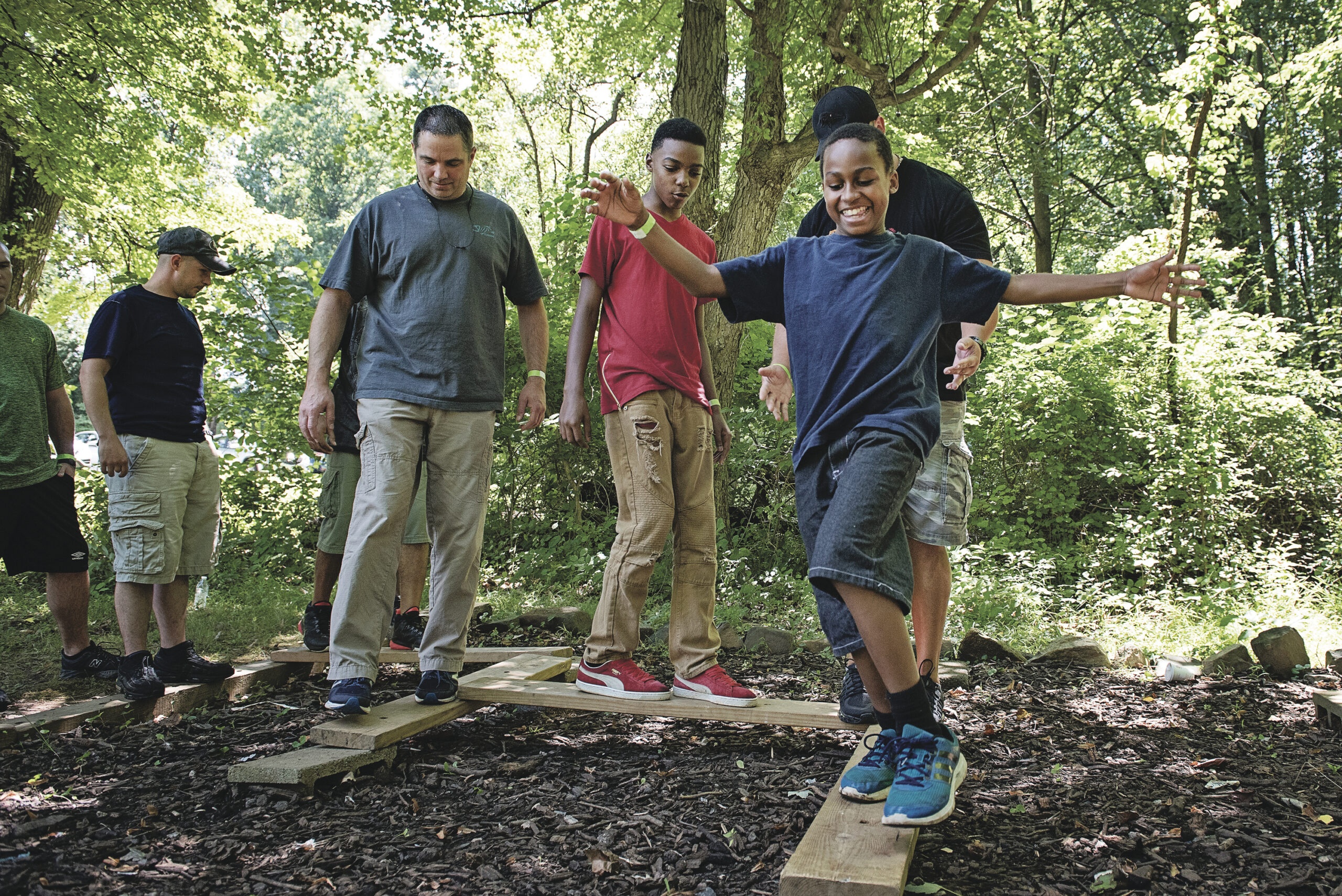
The first moments of the Police Youth Challenge rarely seem promising. Teenagers and officers gather in separate groups on Thursdays in Baltimore’s Leakin Park, eyeing each other warily like boys and girls at an eighth-grade dance.
But over a day full of team-building exercises, many participants gain each other’s trust — a step nonprofit and civic leaders believe is critical to making Baltimore safer for everyone.
Since 2008, police and middle- and high-school students have played outdoor games and tackled ropes courses together through the program run by the Baltimore Chesapeake Bay Outward Bound School. The effort grew in 2015 when Kip Fulks, an executive at the Baltimore-based sports-apparel company Under Armour, made a donation in response to the death of Freddie Gray, a young black man, in police custody.
Pressure from Under Armour to make the program mandatory for all city police officers helped fuel its growth from serving 360 to 6,000 people annually, as did data from a Johns Hopkins University study on how effective it is in changing participants’ perspectives. Surveys showed that 64 percent of student participants believed that police were trustworthy after the event, up from 36 percent before. Of officers surveyed, 75 percent reported feeling “socially close” to youths after the event, up from 58 percent before.
The conditions under which the police and students meet are central to the program’s success, says Ginger Mihalik, executive director of Baltimore Chesapeake Bay Outward Bound School. They arrive as equals. Officers don’t wear uniforms or carry weapons. The park is neutral territory. And both groups work toward a common goal unrelated to their daily concerns.
“The best way to build a relationship is to get vulnerable in front of someone, and that’s what our 40-foot climbing wall does,” Ms. Mihalik says. “We take them from strangers to friends who feel like they’re part of the same community at the end of the day.”