Ford’s Next Leader Needs Grass-Roots Experience and Entrepreneurial Spirit, Say Nonprofits

By Maria Di Mento
Senior Editor
April 21, 2013 | Read Time: 6 minutes
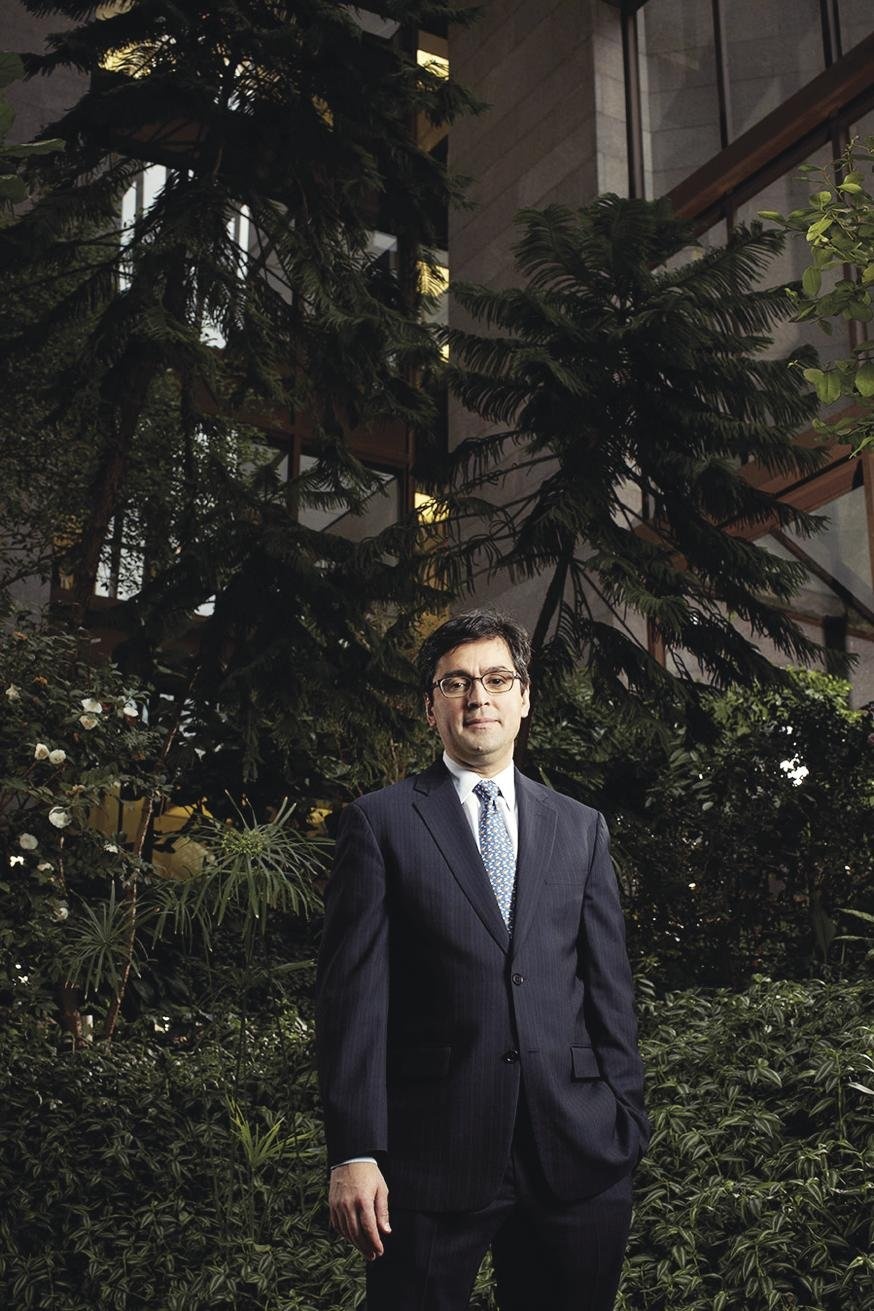
The Ford Foundation, behind only the Bill & Melinda Gates Foundation in terms of wealth, is seeking a new president in the wake of the surprise announcement last month by Luis Ubiñas that he plans to step down in September, ending a five-year term as chief executive that drew mixed reviews.
Finding the perfect leader for an institution as big and powerful as Ford is never easy, says Paul Light, a professor of public service at New York University who studies nonprofits. He compares running a large foundation to being president of the United States.
“There is no training for that job,” says Mr. Light. “You can be a hell of a candidate and a terrible president.”
Beyond Tradition
The campaigning stage is well under way, though nobody is willing to predict the front-runners on the record. Still, people in the nonprofit world have plenty of ideas about the kind of person who should take over.
The path to the perfect candidate begins in the trenches of nonprofits, not in the executive suite, say many philanthropy experts.
“They should look for people who have really gotten their boots dirty over many, many years and have tremendous in-depth knowledge and experience of social needs and how philanthropy can help to resolve those problems,” says Michael Edwards, a distinguished senior fellow at Demos, who oversaw grants on government and civil society at Ford from 1999 to 2008.
During its 76 years, Ford has had nine presidents; most of them came from law, academe, or business, as did Mr. Ubiñas, who worked at McKinsey & Company before joining the fund.
Mr. Edwards urges Ford’s board members and Spencer Stuart, the recruiting firm seeking Mr. Ubiñas’s replacement, to look beyond people with such traditional backgrounds and instead consider leaders in human rights, labor unions, progressive journalism, and social-change nonprofits.
An Entrepreneur
Just as important as the background of Ford’s next president will be his or her sound judgment, deep understanding of how to collaborate with others, and ability to clarify the foundation’s mission and direction, say philanthropy experts.
The foundation would also do well to appoint someone who understands entrepreneurship and has experience starting a global charity, says Adam Meyerson, president of the Philanthropy Roundtable.
As a model for the type of leadership Ford needs, Mr. Meyerson points to nonprofits such as the Acumen Fund, Doctors Without Borders, and Global Fund for Children.
“There’s a great entrepreneurial vitality in philanthropy, and I think there would be many candidates coming from that universe for the Ford Foundation to consider,” he says.
Tackling Poverty
Because Ford has traditionally focused much of its grant money on fighting poverty, many observers hope the next president will have experience fighting inequality around the globe.
Jaime Grant, executive director of the Arcus Center for Social Justice Leadership at Kalamazoo College, previously led Leadership for a Changing World, a $19-million effort financed by Ford to support the leaders of small nonprofit groups and identify what made them successful. She is among those who believe Ford must look to the grass roots for its next president.
“There are brilliant people out there who know the experience of poverty in their bones,” says Ms. Grant. “These people have been doing so much for so long with so little that they know how to get things done and could do so much with resources like Ford’s.”
The Philanthropy Roundtable’s Mr. Meyerson says Ford should seek a president who will take a fresh look at what the foundation has done to help the poor. He points to Ford’s history as one of the main supporters of civil-rights groups in America over the past 45 years.
Ford’s support allowed those groups to improve race relations, pave the way for the growth of a larger black middle class, and make it easier for blacks to step into important leadership roles, he says.
“But we’ve also seen a collapse of the black family, the catastrophic failure of public schools to educate low-income children, and a decline in upward mobility among the poor,” Mr. Meyerson says. “So the next president may want to re-examine whether the foundation’s been following the best strategies for expanding opportunities for racial minorities in America.”
Improved Finances
Ford also needs to collaborate more with its grantees, say observers such as Lindsay Coates, executive vice president at InterAction, a coalition of American nonprofits that work overseas.
Because Ford makes grants all around the world, says Ms. Coates, it is in a good position to foster cooperation among international nonprofits.
“The person who takes this job over is going to need to have the capacity for networks and collaborations systems that are intertwining with one another,” she says.
Ford’s next leader will probably face an easier financial situation than Mr. Ubiñas, who took the reins in 2008, just as the world was beginning to cope with a staggering financial crisis that caused the foundation’s assets to plunge and more charities to make urgent pleas for help.
Ford’s assets have partially rebounded but are still more than 27 percent lower than before the downturn, after adjusting for inflation.
Because of the endowment’s drop, Mr. Ubiñas was forced to offer buyouts to a third of the foundation’s staff.
Even with the challenges caused by the reduced assets, Mr. Ubiñas started new grant-making efforts to end child marriage globally, curb climate change, increase the amount of time American children spend in school each day, and support documentary films on social inequity.
Some changes he made were unpopular, such as ending Ford’s $100-million Initiative to Strengthen Philanthropy, a program that supported indigenous foundations worldwide; eliminating most of its government and civil-society grants; and cutting its programs in Russia and Vietnam.
‘What Is Visionary?’
One of the first steps a new Ford leader should take, experts say, is to clarify the grant maker’s mission and message. The foundation’s current slogan, “Working with visionaries on the front lines of social changes worldwide,” draws much criticism from people who say it is too squishy for an organization doing such important work.
“It’s a perfectly lovely tag line, but it doesn’t mean anything,” says Mr. Light, of New York University.
“What is visionary? Where are the front lines? What is change? I never understood what that meant.”
Such broad and sweeping terms have become ineffective because they show little substance, says Shepard Forman, who oversaw human rights and international grants at Ford from 1977 to 1998 and is now president of the LAFF (Life After the Ford Foundation) Society, an independent, volunteer-led association of Ford alumni.
Ford’s next leader, he says, should do all he or she can to avoid the clichés that become “empty banners” rather than decisive statements about the foundation’s purpose in the world.
“The next president needs to look outward,” says Mr. Forman, “and ask him/herself what the foundation is about and what it wants to be and accomplish as a 21st-century foundation, and move boldly forward.”