Leader of Ms. Foundation Hopes to Expand Feminism Beyond White Women

By Caroline Bermudez
Contributor
July 10, 2014 | Read Time: 4 minutes
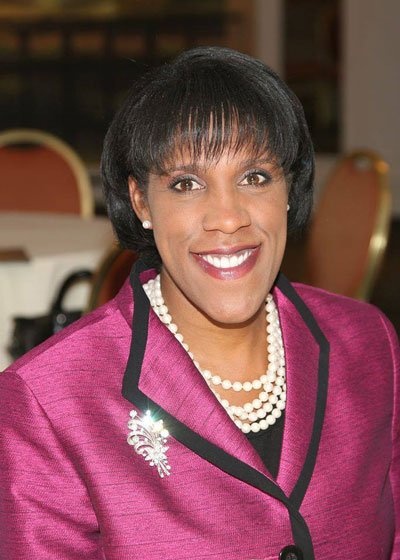
Teresa Younger knows that many people think the feminist movement has been led largely by white, middle-class women.
In her new role as head of the Ms. Foundation for Women, Ms. Younger, 45 and African-American, is determined to show that she sees a lot more diversity in both the history and the future of feminism.
Her goal as the group’s leader, she says, is to “diversify our grant making and what philanthropy looks like.”
She replaces Anika Rahman, who left the organization last year. Ms. Younger will draw on her strong background of advocating for women’s rights.
As head of Connecticut General Assembly’s Permanent Commission on the Status of Women, she ran campaigns to raise the minimum wage and provide paid sick leave, and also helped press for the passage of legislation to hold colleges responsible for preventing and reporting sexual assaults.
In addition, she was the first woman and the first African-American to lead the American Civil Liberties Union of Connecticut.
High on Ms. Younger’s agenda is fostering a sense of inclusion, both in setting priorities for advocacy and reaching out to donors, she says.
She plans to travel America to talk with grantees, donors, and other philanthropies to solicit their ideas and goals for the 40-year-old organization, which was created by three co-founders of Ms. magazine and the actress Marlo Thomas.
Ms. Younger wants to build on the group’s $8-million annual budget by seeking bequests and other planned gifts, as well as more big gifts from women. Her goals include adding to the endowment and increasing the organization’s ability to make grants to grass-roots groups.
She hopes that through her fundraising, she can show women how to “use their money to talk about the way we want it to influence the economy,” she says.
‘A Dream Come True’
Fighting for women’s rights is something Ms. Younger has done since childhood. She was introduced to feminism, she says, through her activities as a Girl Scout while growing up in South Dakota.
“It was the first spot that I learned fairness was important, you had an obligation to make a difference in the world, and not everyone was treated equally,” she says.
In her 20s, she planned to spend her career working at children’s nonprofits—until she ran a youth camp and met a pregnant 12-year-old girl from a low-income family. After speaking with the girl’s mother, she decided to shift her focus from children to promoting policies that protected the rights of young women.
Cathy Raphael, board chair of the Ms. Foundation for Women, says Ms. Younger’s long history of fighting for women is why she was ideal for the job.
“She had a real sense for our mission because it’s been her mission forever,” Ms. Raphael says.
As Ms. Younger looks to shape the organization’s priorities, she plans to put safeguarding reproductive rights high on the agenda.
That issue became even more pressing, she says, after two Supreme Court rulings in June. One said family-run and other closely held companies like Hobby Lobby cannot be required to pay for contraceptives for their employees; the other held that Massachusetts was wrong to require buffer zones to keep protesters at a distance from abortion clinics.
Ms. Younger says that although the decisions disappointed her, the discontent she has seen expressed since the rulings is a sign that feminism is not on the decline.
“One of my key goals is to remind people from all walks of life that the Ms. Foundation is here,” Ms. Younger says.
“The Supreme Court’s decisions emphasize the importance of women taking their collective power to make change happen and to recognize the issues that happen in Washington are affecting women on the ground.”
‘Insult to Women’
In addition to protection of reproductive rights, women’s safety has long been a priority for the foundation.
A self-described “huge” football fan, Ms. Younger often listens to sports news on her car radio. She was shocked to hear that Ray Rice, a running back for the Baltimore Ravens, had been suspended for two matches of the National Football League’s season after knocking his fiancé unconscious at an Atlantic City casino. He was indicted by a grand jury, but he was not charged.
“I thought it was an insult to women,” Ms. Younger says.
She wrote an op-ed for USA Today denouncing the lightness of Mr. Rice’s punishment and appeared on ABC News’s evening broadcast. The Ms. Foundation has posted an online petition urging the NFL to take a stronger stance against domestic violence.
Ms. Younger hopes her efforts bring attention to the issue. “We have seen a culture of intimate partner violence,” she says. “It’s not just this one piece.”
[Editor’s Note: This story was updated on August 7, 2014 to include additional information.]