Mysterious $10 Billion Crypto DAF Barred in Georgia, Appears to Re-Emerge in Wyoming
Fraudulent charities often shop for states with lax jurisdiction. A crypto-based donor-advised fund appears to have done that after Georgia authorities shut it down.

By Alex Daniels
Senior Editor, Foundations
July 31, 2026 | Read Time: 6 minutes
A donor-advised fund with assets topping $10 billion dollars that was barred from operating in the state of Georgia appears to have resurfaced in Wyoming, underscoring what experts say is a lack of national coordination to combat charity fraud.
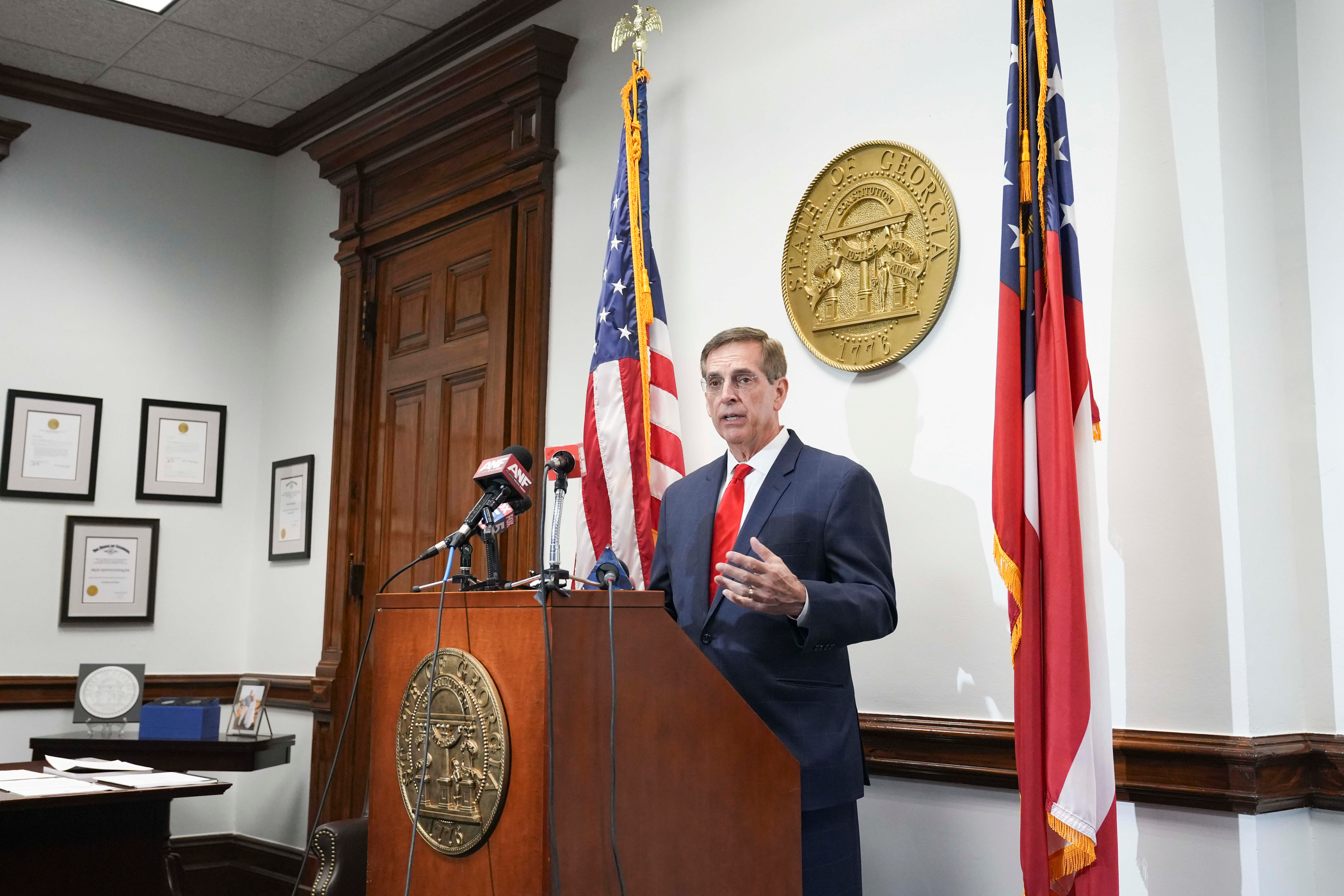
In June, Georgia Secretary of State Brad Raffensperger’s office ordered SDG Impact Fund to stop soliciting charitable donations in the state and forbade Anthony Suber, the fund’s CEO, from running a charity there. The order was accompanied by a $100,000 civil penalty. Raffensperger’s investigation found that Suber commingled charitable funds with his own bank accounts, used money in the accounts to pay for a house in Louisiana, a private school’s tuition, and numerous credit card purchases.
Suber did not return calls from the Chronicle.
Violations of charitable solicitation rules are not uncommon. What makes the SDG Impact Fund’s case unusual is the sheer size of the organization and the fact that the last public informational tax form available for the organization is for the year ending in December 2022 even though it continued to solicit charitable donations for several years after that.
“It’s a lot of money to go missing,” said Karen Gano, a lawyer who previously served as assistant attorney general in the charities unit of the Connecticut Attorney General’s office.
Using Donors’ Money for Personal Expenses
A massive haul of crypto donations catapulted the SDG Impact Fund from a $117,000 charity in 2017, to a $10 billion collection of 146 donor-advised funds four years later. That’s an asset base on par with some of the biggest names in philanthropy.
The fund was set up to give donors the ability to make charitable donations to support the United Nations Sustainable Development Goals, which are longstanding global efforts to do things like improve maternal health, end hunger, and provide clean, affordable energy. But as its assets soared, it only reported meager grants to those efforts in its filings with the Internal Revenue Service.
In 2022, as crypto asset values plunged, SDG Impact Fund still reported more than $10 billion in assets in its last IRS filing. Even after it informed some donors that it was dissolving, it still solicited donations through the summer of 2025, according to Raffensperger’s order barring Suber from operating in Georgia. By then, several donors reported that the fund had ghosted them and ignored requests to direct money from their funds to specific charities, the Chronicle previously reported.
According to the order, Suber “routinely used donor funds for noncharitable purposes.”
For example, Raffensperger’s investigation found that Suber wired $175,000 to cover a demand from a venture capital firm made to one of the fund’s donors and appears to have used $773,000 in donor funds to make an investment in a Chinese electric car manufacturer. Nearly $100,000 was used to pay for a New Orleans residence, $42,525 went to the Atlanta Hawks basketball team, and various amounts went to cover private school tuition for family members and personal credit card payments.
The Fund May Have Re-Formed in Wyoming
The investigation found that “there is reason to believe” Suber had created a similarly named organization called SDG Global Impact Fund that was also registered as a Georgia charity. In February, a charity with the same name was given tax-exempt status by the Internal Revenue Service and incorporated in Wyoming, according to an IRS determination posted on the fund’s website and incorporation documents maintained by the Wyoming Secretary of State’s office.
The practice of an organization getting banned in one state and then simply setting up in another state is a regular ploy, said Gano, who didn’t have specific knowledge of the Wyoming fund. “It’s common for bad actors to move around and shop states that have fewer staff or are less likely to flag them,” she said.
The new charity’s incorporation papers do not name Suber or any other officers of the nonprofit. It used what is called a registered agent, a third party company to fill out its application forms. In Wyoming, it is not necessary for the officers of a company to have their identities on public file when they use a registered agent.
Because there is no formal coordination between state attorneys general, it is unlikely that charity regulators in one state would be tipped off about red flags a new applicant might raise. A state regulator can send a referral to the IRS, but many states have stopped doing so because they have seen no action taken, according to Erynn Beaton, a professor at the Ohio State University’s John Glenn College of Public Affairs, who serves as a charities adviser to the Ohio Attorney General.
According to a ranking of state charity laws conducted by the Philanthropy Roundtable, Wyoming has the second lowest regulatory burden for charities behind Montana. Charities can use third-party registered agents to file for incorporation, and they do not have to file a separate application to solicit charitable donations.
More states are removing such reporting requirements ostensibly to project board members’ privacy, Beaton said, adding that it is a dangerous trend. “Board members are the fiduciary agents acting on behalf of the taxpaying public to ensure funds are stewarded responsibly,” she wrote in an email: “Such a role does not require confidentiality but instead accountability.”
Neither SDG Global Impact Fund’s registered agent, Registered Agents Inc., nor the Wyoming Secretary of State’s office responded to calls from the Chronicle.
This year a bill that would have tightened regulations on registered agents passed the Wyoming senate but was tabled in the House. The measure would have required registered agents to provide the names and addresses of the officers of corporations they represent.
A DAF and an Investment Fund
The new iteration of SDG Global’s website does not list the nonprofit’s leaders, but several entries on it were written by Tony Suber, a name Anthony Suber is known by.
Suber lists some of the impact of the fund’s support on the environment, health care, and education, including using funds to train 500 farmers in sustainable agriculture practices, planting more than 1 million trees in Latin America and Asia, and helping achieve a 20 percent reduction in carbon emissions in local areas, which are not specified.
“The future of our planet depends on collective action,” Suber writes. “By aligning philanthropy with sustainability, we are creating a greener, healthier, and more resilient world.”
It is not clear from the SDG Impact Fund’s filings how the money in donor-advised fund accounts helped achieve those priorities. In 2022, it paid out $8.5 million, only 0.1 percent of its massive asset base, and the tax filing provided no information about grant recipients.
The Wyoming SDG Global Impact Fund not only plans to include charitable donor-advised funds but it also plans to operate a pooled investment fund. By doing so, it is taking on an additional layer of risk by offering a return to investors, said Brian Mittendorf, an Ohio State University nonprofit tax professor who, along with Helen Flannery of the Institute for Policy Studies, first uncovered the SDG’s huge crypto gains.
The Wyoming fund, which has many of the same characteristics of Suber’s Georgia fund, appears to be embarking on an even riskier path without explaining what happened to the $10 billion in mostly crypto donations it reported four years ago.
Asked Mittendorf: “What did they do with those assets?”