Nonprofits That Forge Partnerships Survive Crises Better, Study Finds
It isn't about having more partners but the right partners.

By Stephanie Beasley
Senior Writer and Fellowship Director
May 21, 2026 | Read Time: 5 minutes
Government funding cuts, fiercer competition for foundation grants, rising costs, and legal threats are among the pressures bearing down on nonprofits today and stress-testing them in ways few anticipated.
A new University of Kansas study examines how some nonprofits manage to meet their missions despite unexpected challenges and a surge in demand for services. This resilience, the study finds, not only depends on having more partners; it’s about having the right ones.
Using data collected from July 2021 to April 2022 from 59 nonprofits in Douglas County, Kans., the study examines how some groups demonstrated resilience as well as an “adaptive capacity” during the pandemic. Researchers evaluated two things: a nonprofit’s ability to expand services and develop backup plans as challenges arose and the staff’s ability to collaborate and solve internal problems.
Researchers concluded that for nonprofits to weather crises well, they need partnerships with other nonprofits to expand their networks, especially with organizations that have differing missions, says Cameron Piercy, a communication studies professor and co-author of the study. “They need that bridging ability,” he says.
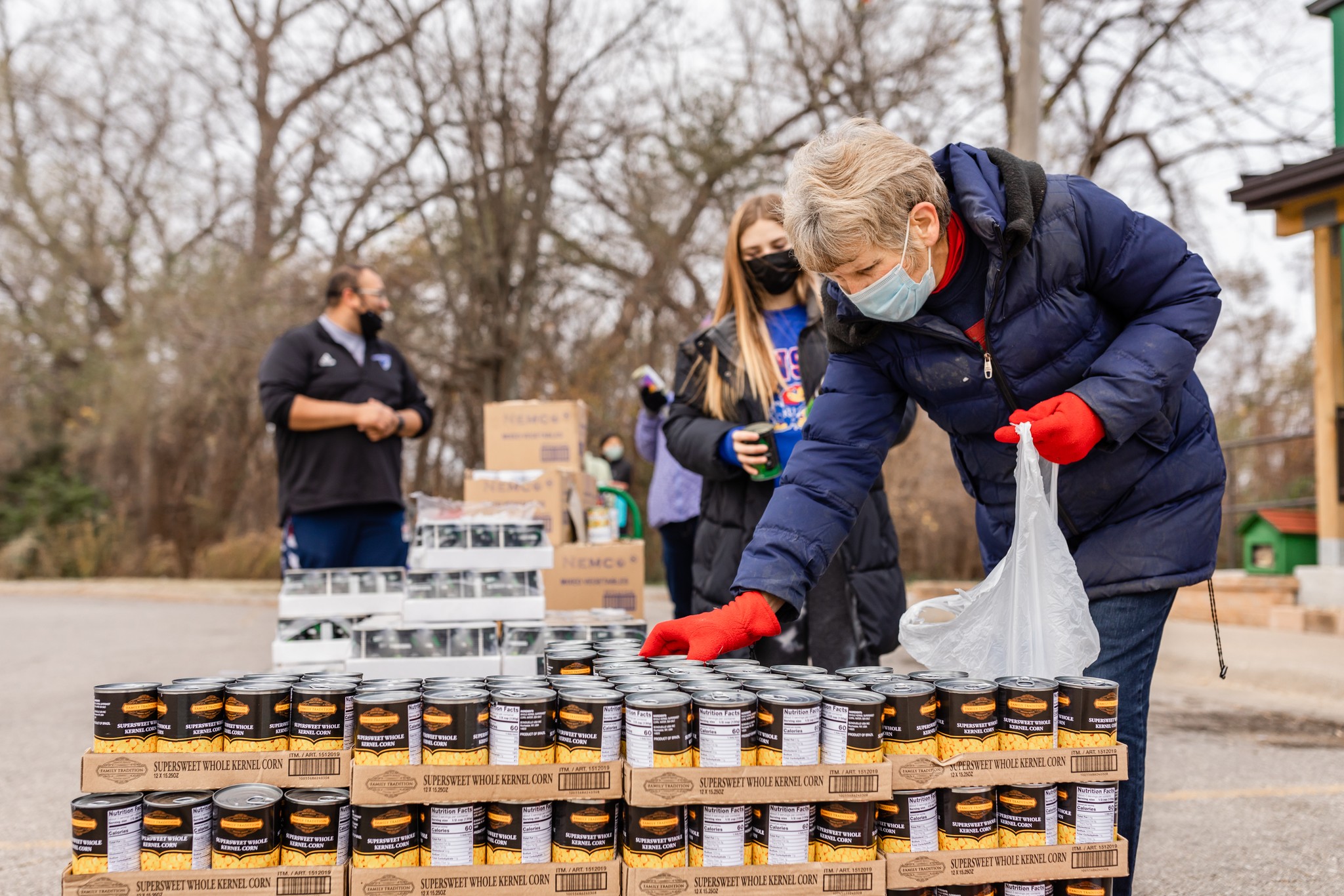
When Covid struck, the most successful organizations found ways to achieve resilience and adaptability, the study found. While the study did not name specific organizations, local examples of successful groups include Just Food, a food bank and pantry that managed surging demand and a logistical crisis. “The pandemic was really wild for us,” says Aundrea Walker, Just Food’s executive director. “We had to continue figuring out how to feed our community.”
For example, when safety restrictions forced Just Food to abandon its indoor pantry, staff and volunteers built a drive-through distribution system and launched a no-contact delivery program for people in quarantine that continues to serve seniors and others with limited mobility today.
One key to its success: Just Food worked with partners across the county, distributing food through an early childhood education center and coordinating with other agencies to address unmet needs, Walker says.
In recent years, Walker says, it has become easier to collaborate because the nonprofit community has become less competitive, despite the region’s relatively small donor pool. Local nonprofits now regularly share resources, coordinate services, and refer clients to each other, which creates a more efficient and less redundant system, Walker says.
And the organizations do not undermine each other’s funding because they play different roles in the community and don’t see themselves as competing for the same donors, she added. Last fall when federal food assistance was disrupted by a government shutdown, Just Food and several other nonprofits, including the Salvation Army, held a joint fundraiser at the Douglas County Community Foundation. They raised more than $80,000, Walker says.
Each nonprofit recognizes that a web of nonprofits is required to meet complex community needs, Walker says. “You have individuals that need resources, and not just food,” she says. “They might need clothing, child care, help for a domestic violence situation, medical, dental, mental health — there’s very much overlap with the other social services in town,” she says.
Ties to Nonprofits With Different Missions Are Key
The study found that resilience was strongest among nonprofits with “bridging” connections, relationships that span different sectors and include groups that don’t often work together. Resilient organizations tend to have diverse networks, Piercy says.
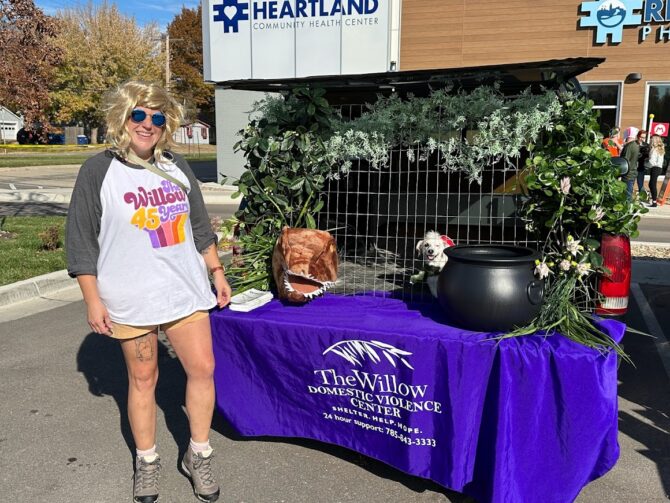
At the Willow Domestic Violence Center, collaboration was critical. Founded in 1976 as a volunteer effort to shelter women fleeing abuse, the center had to quickly reduce capacity during the pandemic, shifting residents into separate spaces or hotels for safety. At the same time, demand rose as people were confined at home.
Leaders coordinated closely with other abuse and trauma centers and with groups like Just Food that offered other critical services. The nonprofits divided responsibilities and shared information, says Adrianne Nuñez, the center’s director of communications.
Just Food and the Willow Center showed other nonprofits how teams could adapt quickly and function well under pressure. In fact, many of the pandemic-era changes have endured.
Just Food now spends about $40,000 a month purchasing food through a combination of community donations, public funding, and support from foundations and corporations. This approach is a sharp shift from the food bank’s earlier reliance on food donations. About 83 percent of the funding to buy food comes from individuals in the community, Walker says. Just Food held on to the pandemic donors and their contributions, which enabled it to buy larger quantities of food and meet continued high demand, she says.
The Willow Center demonstrated resilience during the pandemic by introducing virtual support groups and hybrid services. Now the center has branched out to form partnerships with other local groups.
For example, the center co-hosts educational movie nights with the Lawrence Arts Center. The film series focuses on films from the 1980s, such as Sixteen Candles, that include problematic treatments of topics such as sexual assault, Nuñez says. “This is a fun event where we get to talk about our mission and about healthy relationship dynamics,” she says, adding that the film nights draw a devoted audience. They bring in people who might be unfamiliar with the arts center, increasing its reach and attendance, she says.
The Willow Center and Just Food demonstrated the kind of adaptive capacity that the study says could be critical for organizations to manage changes. The most successful groups proactively made decisions to prepare for unforeseen challenges, the study found.
Building the right partnerships is harder than it sounds. Nonprofit leaders often face a difficult choice: invest in deepening relationships with natural partners or pursue collaborations with organizations outside their usual orbit, Piercy says. Both approaches have value, but time and resources rarely allow for both, he added.
Nonprofits often don’t realize the full extent of their own networks, which can make it difficult to identify new partnerships to pursue, Piercy says.
Piercy’s advice to nonprofit leaders is to start by assessing your organization’s needs. Then build partnerships beyond your cause that can strengthen individual nonprofit and the whole community’s ability to respond to crises. “Take your need and pair it with your goals for connecting with other organizations.”