What to Do When the President Calls You ‘Corrupt’
Recent White House rhetorical attacks against nonprofits are unprecedented. Will donors listen?

By Drew Lindsay
Contributor
October 28, 2025 | Read Time: 9 minutes
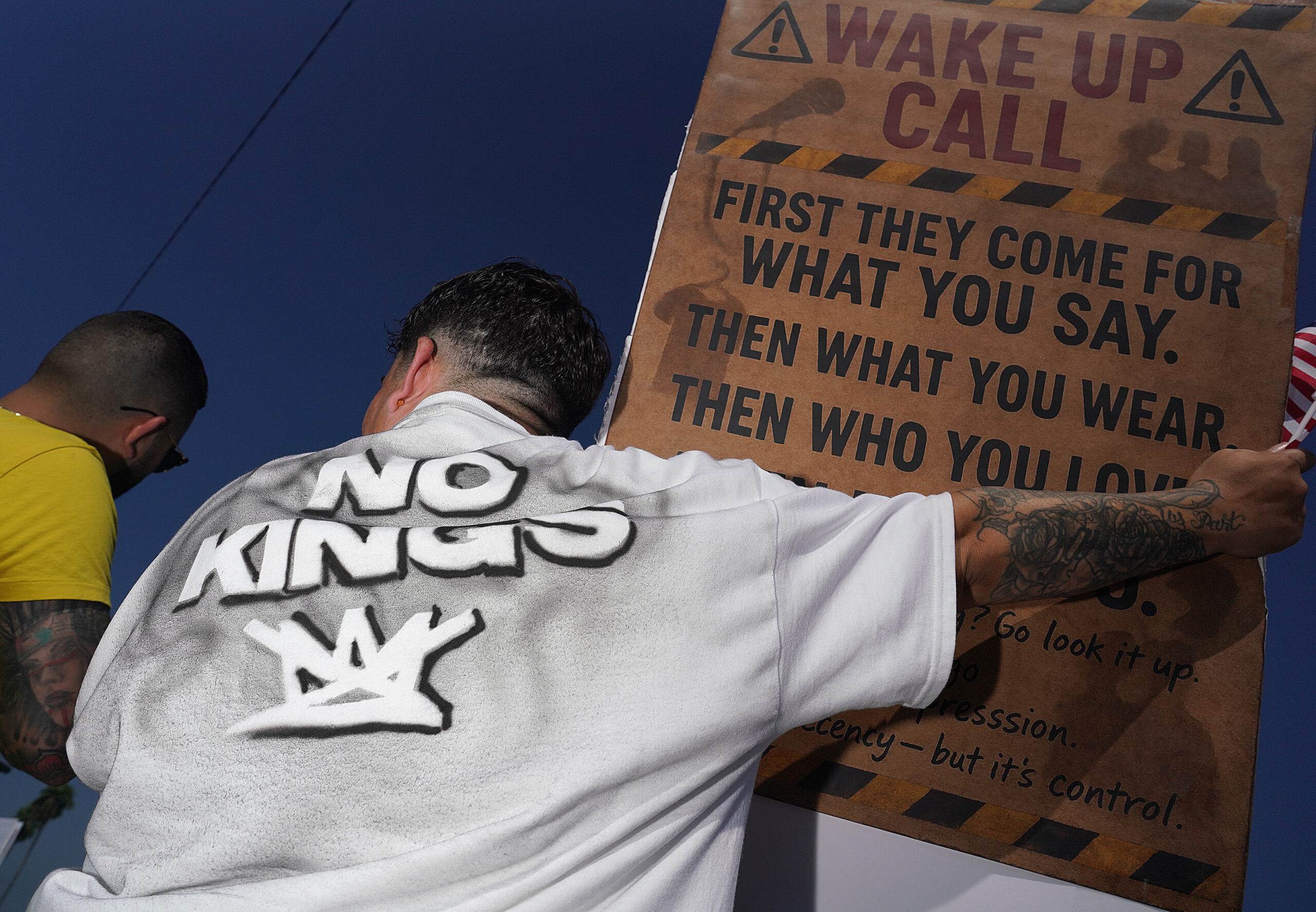
As the Trump administration cuts funding to nonprofits and challenges their tax-exempt status, the president and many of his officials justify the actions with rhetorical attacks that potentially represent a material threat of a different kind: What if Americans believe the president and pull back on charitable giving?
In speeches, executive orders, and social-media posts, the president and many of his allies declare that waste, fraud, and abuse are rampant in the sector. So, too, they say, is an anti-American “woke ideology” that led to, among other things, Charlie Kirk’s assassination.
More From The Commons
-
Opinion | Watch Your Language
Why Philanthropy’s Democracy Talk Turns People Off
-
Division in America
The Church Americans Often Mock Could Teach Us to Heal
Such verbal assaults from the White House are unprecedented — presidents typically use their microphone to extol charitable groups. At stake, say experts and nonprofit leaders, is the public’s trust in nonprofits, which polls indicate was in decline even before Trump came to office. The barrage also could dampen giving, fueling the fears of donors who worry that their gifts go to grift or excessive salaries.
A food bank donor may pause, worried that its leader is “doing something nefarious” like selling donated goods, says Kristen Grimm, founder of Spitfire Strategies, a communications firm, and author of a guide on how nonprofits can build trust.
“It’s creating a climate of suspicion, and that’s a very dangerous thing to do,” Grimm says. “Suddenly, we become a less charitable nation.”
Although the administration is targeting certain parts of the sector in particular, all organizations are tainted, says Jamie Levine Daniel, a professor in nonprofit management at New York University. “Nothing happens in a vacuum. They’re still affected.”
That the administration is slinging a large share of its allegations at higher education, international-relief groups, and racial-equity organizations is no coincidence, says Glenn Harris, president of the racial-justice group Race Forward. Those are parts of the nonprofit world that champion diversity and people of color.
The rhetoric, he adds, intentionally vandalizes the mission of nonprofits as part of a larger strategy to reset the country’s values and democratic principles. “It’s an assault on civil rights, racial justice, and ideas of who’s included, who’s deserving.”
The Nonprofit Defense
In response, the sector is marshaling words of its own, along with video, social-media campaigns, and more.
The National Council on Nonprofits is running a “Nonprofits Get It Done” campaign that emphasizes the contributions and impact of local groups. “They’re your neighbors who provide urgent, even life-saving help where government and business can’t,” reads a promotion encouraging people to write to their elected federal officials.
The Council on Foundations has organized a social-media and paid advertising effort with video and images of volunteers and messages promoting the “freedom to give.” The Council for the Advancement and Support of Higher Education offers colleges and university toolkits for rallying alumni to defend higher education. It will soon launch a public-relations effort to “deepen public understanding of the impact and value of higher education,” says President Sue Cunningham.
At Independent Sector, leaders are revising the group’s guide for nonprofits that outlines the principles of good governance — work that began before Trump took office but which is even more important now, says CEO Akilah Watkins. “The principles are one way that the sector is taking personal accountability to make sure that we are strong, accountable, and transparent to build stronger trust with the American public.”
There’s a chance such work will be “performative,” says Laurie Styron, who leads CharityWatch, which reports on nonprofit financial abuses and grades groups based on their fiscal management. But she would like the president’s rhetoric to persuade organizations to accept greater regulation and transparency. “There’s reason to be hopeful that the nonprofit sector will get the memo and read the room, but they need to approach it with authenticity.”
Damage Assessment
So far, it doesn’t appear that the attacks have damaged the reputation of the field as a whole. Independent Sector’s annual trust in nonprofits survey, conducted by Edelman about three months into Trump’s term, showed no change. GivingTuesday, which also reports on trust in nonprofits quarterly, reports no movement in its numbers.
Interestingly, trust in higher education increased in 2025, according to Gallup polling, with confidence rates climbing to 42 percent from 36 percent in 2023 and 2024.
The impact on giving likely won’t be clear until at least the end of the year, when many Americans make their charitable decisions. Some donors are pulling away from the causes that Trump has targeted — notably businesses that once supported DEI. More than half of corporate philanthropies say federal scrutiny of DEI has affected their corporate giving strategies, according to a recent Conference Board survey.
Edesia Nutrition, a Rhode Island group that supplies high-energy, nutrient-rich food for international-relief efforts, saw its corporate backers retreat even before Trump took office. Founder Navyn Salem says the funders sensed the changing winds and concluded: “If I align with someone who’s feeding children abroad, that is going to lose me customers. I don’t want to be associated with someone who’s feeding children outside of the United States.”
At the same time, the attacks may be stirring rage-giving, an echo of the “Trump bump” surge during the president’s first term. In April, Harvard saw $1.4 million pour in from 4,000 online gifts after President Alan Garber publicly defied Trump administration demands.
At Edesia, a “Children Can’t Wait” fundraising campaign netted $4 million when the organization typically raises $6 million a year, with the bulk coming at year’s end. It has added 1,600 new donors, doubling the number on its rolls.
“This is resonating with people,” Salem says. “They want to turn their frustration into action.”
At least one school of thought suggests that nonprofits benefit even from negative attacks because they bring attention to the organization’s work and mission. “It doesn’t actually matter whether it’s good news or bad news,” says Woodrow Rosenbaum, chief data officer at GivingTuesday. The organization’s research and other studies indicate that donations are not affected by bad press.
“Negative news about nonprofits doesn’t suppress people’s giving overall,” he says. “Just hearing more about nonprofits is good.”
Past Scandals
This is not the first time that the national conversation has turned to questions of nonprofit integrity and effectiveness. In 1992, news investigations revealed that longtime United Way CEO William Aramony and other organization executives had mismanaged funds to fund extravagant lifestyles — reports that led to their conviction for fraud, money laundering, and other crimes. Months after those first stories hit the media, a Gallup poll found that the share of Americans who believed that most charitable organizations were honest and ethical dropped from 75 percent the previous year to 66 percent.
In the 2000s, mismanagement at veterans’ groups led U.S. Sen. Chuck Grassley to order an investigation to identify “deceitful charities that pocket donations.” Grassley also suggested the IRS wasn’t doing enough “to discern deceitful charities from high-performing charitable organizations.”
Nonprofits, however, have never previously faced a steady drumbeat of accusations and criticism from the White House. Presidents often partner with the sector to enact their agendas, whether that’s national service (Bill Clinton), volunteerism (George H.W. Bush), or faith-based and community service (George W. Bush).
Declared George Bush’s White House: “’Rallying the armies of compassion’ does not merely involve honoring and celebrating the work of nonprofits. It also requires engaging their service in the most effective manner possible to address social ills.”
The current president’s rhetoric is diametrically opposed — and it’s accompanied by threats of retaliation that include targeting groups’ tax-exempt status, notes Harris of Race Forward. Polls show that Americans still believe in equity, diversity, and inclusion, he adds, but are afraid to support efforts to advance it.
“It’s not just rhetorical threats,” he says. “It’s legal threats, it’s intimidation, and it’s harassment.”
The Commons is financed in part with philanthropic support from the Arthur M. Blank Family Foundation, Einhorn Collaborative, and the Walton Family Foundation. None of our supporters have any control over or input into story selection, reporting, or editing, and they do not review articles before publication. See more about the Chronicle, the grants, how our foundation-supported journalism works, and our gift-acceptance policy.