Web-Savvy Supporters Help Make Online Giving an Expanding Bright Spot
60% of big charities say Internet fund raising is stronger so far in 2011 than a year ago, according to latest Chronicle survey.

By MAUREEN WEST
Contributor
May 1, 2011 | Read Time: 7 minutes
More: See how much money large charities are raising online in The Chronicle’s extensive online fund raising database.
Online donations continue to swell charity coffers even at a time when many other types of donations have yet to rebound from the bad economy, a new Chronicle study shows.
Six in 10 charities say they are raising more money online this year than they were a year ago. And 2010 was a good year for online giving, as donations rose 34 percent for the nation’s biggest charities.
In perhaps the biggest sign that online giving has reached financial maturity, nine charities in The Chronicle’s survey reported they received individual gifts of $100,000 or more online—and one of those was for half a million dollars.
“There is a change in donors who are more comfortable online,” says Nancy Klein, chief marketing and revenue officer at the Leukemia & Lymphoma Society, in White Plains, N.Y., which collected one-third of all its donations raised last year via the Internet.
Her group, an early adopter of online giving, raised nearly $79-million online, more than any other group but the American Red Cross and United Way Worldwide, according to The Chronicle’s survey.
The 140 large nonprofit groups that provided data for the past two years to The Chronicle raised a combined $1.2-billion in online donations in 2010, compared with $887-million in 2009.
The Chronicle’s survey was sent to charities that appeared on the Philanthropy 400, the newspaper’s list of the charities that raise the most from private sources.
For many groups in the survey, last year’s earthquake in Haiti produced a big rise in online donations. Twenty groups in The Chronicle’s survey saw their online donations more than double from 2009, largely as a result of giving for Haiti relief and recovery efforts. If giving to the 32 groups that raised money for Haiti are included in the tally, giving rose by more than 50 percent.
Better Web Sites
To boost online giving, many organizations improved their Web sites over the past year, personalizing communication with donors and setting up special features to encourage people not just to make gifts but also to get involved in the cause.
And while some charities are raising substantial parts of their budgets online, that is not yet the norm. Online gifts accounted for a median of 1.5 percent of total giving for all charities in the survey, meaning that half received a bigger share of gifts online and half a smaller share.
The slow economy has prompted many charities to focus their online solicitations on smaller gifts: In 2010 the average online gift was $136, compared with $146 in 2009.
Charities say they are attracting bigger numbers of donations as a result of the push for small donations, and they are benefiting from increased promotion of monthly gifts that donors can automatically charge to their checking account or credit card.
However, some groups are focusing more on big online donors. For instance, Vanderbilt University, in Nashville, reported the largest online gift of any organization in the survey: $500,000. It was part of a four-year, $2-million pledge, but this year the donor decided it was easier to make the payment online, says Charles Melichar, associate vice chancellor of communications at Vanderbilt.
Empowering Donors
Texas Children’s Hospital, in Houston, landed its first $100,000 online gift from Chris Brown, a 40-year-old energy trader, and his wife, Jennifer, who is 34, The Browns say they do everything they can online. They believe others of their generation want to do the same. (See article.)
Before the recession, Texas Children’s Hospital didn’t do much with online fund raising, but it expanded efforts to promote Internet giving in 2008.
“It was suddenly a bright spot in a time when other fund raising was down, and today it’s an integral part of the hospital’s fund-raising strategy,” says John Scales, senior vice president for development at the hospital, “You get people engaged, and they give.”
Last year, the hospital was one of 46 groups in the survey that grew online donations by at least 40 percent. Online gifts rose nearly 70 percent, from $725,000 in 2010 to $428,000 in 2009.
One reason the hospital did so well is that its Web site provides features for people who want to do fund raising on the hospital’s behalf, says Tara Mermis, its manager of e-philanthropy.
“We used to get phone calls from people wondering what they might do to help. Now we can give them a way to help us raise money,” she says. A local race-car driver raised $25,000 for the hospital with the help of the site’s features.
‘More Personalized’
The Christian Foundation for Children and Aging, in Kansas City, Kan., which helps more than 250,000 donors channel gifts to 300,000 needy children and older people in 22 developing countries, is among the 82 groups in The Chronicle’s survey that say 2011 is thus far shaping up to be a stronger year for online fund raising than 2010.
In September 2010, the organization unveiled a new Web site that profiles the children aided by the charity and allows donors to select the individuals they want to help.
The average online donation rose from $71 to $78, and total online funds increased 15.7 percent over the year. The charity plans to do more to improve its site, such as offering more cultural background information about each country served and enabling donors to send updates to the children and older adults their gifts support.
“We hope they will see it as a more personalized experience,” says Laney Haake, director of sponsorship operations. “It’s never been more important to have a good Web site. People have become more selective about who they give to, and they are researching organizations online. Once you get them, you have to treat them like they are gold.”
Text Messaging
Most of the charities in The Chronicle’s survey are focusing on the basics, like strengthening their Web sites, and not on using cutting-edge techniques.
Of the 129 charities that answered The Chronicle’s question about text-message fund raising, about half said they have no plans to offer such appeals this year.
But more groups may soon embrace the idea.
“If you asked me six months ago if I could envision doing anything with cellphone giving, I would have said ‘no chance,’” says Greg Baker, president of Renaissance Charitable Foundation, an Indianapolis group that manages donor-advised funds. (Such funds allow donors to make a gift, take the tax benefit, and later decide which causes should receive the money.)
But he got a call from a Pennsylvania State University student who was organizing the annual dance marathon to raise money for children’s charities. Students wanted to use text messaging during the marathon to raise additional funds but needed a sponsor to handle it, and Mr. Baker obliged.
Several times during the 46-hour event, dancers were asked to get out their cellphones and text another $10 donation, providing more than $20,000 in additional proceeds for Renaissance to distribute.
Last year Renaissance struck a partnership with Visa and Blackbaud, a company that sells online fund-raising tools to charities, on a pilot project to see how to better motivate people to give online via credit cards. As a result, the group received an average online gift of $2,117—the highest among all charities in The Chronicle’s survey.
Visa set up a Web site called Visa Giving Gateway and promoted it on its Visa bills. Customers could make donations to their favorite charities through Renaissance, which distributed the money. Donors appreciated the fact that they didn’t get direct pleas for support, Mr. Baker says. “Some people don’t want to be inundated with ongoing gift appeals.” A total of $260,352 came in, including one donation for $35,000 and a couple for $10,000.
In Person Is Best
But even successful online fund raisers say the Internet will never replace in-person solicitations for big gifts.
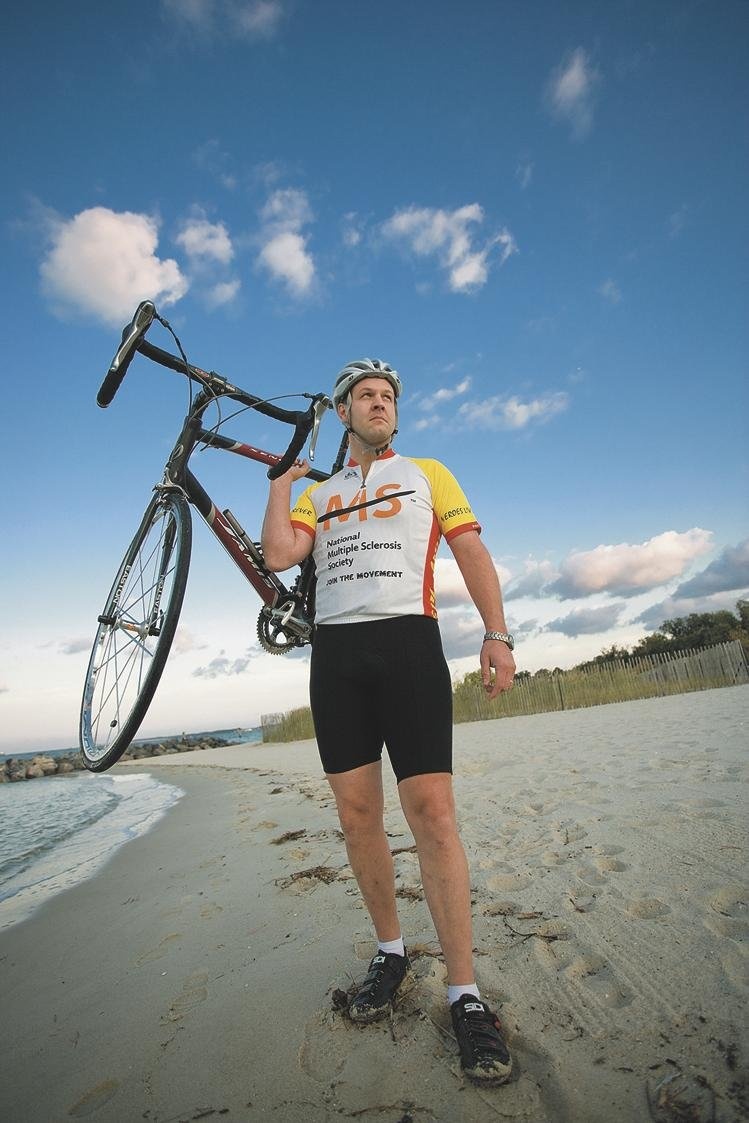
“The most personalized online experience isn’t like sitting down face-to-face,” says Audrey Kintzi, executive vice president of the National Multiple Sclerosis Society’s Minnesota chapter, in Minneapolis.
The group’s New York headquarters says it took in $73.5-million online in 2010, the fifth largest total of the survey.
Ms. Kintzi sees the Web as a way to attract people into the fold, where their generosity can then be cultivated. The charity, she says, is giving top donors chances to participate in Webinars and to talk to medical researchers.
“In February we had top experts from all over the world gathered in New York, and my donors in Minnesota were able to get some of their time,” Ms. Kintzi says. One of her donors was so excited by the information, the fund raiser says, that she knew the next gift would come easier.
Peter Bolton and Marisa López-Rivera contributed to this article.