Why Progressive Funders Are Now Backing Conservative Groups
Institutional donors gave nearly $1 billion to bridge-building efforts last year, a 36 percent jump. Behind the numbers: a reckoning over whether progressive philanthropy fueled the polarization it set out to fix.

By Alex Daniels
Senior Editor, Foundations
July 23, 2026 | Read Time: 10 minutes
- Progressive foundations are arguing that durable solutions to democracy's challenges require buy-in across the political spectrum.
- Dame Louise Richardson, president of the Andrew Carnegie Foundation, now asks staff to evaluate every grant through the eyes of someone with opposing political views.
- Some funders and advocates are pushing back against this shift, warning there's no equivalency between progressives and the MAGA movement and that national legislative fights can't be sidestepped in favor of local dialogue.
Keep up with everything happening in The Commons by signing up for our monthly newsletter.
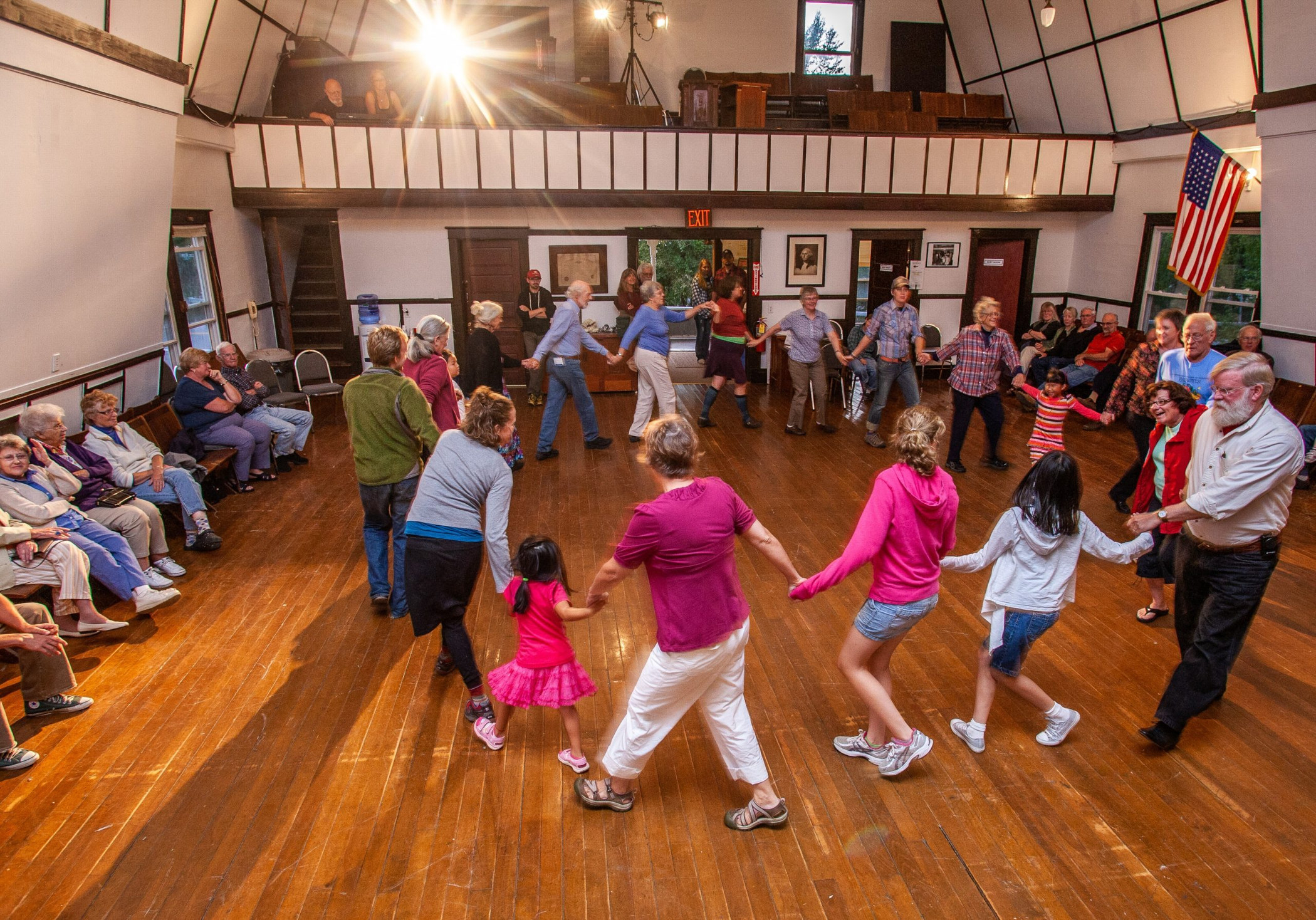
In search of ways to overcome the country’s deep partisan divides, many progressive funders are shifting strategies to embrace something that had been rare: They are throwing their support behind conservative organizations. These grant makers, who have long worked to boost democratic engagement, are shunning the rancor of national politics. Instead they are funding quieter efforts away from the national stage designed to encourage people with different backgrounds to work together for a common purpose.

The push among centrist or left-leaning philanthropies to support conservative groups is a recognition that lasting solutions to societal problems need buy-in from a diverse cross-section of people, said Nick Troiano, executive director of Unite America.
“The focus in the past few years on inclusive democracy has been disproportionately on how people look and not how people think,” he said. “That pigeonholed the democracy movement to be a project of identity politics and not of representative democracy.”
Troiano’s group promotes open primaries, in which voters can select candidates from any political affiliation. It’s a way, he said, to make candidates work for votes from a broader constituency rather than pandering to their base.
Until recently, he said, foundations have done a “mediocre job” practicing what they preach regarding pluralism and may have contributed to the very problem they were trying to fix. Progressive foundations’ support for liberal organizations led to the impression that democracy funders were carrying water for the Democratic party. And that helped set the stage for recent populist backlashes, he said.
Plenty of big name grant makers are on board, including the Andrew Carnegie Foundation and the Rockefeller Brothers Fund, which has revamped its whole democracy strategy to mend divisions in the electorate.
One of the largest recent commitments to democracy issues — $60 million announced in April by the Ford Foundation — will be directed to groups working to ensure unrestricted access to the ballot and the accurate tally of votes. It takes a decidedly nonpartisan approach. Writing in the Chronicle when it was announced, Ford President Heather Gerken highlighted the work of Pillars of the Community, a nonprofit working to restore trust in election systems co-chaired by Bob Bauer and Ben Ginsberg, two election lawyers who have a history of facing off against each other.
Grant makers are showing their support for these efforts. In 2024 — the most recent year for which figures are available, institutional funding for democracy programs increased 17 percent from the previous year, to reach $6.7 billion, according to the U.S. Democracy Hub, a project of the Democracy Funders Network that uses AI to scour informational tax forms. The level of support rises during election years, such as in 2020, which hit a high mark of $8.7 billion, and drops in off-years like it did in 2023, when grants totaled $5.7 billion.
In 2024, nearly $1 billion of the $6.7 billion in total support for democracy from institutional donors went to bridge-building and “holding space for creative tensions.” That was a 36 percent jump from the previous year.
In the Trump era, these bridge-building efforts have taken on an added urgency for some. Foundation-supported attempts to build movements that stretch across different political parties, neighborhoods, and racial backgrounds are the most effective bulwark against authoritarianism, said Deepak Bhargava, president of the Freedom Together Foundation. Because of what he sees as the Trump administration’s growing authoritarianism, Freedom Together increased its payout to 10 percent of its assets for the second year in a row. Last year alone that resulted in an additional $280 million to devote to democracy efforts, where there is no “political litmus test” to join in, Bhargava said.
“The whole experience of authoritarianism in this period speaks to the importance of mass engagement, mass organizing, and mass mobilization. There is simply no substitute for it,” Bhargava said. “Those movements need to be diverse and bring together not just people of one ideological persuasion.”
Unwittingly Contributing to Polarization
This is not a wholesale pivot for these grant makers. Progressive foundations like Freedom Together still direct hundreds of millions of dollars to lawsuits and campaigns designed to blunt White House attacks on civil society. Yet many are also committed to supporting groups working on behalf of people from different backgrounds, including conservative groups. Whether they are funding projects that are specifically labeled as “bridge-building” or active in other areas commonly associated with democracy funding, like election security or supporting independent media, even the most stridently progressive foundations are reaching across divides.
Case in point: the Open Society Foundations, which in May announced a $300 million commitment over the next five years to protect democracy, expand economic opportunity, and protect civil rights.
That kind of effort has drawn the ire of Republicans on Capitol Hill and at conservative think tanks. The Trump Justice Department has pushed prosecutors to investigate Open Society. They argue that foundation-funded campaigns to support voter mobilization and education efforts are part of a plan to provide direct help to Democratic candidates and policy priorities, which the foundation denies.
Despite the fact that some of Open Society Foundation’s new commitment will go to resist efforts of the Trump administration, it is still supporting broader, more diverse groups, including veterans movements, interfaith groups, and bipartisan foreign policy coalitions.
A longtime democracy funder, the Andrew Carnegie Foundation, supports a broad range of groups that conduct research, secure an accurate ballot by supporting election administrators, and protect voting rights. But since Dame Louise Richardson took over as president in 2023, she has worked to ensure that ending polarization underlies all of the foundation’s efforts. Perhaps, she thought, Carnegie itself had played a part in dividing America.
“Unwittingly we were actually contributing to polarization,” she said. “And so I invited our staff to think about every single one of our grants that we give and think about how they might look to somebody whose political perspective was the opposite of their own.
Richardson said it would be easy to understand why someone might be turned off by its support of immigrant organizations when they have family members “living under a bridge.”
Similarly, a perfectly rational response to Carnegie’s support of voting rights could be “‘you’re only interested in people who vote for the people you want them to vote for,’” she said.
As a result, Carnegie makes grants to fewer organizations that squarely identify as progressive, opting to also support center-right nonprofits and efforts that include people from across the political spectrum, Richardson said. That includes Be the People, a coalition of groups spearheaded by Stand Together, Charles Koch’s network of conservative donors, and others such as the Cato Institute, American Enterprise Institute, and We the Veterans and Military Families.
“People Want to Solve Problems”
The Democracy Fund has been putting financial muscle behind these kinds of efforts. In 2024, it started “All by April,” a campaign to get democracy funders to front load their grants to the first quarter of the year. That year, $155 million dollars went out as a result of the effort. This year, according to the fund’s initial tabulations, that number has climbed to $268 million.
The group has completely rethought many of its programs. It has wound down both its “digital democracy” effort to ensure media and technology serve people of color and some of its place-based programs in favor of efforts aimed at helping people — no matter their perceived differences — tackle local problems.
“There were signals in the system that were telling us that pro-democracy work needed to be more grounded in the everyday lives of people and communities,” said Sanjiv Rao, the Democracy Fund’s vice president.
It still supports nonprofits that challenge the Trump administration’s actions in court. But another prong of its new strategy seeks to harness input from people about how to solve problems in their neighborhoods and towns.
The Trust for Civic Life, began in 2024 with a goal of raising $66 million in five years. Its approach, to support local efforts to tackle thorny issues in ways that are not necessarily political or based on elections, has made it popular with some funders. The Trust has secured support from the Arthur M. Blank Foundation, the David and Lucille Packard Foundation, the Charles Stewart Mott Foundation, and others to surpass the $54 million mark.
“This is moving faster than we thought,” said Charlie Brown, the Trust’s executive director.
The trust supports groups such as the High Desert Partnership, which brings ranchers, workers, environmentalists, and others together to solve water and land use issues, and the Adirondack Community Foundation, which works with wealthier people new to the area and long-time residents to address poverty.
Programs that bridge divides through meetings and conversations can help people recognize the humanity in one another and improve the quality of life in any given area, but they must be coupled with action.
“People want to solve problems,” he said.
The cross-ideological efforts come as President Trump has turned the volume up on his administration’s efforts to sow doubts about the electoral system. In July, less than four months before the midterm elections, Trump gave a prime time speech in which he alleged massive voter fraud, an allegation that has been debunked, without providing any evidence and promised federal intervention this November.
If there are no free and fair elections, other efforts, including bridge-building work, will not matter, said Pamela Shifman, president of the Democracy Alliance, a network of progressive donors. As such, protecting the ballot remains incredibly important for pro-democracy nonprofits.
But she said one of the biggest priorities for groups like hers is to broaden participation in the movement to stop authoritarianism. She disagrees with the notion that overreach by progressives contributed to polarization. She blames the MAGA movement for waging war on constitutional freedoms and basic democratic institutions.
“There’s simply no equivalency between those spreading hate and those working for democracy,” she wrote in an email. “We can and should expand our tent without abandoning our values.”
National Politics Can’t Be Ignored
While a growing number of grant makers are throwing their support behind local efforts to find common ground, some remain focused on the need for legislative and regulatory change at the national level.
But many are doing so in a way that is assiduously bipartisan. Issue One, for instance, which pushes for improved campaign finance disclosures and tracks tech companies’ public policy statements to hold them accountable, recruited 200 former members of Congress, nearly equally divided between parties, to serve as advisers.
To create lasting change, said Nick Penniman, the group’s founder, nonprofits must be willing to delve into politics at the national level. And they must do so with support from both parties, so legislative changes survive when the balance of power on Capitol Hill changes.
Bridge-building conversations at the local level are fine, Penniman said, but they don’t address the real problem, which is dysfunction in Congress.
“The predominant theory with funders is that Washington’s too hard,” he said. “A lot of them say, ‘I don’t want to deal with legislation.’ Well, how are you going to fix this stuff unless you legislate, and to legislate you have to engage in politics.”
Corrections: A previous version of this article referred to the “Be the People” campaign as the “We the People” campaign. That version also said the Trust for Civic Life was a grantee of the Democracy Fund. The Democracy Fund has not supported the Trust.
Clarification: This article has been changed to clarify that the Open Society Foundations democracy commitment includes grants to promote civil rights and economic security.
The Commons is financed in part with philanthropic support from the Arthur M. Blank Family Foundation, Einhorn Collaborative, and the Walton Family Foundation. None of our supporters have any control over or input into story selection, reporting, or editing, and they do not review articles before publication. See more about the Chronicle, the grants, how our foundation-supported journalism works, and our gift-acceptance policy.