A $100M Fund for Black-Led Groups Fell Flat. That Didn’t Stop the Momentum.
When the money didn’t materialize, the group managing the fund turned to locals for donations and has worked to strengthen Baltimore’s Black-led groups.

By Alex Daniels
Senior Editor, Foundations

June 16, 2026 | Read Time: 12 minutes
BALTIMORE, MD.
Many Black nonprofit leaders in Baltimore felt a mixed sense of loss and promise three years ago. Though the racial-equity funding that had begun to flow to Black-led groups in 2020 was already starting to slow, in Maryland another big change was underway. The Open Society Institute Baltimore, a longtime supporter of these groups, was closing its doors. Upon its exit, it secured $6 million from the affiliated Open Society Foundations for a fund to support these groups.
That was meant to just be the beginning. An even loftier goal: Raise $100 million for the state’s Black-led groups.
Today that goal is so distant that Jamye Wooten, who heads the nonprofit that is leading the fundraising campaign and whose organization, CLLCTIVLY, set that high goal, rarely mentions the dollar figure. In a changed political climate that has some grant makers retreating from race-based grants, big foundation checks have yet to materialize. Grant makers in the state “are stepping back and saying, ‘We don’t want to get caught up in this,'” he says.
While some funds designed to support groups calling for racial equity attracted huge sums, events unfolded very differently in Baltimore. Since Open Society Foundations, the philanthropy founded by George Soros, closed its OSI-Baltimore office, the fund has yet to match even the original $6 million, let alone achieve that $100 million goal.
The fund was set up quickly as the foundation exited the city, says Danielle Torain-Victor, who led OSI for its last several years. In Maryland, the $100 million target was a “concept” inspired by a similar fund in California, not a fully baked plan, she says.
But in many ways the fund faced an uphill battle. Most Black-led nonprofits in Baltimore lack the infrastructure needed to get on the radar of big grant makers, and local foundations are often isolated from the city’s nonprofits. It didn’t help that OSI provided the seed funding as it shut down so it wasn’t able to offer support.
At the same time, pledges made in 2020 to fund Black-led groups that address racial inequities went unfulfilled. Such unreliable funding is a problem that many nonprofits grapple with as grant makers, big donors, and even governments shift priorities and money from cause to cause.
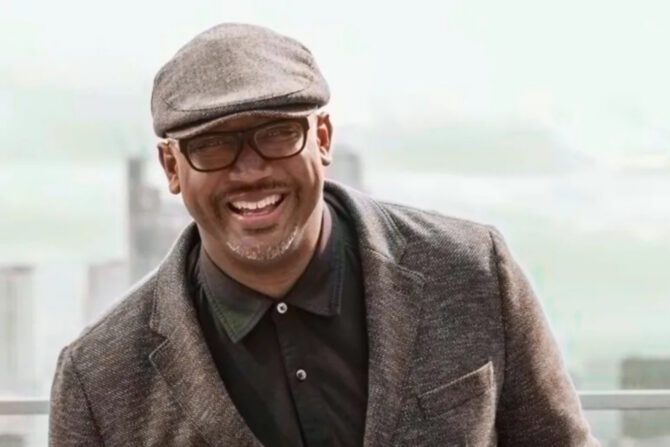
Given the sometimes fickle nature of philanthropy, being able to adapt to such sudden changes is paramount. For his part, Jamye Wooten, a veteran organizer, has narrowed his group’s focus to helping small nonprofits in the city of Baltimore. The group is supporting the development of young leaders and helping groups to create strategies that will appeal to big grant makers.
He is also shifting his fundraising approach. Rather than counting on big grants from some of the large private foundations in the state, Wooten is betting on small donations from city residents. He’s using that money to cultivate leaders and build the muscle of small, Black-led nonprofits.
“Foundations alone will not sustain your work,” Wooten says. “We are definitely double-clicking on individual donors.”
A Call for Self-Care
Last summer, Wooten’s nonprofit, CLLCTIVLY, gathered nonprofit leaders and community members to celebrate Black culture and deepen the self-reliance Wooten is hoping to instill.
In a conference room near Baltimore’s harbor, social activist Darnell Moore reminded the assembled group of their own power. In a world where race-based philanthropy is under attack, institutional donors can’t be relied on, and the gains of the Civil Rights era are threatened, Moore told the group to help one another.
“I don’t want to pay attention to the hellscape out there,” he told the crowd. “They’re wilding. I want to talk about us. We deserve better.”
This was the opening of We Give Black, a three-day communal gathering. The nonprofit’s other main event, its annual CLLCTIVGive fundraising campaign, has raised more than $1 million for each of the past three years. The money raised through the event goes to participating nonprofits. The group has also established a $500,000 fund that provides flexible, low-interest loans to Black-led organizations and to support residency and fellowship programs for social entrepreneurs.
Using small gifts from local donors, Wooten wants to ensure nonprofits have devised well-thought-out strategies to help them grow organically, whether or not they receive a big check from a foundation.
Wooten’s long-term vision of raising large amounts of money for the project remains, but he has downsized his goals: He’d like the fund to distribute $20 million over the next five years, fueled by “community-rooted” philanthropy. And rather than focus on nonprofits throughout Maryland, he is focusing on groups in Baltimore.
That work, Wooten says, is a necessary prelude to a much bigger effort that was envisioned by the original plan to raise $100 million.
“We still have a lofty goal,” he says. “But we want to make sure we have the infrastructure to do this right. We want to make sure that we are primed and that the community is primed.”
A Funder’s Sudden Exit
The Open Society Institute was a pillar of support for Baltimore’s nonprofits. For 25 years the grant maker funded groups that served the city’s low-income residents of color. In 2022, when Open Society Foundations Chairman Alex Soros announced its closure, he called the office’s work an excellent “proof of concept” and lauded its success in reducing overdose deaths, protecting residents’ rights during interactions with the police, and providing cash assistance to 15,000 people during the pandemic.
The philanthropy closed its Baltimore office during a broader restructuring, in which it consolidated programs and began making fewer, larger grants.
The decision to shutter the Soros philanthropy’s Baltimore office came without much warning, recalls Torain-Victor, OSI’s former leader, who spoke with the Chronicle in July 2025. Before the moving trucks arrived, she and her colleagues convinced the Open Society Foundations to extend the life of the program by a few months. One of their goals was to provide seed money for CLLCTIVLY’s fund. She also worked with donors to provide $8 million in tie off grants for OSI grantees.
Open Society provided $6 million to start the fund and $4 million to further develop an existing OSI-Baltimore fellowship and education program. The creators of the Maryland fund used as their guide the California Black Freedom Fund, which quickly got buy-in from more than a dozen donors and foundations across the Golden State. It has already exceeded its original goal of raising $100 million and plans to double in size as an independent nonprofit.
But because Open Society left town so quickly, there wasn’t a lot of time to make plans, Torain-Victor says. “We knew at the time a much more deliberate process would need to play out in terms of assessing the capacity of the regional and local foundation base,” she says. But that has yet to happen.
A spokesman for the Open Society Foundations declined to make any staff available for an interview or to speak with the Chronicle on the record.
It should not have been a surprise that the fund has failed to achieve its goals. In Maryland, foundations and individual donors have paid little attention to the work being done by small, Black-led nonprofits, according to John Brothers, who until last spring served as the president of the T. Rowe Price Foundation, the philanthropic arm of the financial-services company.
When he started in 2015, T. Rowe Price gave 3 percent of its grants to organizations focused on improving the lives of people of color. Now that number is 80 percent. Brothers, who is now acting president of data nonprofit Candid, believes that more funders are interested in supporting smaller, Black-led nonprofits, “but they don’t know them from Adam’s house cat.”
In Baltimore about 40 percent of nonprofits were losing money and nearly half did not employ a full-time fundraiser, a 2022 T. Rowe Price survey found. As a result, Brothers says, they are off the radar of many foundations and wealthy donors who live in Baltimore’s suburbs.
“The nonprofit sector in Baltimore is just supremely weak,” he says, “and philanthropy is a big reason why it is weak.”
Black-led groups in many places across the country face similar challenges to those in Baltimore. They have long been excluded from philanthropy and little effort has been made to reach out to them.
The point, however, isn’t always to build the biggest war chest possible, says Lulete Mola, co-founder and president of the Minnesota Black Collective, a $5 million fund. Instead, she says, racial justice funds, whether hers or the Baltimore fund, should place a top priority on reflecting the ideals and hopes of the community they were created to serve. “Not all money is good money,” she says. “When you build something on culture, it will last and reflect the full dignity of our people.”
Developing a Generation of Leaders
To bridge some of those structural gaps between small, Black-led nonprofits and grant makers in Baltimore, CLLCTIVLY is putting money toward educating leaders. It partnered with the University of Pennsylvania’s Center for Social Impact Strategy to create a six-month fellowship where 36 social entrepreneurs have received training so far. And it supports eight residents who receive $75,000 annually to advance storytelling strategies to help social impact groups in Baltimore.

The latest class of fellows includes Jess Solomon, who is exploring how to use standup comedy to change how residents speak about health. By bringing comedians and health researchers together for discussions, she hopes that the comics will be able to incorporate health data into their acts.
“This is an exciting chance to bring humor and levity into data, to make it palatable,” she says. “People can find themselves in the data and find their stories.”
Solomon is very familiar with philanthropy through her firm Culture Rules Everything, which works as a consultant for funder collaboratives and movement organizations. She worries about having to “contort” the project to fit within the strategies of an institutional donor. There may be foundations interested in the work, she says, but because the effort is a bit unconventional, big funders may be more comfortable putting money into it if others have already taken the lead.
“Support through CLLCTIVLY was a way to signal to other funders that this is a project that you should take note of,” she says. “I hope that part of the outcome is that funders will start to recognize that this narrative-shift work is really important to the larger ecosystem.”
Black Is a Dangerous Word
Wooten is finding creative ways to help Baltimore nonprofits connect with local grant makers. But because of forces far beyond his control, even those best efforts face roadblocks. In 2023, a pair of Supreme Court decisions on college admissions called the constitutionality of race-based grant making into question. Then upon taking office in 2025, President Trump issued an executive order declaring all grants based on race illegal. More administrative actions followed, all designed to end race-based programming at nonprofits, businesses, and government agencies.
The backlash against race-based funding efforts has made some potential donors wary, even as the need for more money has become more acute, Wooten says. Shortly after Trump’s DEI executive order, he walked through the fund’s emerging plans with some prospective donors, and their response, he says, was, “Maybe you want to think of changing that language in this moment?”
Wooten has even changed the fund’s name twice, from the Maryland Black Futures Fund to the Black Futures Initiative, and finally to the Kindred Abundance Infrastructure Fund, removing the word “Black” entirely.
Grant makers may be wary of legal trouble should they fund race-based initiatives. Just by including the word “Black” in their names, the Kindred fund’s predecessors were exposed to a lawsuit, says Daniel Lennington, deputy counsel at the Wisconsin Institute for Liberty and Law, a conservative litigation nonprofit that has pursued cases against affirmative action policies
“It’s exceedingly dangerous to even have something called Maryland Black Futures Fund,” he says. “When you say those things outwardly, that your plan is to discriminate in favor of Blacks, it casts a shadow over all of their programming.”
$100 Million Still in Reach
The lack of response from foundations has turned Wooten to small donors. He is betting that this approach will help the fund foster deeper connections with city residents that can be sustained long into the future.
It won’t be easy, says Alysia Lee, president of the Baltimore Children and Youth Fund, which is a grant-making entity funded by the city. She points out that Baltimore has a long history of racial inequity that affects attitudes to this day. Perhaps the biggest hurdle, she says, is changing people’s mindsets about large, Black-led institutions when there has been a “historical, intentional, devaluation of what Black people have contributed in our city.”
Those attitudes may make it harder, but they can be overcome, Lee says.
“There is a lot of money in our city,” she says. “Is there $100 million? I think so.”
Correction A previous version of this article implied that funds from CLLCTIVGive were used in CLLCTIVLY’s loan fund. It also said that the group funds a fellowship at the University of Pennsylvania and supports five residents. It has been corrected to indicate that funds from the event went only to participating nonprofits, that CLLCTIVLY partnered with the university to create the program, and that it supports eight residents.
That previous version also indicated that Danielle Torain-Victor, former head of OSI-Baltimore, conceived of the $100 million fund. That goal originated with CLLCTIVLY. OSF committed $6 million to the fund, not $10 million, and we have clarified some of OSI’s additional support for local nonprofits.
Reporting for this article was underwritten by a Lilly Endowment grant to enhance public understanding of philanthropy. The Chronicle is solely responsible for the content. See more about the Chronicle, the grant, how our foundation-supported journalism works, and our gift-acceptance policy.