Turning Challenges Into Programming Innovations
Some charities are collaborating with other nonprofits, while others are using their heft to muscle into new territory.

By Ben Gose
Senior Editor
June 9, 2026 | Read Time: 8 minutes
In 2024, the human-services organization Clover made plans to bring 17 charities together on its eight-acre campus in New Orleans so families could interact with lots of groups for important services, including medical care, legal advice, and community-college courses. The collaboration would have also offered enrichment activities like coding and puppetry for their kids, all in one place. The effort made good progress with the help of a $425,000 grant from the W.K. Kellogg Foundation but didn’t fully launch.
Shortly after, the second Trump administration launched a series of attacks on Head Start, which provides nearly 80 percent of Clover’s revenue. That sent Arnel Cosey, whose vision sparked the collaboration effort, back to the drawing board. She revived her push to bring all the charities together, thinking it would best position Clover — and its partners — for operational and fundraising success.
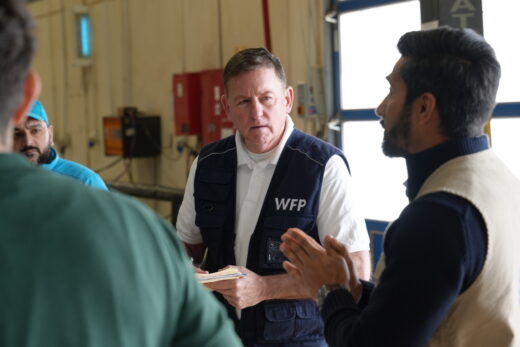
This time, the Kresge Foundation came through with a $358,000 grant — and the effort, known as CORE at Clover, now is poised to become reality. A soft launch held last month offers just a sampling of what the broader effort will look like: a conversation about fatherhood with Fathers Matter NOLA, a mobile health clinic run by DePaul Community Health Centers, an entrepreneurship clinic held by Opportunity Street, and coding and engineering projects for kids from Stem NOLA.
“It’s like cooking gumbo: We’re putting it all in the pot,” says Cosey, who was promoted to CEO in April after overseeing strategy at Clover since 2020. “We don’t know what it’s going to taste like until it’s finished, but our heart is in it.”
Nearly 18 months into Trump’s second term, the outlook remains challenging for many nonprofits, with federal funding cuts, government instability, and heightened fundraising competition chief among the concerns. Instead of hanging on, some charities are adapting their programs in ways they believe will enable them to thrive.

Many, like Clover, are pushing forward on collaborations with nonprofit partners that they think can help strengthen their own organizations while transforming their regions — or the country. Others are using their operational and financial heft to muscle into new territory or are finding that advocating for their programs and funding can make a difference even in this environment of budget cuts and attacks on nonprofits.
The turmoil in the nonprofit world over the past 18 months may feel unique, but the sector gets upended with enough regularity that seasoned charities develop a muscle for finding a way through, says Greg Petersen, a strategy consultant and the CEO of Keystone Alliance.
“It’s something that’s just true of our field — it transforms fundamentally about every 15 years or so,” Petersen says. “We tend to be very adaptive creatures.”
Going on the Offense
Last year Carey Harris’s job became so challenging that the CEO of Literacy Pittsburgh started trotting out a pat response when friends and relatives asked about work.
“Well, I run a federally funded agency that serves immigrants,” she’d reply. “How do you think it’s going?”
The charity, which teaches English classes and basic math and employment skills to 3,200 adults per year, lost an AmeriCorps grant it had held for 32 years — a 3 percent hit to the charity’s $8 million budget. Worries about much bigger funding losses, or raids by U.S. Immigration and Customs Enforcement agents, left Harris so depleted that she crawled into bed by 6:30 some nights.
Literacy Pittsburgh has been exploring program changes that appeal to donors and add to financial stability.
Literacy Pittsburgh engaged in two rounds of scenario planning — including one with Elevate NP and Bridgespan consultants — and warned staff that layoffs would be necessary if Trump’s threats to cut $715 million from adult basic education came to fruition. “All we can do is get prepared. That’s how we’ve adapted,” Harris says. “It’s like the Serenity Prayer — give me the courage to do what I can.”
The group, which is the biggest provider of instruction to improve foundational skills in reading, writing, and math in Pennsylvania, joined a successful lobbying effort coordinated by COABE to preserve federal funds for adult basic education. The threatened cuts never materialized.
Since then, Literacy Pittsburgh has been going on offense –— making and exploring programmatic changes that appeal to donors and add to financial stability.
It compensated for the AmeriCorps loss by raising $20,000 from local donors to create its own homegrown internship. It expanded its in-school tutoring program after a successful pilot won additional support from an enthusiastic donor.
It’s now exploring whether to expand into adjacent, mostly rural counties — a move that might lead to greater financial stability if it’s able to win new contracts. “When there’s chaos,” Harris says, “there are always opportunities.”
Letting Go to Move Forward
The last eight years or so have presented a lot of challenges for Catholic Charities Fort Worth. The group has had significant leadership turnover and was mired in a contentious legal fight with the Trump administration over the Texas refugee resettlement program, which the charity took over when the state withdrew oversight.
Through it all, the organization has continued to nurture and test an innovative anti-poverty program called Padua. And now, in the midst of such uncertainty, the program may be poised to help the group sharply expand its reach. It combines smaller caseloads for social workers, cash payments to help poor people secure an apartment or get job training, and long-term support that can run for two years or more.
Nonprofits have shown resilience largely because they built diversified funding streams during years of robust government support.
Heather Reynolds, who started as CEO in February, had been involved in the creation of the program during her first tenure with the organization. Now that she’s back, she’s ready to oversee the program’s national expansion.
Padua, whose effectiveness has been documented in two randomized, controlled trials, is being replicated this year by Goodwill chapters in South Bend, Ind., and Chicago. Reynolds is having conversations with some other Catholic Charities agencies, too. She hopes it can eventually spread like the Nurse-Family Partnership, which began as a research project and now serves more than 54,000 families a year in 40 states, with government funds covering most of the local cost. “There’s a lot of money that the country spends on helping people get out of poverty,” Reynolds says. “And Padua produces a better return than many of the things that we are currently investing in.”
To free up resources and staff time, Catholic Charities Fort Worth has over the years let some things go. It closed an arm of a community-college program that wasn’t working, and it transferred an anti-poverty program for veterans to another charity that was better situated to raise money for it. This fall — given that the federal government has become an unreliable partner — the charity will give up its contract for overseeing refugee resettlement in Texas.
“Are you willing to shed things and deploy resources elsewhere?” Reynolds asks. “More social-service agencies need to have that mentality.”
A New Growth Model
The impulse to hunker down is widespread in the nonprofit world, but in some cases, that can be counterproductive, says Isaac MacDonald, a strategy consultant at Trepwise. The most threatened charities may keep limping until their demise. MacDonald says he knows of some nonprofits whose programmatic models are so weak or outdated that the best move today might be a thoughtful wind-down.
For others, he says, stepping boldly into new roles is the right play. Sunrise Movement started in 2017 as a coalition pushing aggressive action on climate. But local climate wins risked being overwhelmed by broader Trump administration actions — and the young people who make up Sunrise’s base wanted the charity to take a bigger stand.
Last October, Sunrise announced that it was expanding its mission to fight what it sees as authoritarianism in the Trump administration.
Charities engaging in strategic planning should at least consider what scenarios might lead to such major shifts, says MacDonald, who helped found Sunrise’s New Orleans hub.
“The bias toward staying the course is strong. It’s often, ‘OK, what little tweak can I make?’ ” he says. “But in some cases, a deeper change — or a wind-down — is required.”
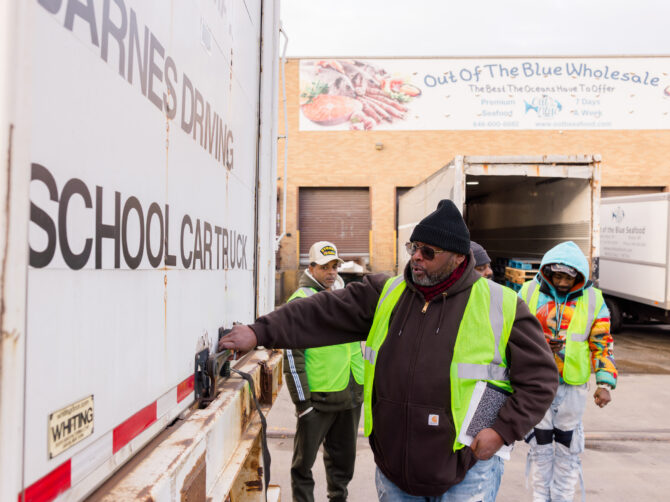
The Center for Employment Opportunities, which helps recently released prisoners obtain work, has adapted by moving more aggressively into partnerships and advocacy.
The nonprofit has shown impressive growth since Sam Schaeffer became CEO in 2009. It now serves 8,000 people a year, up from 2,000 when Schaeffer started, and it has won the backing of some high-profile funders — including Blue Meridian Partners and the GreenLight Fund.
But roughly 100,000 people per year could use re-entry assistance, Schaeffer says. To accelerate its impact, in 2020 the center committed to a strategy of working closely with other nonprofits, including showing them how to tap into state programs that distribute federal SNAP Employment & Training funds. Already active in 12 states, the center hopes to work soon with other nonprofits in Arizona, Maryland, and Texas.
“We’re looking at a totally new growth model that does not mean we have to open an office,” Schaeffer says.
The threats to the SNAP program in the 2025 federal budget deliberations posed risks to the center’s model. When Schaeffer was asked to testify before Congress last April, some colleagues questioned whether he should go. But he did testify — and it worked out. Although the main SNAP program was cut, the employment and training budget was left intact.
“Whenever you raise your head and do something high-profile, like a congressional hearing, things can happen, right?” Schaeffer says. “But we decided we were going to advocate for what we believe in.”