In polarized times, here are 3 ways to keep donors engaged
Experts share how sharpening your brand, rethinking your texting, and tailoring your message can help you break through.

By Rasheeda Childress
Senior Editor, Fundraising
August 5, 2026 | Read Time: 6 minutes
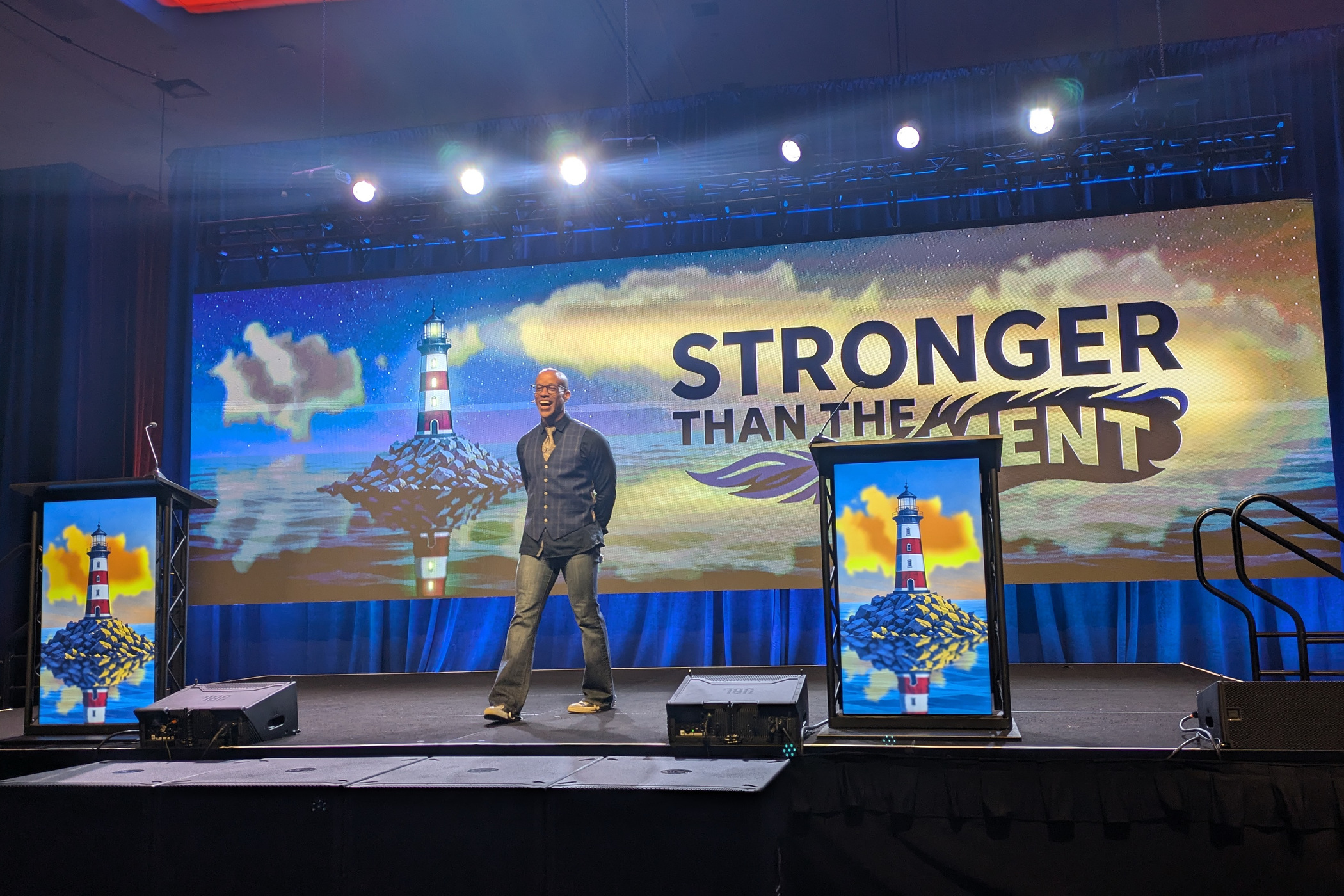
With a world in upheaval from federal funding shifts, inflation, and wars, it can feel tougher than ever to connect with supporters. But nonprofits can still break through the noise and buoy their organizations, said experts who spoke at the Bridge to Integrated Marketing and Fundraising Conference, held last week near the nation’s capital.
At the event, presenters offered hacks to help charities excel. Here are tips on branding, texting, and talking to donors in a polarized environment.
Branding will help donors identify with you.
Ensuring your nonprofit brand remains strong is of key importance when there’s so much happening in the world, said Americus Reed II, the keynote speaker.
While some nonprofits dislike branding, it is a must. “If you are hiding from being a brand, you are making a mistake,” said Reed, a marketing professor at the University of Pennsylvania. “Your brand is out there anyway.”
Your brand is what people associate with your organization — good or bad, Reed said. The good news for nonprofits is that people want a brand that shows their identity. He gave the example of a generic infant pain reliever next to a brand-name infant pain reliever that costs $1 more. Parents of a first child, he said, will often buy the more expensive pain reliever, even though the active ingredients are the same.
“This is an identity choice: What type of parent are you?” Reed said. When parents pick the more expensive option, they’re choosing not to be the cheapskate parent who risked something going wrong but instead the parent who protected their child by getting a known high-quality item.
Nonprofits need to figure out what identities are most relevant to their organization. “Ask these two questions constantly: Who are we as a nonprofit? Who are they as a donor?” Reed said, noting that the identity can be one the donor aspires to be, too, and that is often more powerful. “The nonprofits that will win will help people answer, ‘Who will I become?’”
Texting secrets to draw donors closer.
Many nonprofits struggle with integrating texting into their marketing and fundraising strategy, said Jessalyn Kiesa, senior director of strategic communications at Oceana, an international conservation nonprofit.
Oceana revamped its texting program last year, and grew its list from 20,000 to 50,000 in six months. It brought on a consulting firm to help and used a mix of content — surprise and delight, advocacy, fundraising — to engage donors, Kiesa said.
In the surprise and delight category, it sent a text to supporters that started with, “Eee, eee, eee,” to announce World Dolphin Day and let its list know about one of it events. Playing off the popular basketball season brackets in March, it holds “Marine Madness” and creates a bracket for supporters to vote for their favorite sea animals. As the bracket narrows, it offers links to the Oceana store, where supporters can buy a stuffed animal version of the winners or their favorites.
The texting program helps get the word out for both advocacy and fundraising, with messages asking folks to sign petitions or write their Congress member or donate. Lloyd Colter, principal at Banter Messaging, said once supporters sign up for texts, nonprofits should signal mobile is where they’re going to find important information.
He adds that organizations can send a lot of texts without alienating supporters as long as “you’re talking to them about things they care about and not, ‘Give us $10’ every time.”
While growing a list can be a good thing, it needs to be a productive list, said Jon Wheeler, senior adviser for marketing tech at Save the Children. Save the Children was able to increase mobile revenue by 158 percent by better segmenting its list.
The cost of text messaging varies based on the type of message, adds Sandi Fox, vice president of advocacy and technology at Assemble the Agency. SMS messages, which are only text, are cheaper to send than MMS messages, which allow images and video.
To increase revenue, Save the Children reduced send costs by segmenting its lists to stop sending to 90 percent of longtime nondonors. While some lapsed donors remained on the list, the group upped revenue by culling folks who had expressed no interest in giving.
“Midlevel just crushed it,” Wheeler said, noting its midlevel donors give $1,000 to $20,000. “There has often been this feeling that people aren’t going to donate $5,000 on their phone. Yes, they are.”
Wheeler said the group sent nondonors occasional texts, particularly for action alerts, but kept them to the shortest SMS messages. That offered them the opportunity to re-engage.
Oceana’s texting program was two-way so donors received responses from Oceana staff, which Fox said is a good thing. “The whole benefit of text messaging is engagement,” she said. “If they reply back and you can’t see those messages, you’re missing out.”
Oceana’s replies were a mix of automation and staff responses. For example, to collect more birthdays, Oceana offered marine-themed horoscopes. Supporters just had to text their birthday in month/day format, and an auto reply sent the horoscope. An early January birthday would get, “As a Capricorn, you are also like a blue whale. Traits include persistence, loyalty, and leadership …”
However, if a person had a question about Oceana that needed a response, someone on the team would reply — but not for messages that were random or sent jokingly. Kiesa’s favorite recent response that didn’t require a reply, “Not now! Lebron James just signed with the Sixers.”
How to talk to donors in a polarized world.
With the American public becoming more and more polarized, nonprofits are navigating how to get their message across without alienating a swath of their donors, said Rick Roddam, associate director of integrated media solutions at the consulting firm Allegiance Group + Pursuant (AGP).
The firm looked at data of 2 million donors to a wide array of nonprofits (environmental, poverty and food banks, international) and found that while 50 percent were registered Democrats, the other 50 percent were split roughly evenly between Republicans and independents. This is a reminder that donors have varying political backgrounds, Roddam said, and nonprofits have to consider this in their language, even if their mission shouldn’t feel partisan.
Roddam worked with the Food Bank of Central and Eastern North Carolina to help it tailor messages in these political times. After the loss of federal funding last year, it cost the food bank $1 to provide just three meals, down from five, said Kendra Paiz, director of the annual fund.
With AGPs help, it adjusted its language when talking to supporters digitally. It used geotargeting, noting those in cities leaned Democrat and more rural areas leaned Republican. City dwellers saw messages about how “federal cuts” were causing problems, whereas rural folks got similar messages, but they referred to “federal changes.” The imagery was different, too, with that for conservatives showcasing veteran, rural, and senior populations being impacted, whereas liberal images featured women and communities of color.
“We sent messages on our mission, but the words were slightly different,” Paiz said. “We didn’t get phone calls that we were alienating donors. We were sending it with images and messages that resonated with them to act.”
When using this strategy digitally, Roddam notes it’s important to include certain people based on particular criteria but also to exclude certain people, so users aren’t served both messages.