How small fundraising teams can produce outsize results
Growth starts with cutting low-return work — then pouring the time you save into donor relationships and your team.

By M.J. Prest
Senior Editor, Solutions
September 14, 2026 | Read Time: 8 minutes
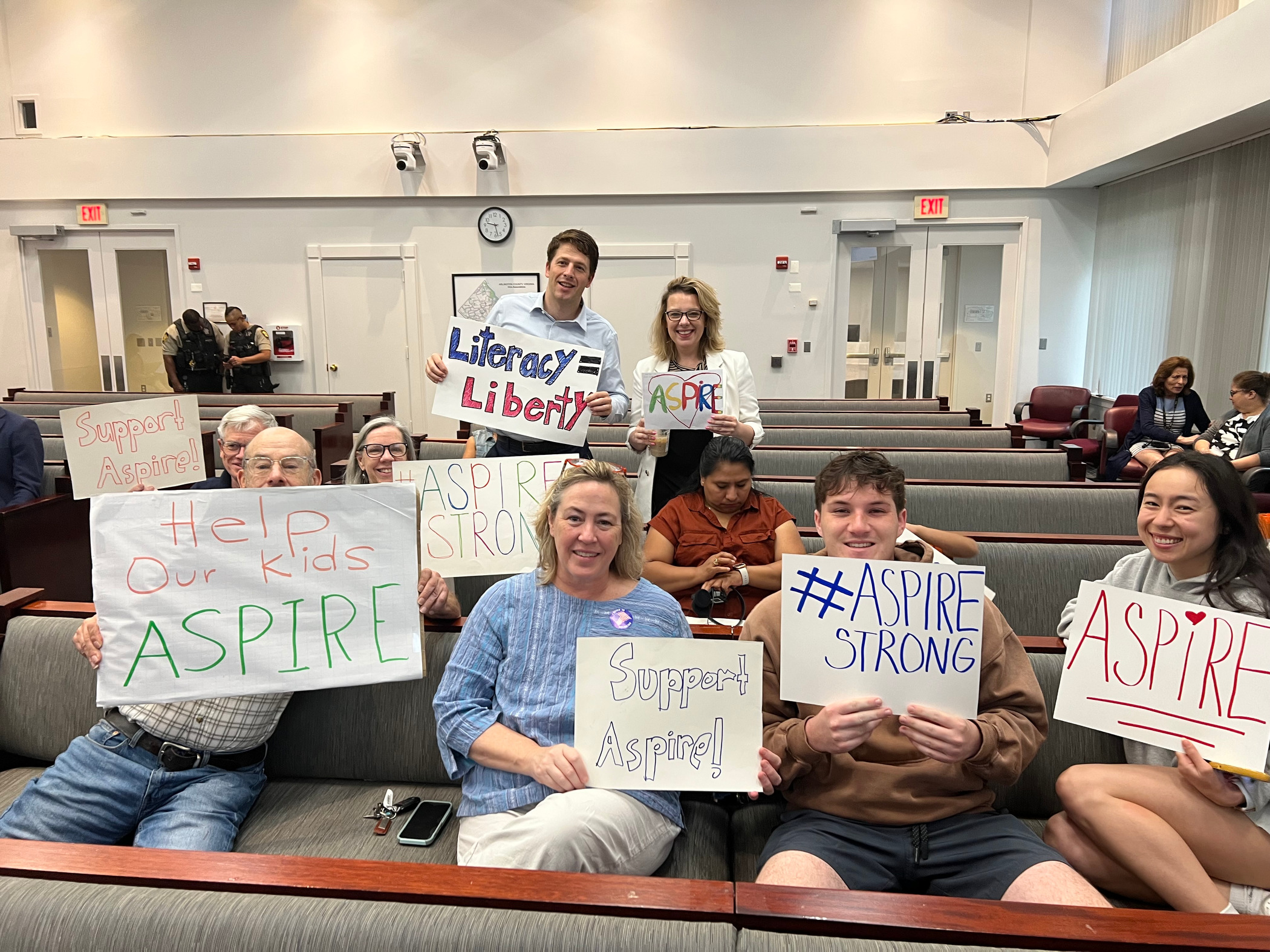
When cuts to AmeriCorps translated into a $300,000 funding loss for Aspire Afterschool Learning in 2025, the education nonprofit’s development team was forced to take immediate action.
Within 36 hours of learning it was losing a third of its overall funding, Aspire’s three-person fundraising staff rallied and launched the Rising Together campaign “to let our community know what these cuts meant, that we weren’t going away, and that we really needed their help right now,” says Maggie McCoy, development and communications director at Aspire Afterschool Learning.
This quick pivot and response from donors and foundations allowed Aspire to retain 15 of the 17 AmeriCorps members who worked with the group and keep all but one of its after-school classrooms at the start of the 2025-26 school year. A grant won later in the fall made the program whole by January.
Among the 1.9 million nonprofit groups in the United States, 70 percent have 10 or fewer employees, according to data from Candid. For a fundraiser on a team that small, the pressure is high and there’s no slack in the day. What separates the shops that thrive from those that struggle is how they spend those hours: eliminating work that doesn’t pay off, protecting time for donor relationships, and stretching the team through its volunteers and, increasingly, through AI — without burning anyone out.
The Chronicle spoke with fundraising leaders who have learned how to punch above their weight. Here are their top insights.
Start by deciding what to stop doing.
For lean teams, growth becomes possible by setting priorities.
Early in her tenure, Aspire’s CEO, Paula Fynboh, came up with a “values scorecard” to help the development team evaluate its activities, communications, and events.
The scorecard’s quantitative and qualitative sections allow staffers to quickly rate an idea against Aspire’s organizational values of fun and caring, equity and access, growth, excellence, and connection. It takes only minutes to generate a score and ensures the work aligns with the mission, respects the team’s time, and advances revenue or stewardship goals.
For example, McCoy says the scorecard led Aspire to decline reapplying for a grant that was labor-intensive and pulling student activities off-curriculum. A tool like this keeps decision making steady when pressure amps up, she says: “It’s easier to have that framework in place beforehand, as opposed to in the middle of a fundraising crisis.”
Building discipline about what to drop is exactly what Holly Moon teaches fundraisers to do. As assistant director for chapter fundraising at the Sierra Club, she coaches the leaders of the national environmental group’s 64 local chapters.

She pushes chapter directors to judge every project by its return, and often has to steer them off a tradition that no longer delivers. “This 5K that we’ve been doing for 20 years doesn’t actually make any money,” she says. “If our goal is to make money, then this is not a good use of our time.”
Much of her coaching comes down to getting fundraisers to value their own time, which she says they chronically underrate. “Our time is expensive,” she says. “We’re an underpaid sector, but still, our time is expensive.”
Pour the hours you save into relationship-building.
The time a small shop claws back by dropping low-return work should go toward what pays off best: donor relationships. Knowing who sits where in your donor pyramid tells you how to spend your time across each subset of supporters.
Moon recommends maintaining data in customer-relationship management (CRM) software about how supporters wish to be contacted, then balance that knowledge with the bandwidth your team has.
She advises saving in-person meetings for your biggest donors who warrant the high-touch approach. After that, establish a hierarchy of attention based on how much time it will require from you: virtual meetings, phone calls, voicemail, and email.
“The really important thing is that you’re doing a mix of all of those,” Moon says. “Just start, just reach out, just call — stop doing nothing and just start moving forward.”
She acknowledges that calling people on the phone can be difficult even for seasoned fundraisers, including herself. But overcoming avoidance is an important and learnable skill if raising money is your career: “I’ve had a hard time finding a fundraiser in real life who doesn’t have some sort of fear related to fundraising.”
Finally, the most valuable donor is often the one you already have. Retention starts with knowing your donors well enough to keep reaching them, which is why Moon says data hygiene in the CRM is so important.
Touching base with donors regularly and in the ways they most appreciate will let you keep them long term, bringing in steady gifts while saving you time and effort. “If you don’t have retention figured out, it’s just going to be pouring water into a bucket with holes in it,” Moon says.
Get creative with AI to amplify your operations.
The Georgia Appleseed Center for Law and Justice’s three-person development team has boosted its productivity by deeply integrating AI into grant writing, donor engagement, and internal operations. As a result, the nonprofit has expanded its grant volume and donor touchpoints for roughly $20 a month per user.
Michael Waller, a lawyer and the nonprofit’s executive director, has spent several years exploring the technology’s potential and has led his staff to use AI as their primary drafting engine for grants, reports, and strategy.
“You need to think of it as a solid, really smart junior colleague who’s new,” he says. “But you are the expert. It is not the expert. You are the expert, and you’ve got to maintain that relationship.”
Waller also leans on Claude and ChatGPT as his strategic partners. Earlier this year, he used both AI platforms to help him draft a keynote speech for Georgia Appleseed’s annual fundraising event in April, then created an AI focus group to evaluate how the speech might be received — including a “red team” instructed to poke holes in it.
He had the AI agents assume the personas of a dozen people who’d be in the audience — a board member, a school principal, a parent — and used their reactions to sharpen the draft.
Liz McDaniel, Georgia Appleseed’s director of engagement and development, describes it as the best-received speech Waller has ever given. “Standing ovation, most donations we’ve ever raised in a single event,” she says. “Staff and board members are still talking about it.”
The team’s day-to-day engine is less dramatic but does more of the work. McDaniel built a grant-writing “workspace” trained on Georgia Appleseed’s own past applications and reports, so it generates first drafts in the organization’s own voice instead of inventing from scratch.
“We are not relying on the model’s training and knowledge to develop a strategy,” Waller says. “We’re saying, here’s the information you need — our writings, our research — this is where you start, and here’s how you should write.”
That insistence on staying in control is also how the team manages risk. Because Georgia Appleseed handles sensitive information about the children and families it represents, Waller says confidential material never goes into ChatGPT or Claude, and staff members review each draft critically. “You have to come at it as a really harsh editor,” he says.
Make your board a bonus team.
Over the past year, Aspire has relied more on its board for donor stewardship, and the clearest win has been handing gift acknowledgments to trustees.
After its fall fundraising event last year, McCoy built a donor spreadsheet so board members could mail thank-you notes and call everyone who gave. The assignment carried no asking for money — just expressing gratitude — and that made all the difference.
Board members who tend to dread solicitation calls found these ones easy, McCoy says: “We got a lot of really great feedback, both from people who received the calls, and also the board of directors really liked making those calls and hearing the positive feedback.”
Boards are frequently an untapped resource, Moon says, but they are natural ambassadors who can amplify what small teams can accomplish on their own.
Drawing from the book Train Your Board (and Everyone Else) to Raise Money, by Andrea Kihlstedt and Andy Robinson, she suggests handing the board a menu of opportunities rather than a mandate. “They have to pick an appetizer, an entree, and a dessert,” Moon says. “So it can range from things like hand-addressing envelopes, to calling and thanking people, to asking a friend to give.”
Reasonable expectations are a retention strategy.
Members of small fundraising teams that protect their well-being stay longer and are happier in their work.
Aspire closes the whole office down a couple of times a year, tied to the academic calendar. To support work-life balance, the entire staff receives a paid spring break, a week off in August, and a third week at the holidays.
In a tough economic and political climate, McCoy says how you frame your work — even to yourself and your donors — shapes morale: “One of the things that Aspire really focused on after the fundraising cuts, and I’ve tried to continue focusing on, is really leaning into messages of joy and trust as opposed to the doom and gloom.”
Moon, as the parent of 3-year-old twins, protects her time carefully and models flexibility for her mentees. “Work does not happen on a nine-to-five, and neither does real life,” she says.
Finally, give yourself grace — both you and your work will benefit from setting reasonable expectations for yourself.
“Put one foot in front of the other,” Moon advises. “It doesn’t have to be perfect. It just has to be heartful and it has to be done.”