The Donor Pyramid Is Crumbling. Here’s How Colleges Are Rebuilding It.
Six institutions on the strategies broadening their donor pools — and reducing their dependence on big gifts.

By Rasheeda Childress
Senior Editor, Fundraising
June 1, 2026 | Read Time: 8 minutes
Earlier this year, a study on higher-education fundraising revealed that 89 percent of the dollars raised came from just 2 percent of donors. Researchers and university fundraisers agree this mix of funding sources is unsustainable for the future.
But fixing the problem requires long-term strategies, college fundraisers say. And that requires a commitment from universities to invest in tomorrow, says Heather Kopec, executive director of annual giving at Rice University.
“It takes a special institution to understand how to make sure I can still raise the same amount of money — if not more — 10, 15, and 20 years from now,” she says.
That long-term approach must be holistic, focused not just on the 2 percent, but on expanding the donor pool to include many more people, adds Leslie Carmona, senior director of donor experience and individual giving at Wayne State University.
“We have to have a strategy that supports donors at every level,” Carmona says. “Our industry has done a pretty considerable disservice in thinking about working only at the top of the pyramid, because that pyramid is going to crumble.”
Wayne State and Rice are among several universities the Chronicle spoke with about how they’re trying to broaden their donor base. Their approaches are diverse and designed to bolster the long-term fundraising prospects of their institutions. Here’s a look at the strategies that are helping move the needle.
Start cultivating donors while they’re still on campus.
Many campuses make giving a part of the culture starting as a student. Kenyon College discusses a culture of generosity starting freshman year, says Molly Gutridge, director of annual giving.
The private liberal arts college has an initiative called the Generosity Project, which highlights how current students give back, how alumni gifts have shaped the campus today, and where students can contribute themselves. This encourages students to see generosity as a core value, Gutridge says. Donations by the senior class to the university have reached 70 percent participation. Even though some gifts are small — just $5 — Gutridge says the key is seeding a giving habit.
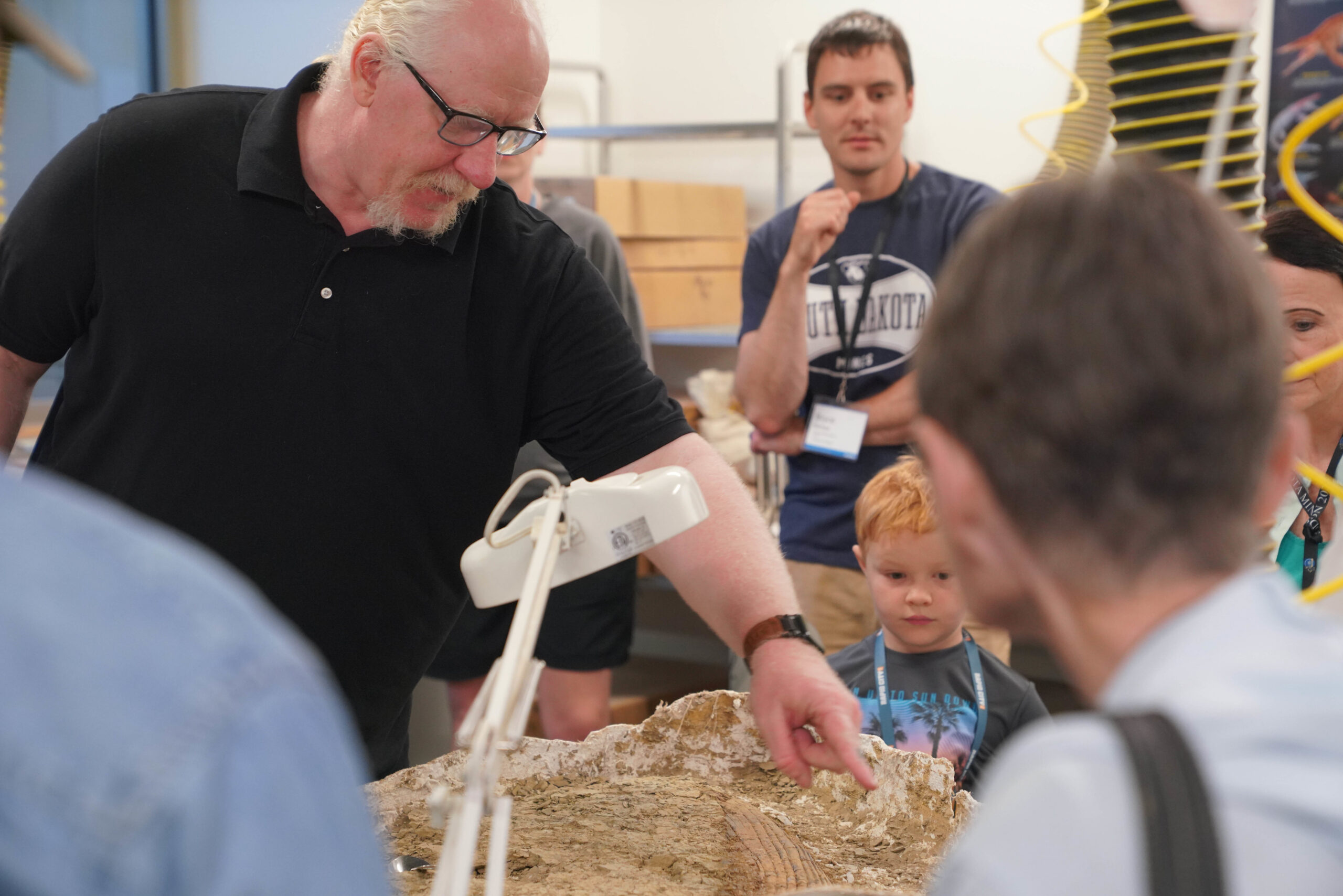
Universities are also making efforts to connect with recent graduates. South Dakota Mines, an engineering, science, and technology university, previously had a fundraising policy to not solicit students in the first 10 years after graduation, says Amanda Barnes, associate vice president for philanthropy.
“We have changed that strategy,” she says, noting that their students are very successful, with an average starting salary of $78,000. “There’s an opportunity to give back relatively early. We need to put more opportunities in front of them.”
Treat giving days as more than a one-day revenue push.
Giving days, when alumni and campus communities come together to support the school, are when lots of schools are reaching new donors. They’re effective because campuses ask donors and supporters to invite their friends to give.
“Giving Day for us is our single largest day of acquisition,” says Carmona, when Wayne State often gets matching gifts and typically 300 to 400 new donors.
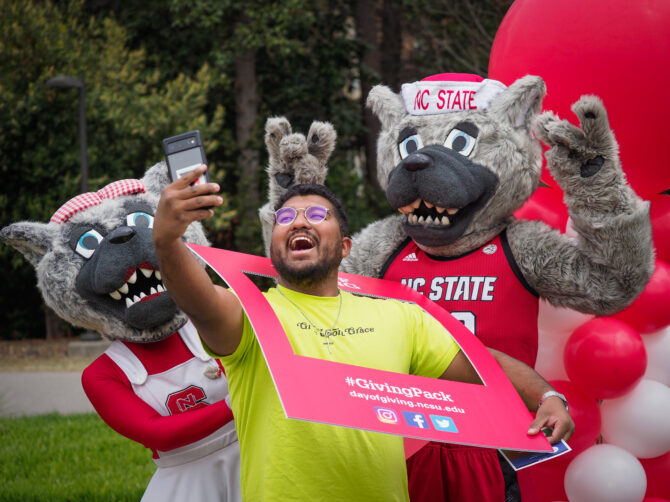
North Carolina State University uses volunteerism and competition to engage more donors, says Adam Compton, executive director of annual giving. For example, it asks alumni to volunteer in social media challenges.
“A lot of times they’ll share on social media, and by the end of the day, they’ll have made a gift,” Compton says.
N.C. State runs two types of competition — one rewarding the most money raised, the other the most donors. “It’s encouraging people to come back to the site, watch, and say, ‘My additional $10 gift could be the gift that puts my unit at the top of the leaderboard,’” Compton says.
But giving days aren’t a win if new donors never come back, Carmona says. That’s why Wayne State has a first-time donor appreciation strategy with at least four touchpoints over the following year to retain them.
“It is incredibly important to celebrate their first gift,” Carmona says. “We do our best to celebrate them for almost a full calendar year, and then we solicit again.”
Donor societies reward loyalty at every giving level.
Some universities are building societies designed to reinforce giving habits and drive participation.
Wayne State is nearly a decade into its Wayne Loyal donor community, Carmona says. People join once they’ve given any amount three years in a row. After 20 consecutive years, they’re inducted into the “lifetime circle.”
Loyalty societies reward donors at every level. “For a donor giving $5, to somebody who’s giving $5,000 a year, it’s attainable for everyone,” Carmona says. “It equals out that playing field. Then you won’t miss opportunities with those donors down the line.”
Wayne State has found that some of its best planned giving prospects come from Wayne Loyal, donors who previously flew under the radar, Carmona says.
Kenyon also has a loyal giving society named after one of its alumni who donated to the university every year from graduation until his death. Members get targeted communication and reunion perks, like access to a lounge with swag, snacks, and air conditioning.
“That gives us another opportunity to talk about what we do,” Gutridge says.
South Dakota Mines just created a new community to attract younger donors. Started in May, the Catalyst Society aims to get young alumni to donate $4,000 by age 40.
“It’s to encourage people to start giving early and help them give back to the school immediately,” Barnes says. The 4K by 40 program encourages recurring giving, so donors can consistently give small amounts to reach the goal.
Establish a data baseline before investing in new tools.
Schools are also investing in technology to better collect and use data to engage donors. Using data better requires tracking the right details and establishing a good starting point, Kopec says.
“If you don’t know where your baseline is, how are you going to know where you need to invest in resources or strategies?” Kopec says. She recommends figuring out who is giving philanthropically, volunteering, attending events, or not engaging at all. “Once you know those baselines, now you know where you need to invest, and you can set reasonable targets for that growth and what success looks like.”
Ohio Northern University has focused on becoming “information rich” and using AI to analyze data and better identify prospects based on their past behavior, says Shannon Spencer, vice president for university advancement.
“It’s looking at people’s capacity to give, tracking their behavior,” she says. “It’s doing look-alike modeling that says this person’s behavior looks this way and they’ve given us a million dollars. This person’s behavior looks a lot like them and they aren’t there yet. So maybe that’s a person that we should prioritize talking to.”
With a baseline in place, institutions can experiment more confidently — and the cost of testing new approaches is dropping, says Scott Brighton, CEO of Bonterra, a company that develops software for nonprofits and recently launched a campaign to boost giving by the year 2033. Institutions seeing gains are “leaning into that to discover where there are opportunities.”
Kopec finds experimentation helpful in approaching a wide range of alumni donors. She puts on her marketing hat to figure out which techniques are working to draw people in and which are putting people off. If she finds open and click rates decline, she adjusts, sometimes by pulling back entirely.
“We choose to stop soliciting certain constituencies at different times of the year because in the long run that’s going to do more harm,” she says. “Maybe we need to focus on re-engagement and partnering with our alumni colleagues on some of these populations to get them more excited before we come back and ask them again for money.”
Drop the institutional voice and talk to donors as a community.
For most donors, engagement comes before giving. Even if an institution has separate alumni relations and fundraising departments, the two should communicate to ensure alumni stay involved, says Kopec, who works closely with her alumni-relations colleagues.
How schools talk to those alumni matters, too. Wayne State uses “community-centric fundraising” techniques — language that frames giving as collective rather than individual.
“Instead of saying, ‘Thank you for your gift; you have done this,’ we say, ‘Thank you for supporting Wayne State. As a part of our donor community, these are the things that are happening,’” Carmona says. “It’s a shift to, ‘This is a collective group doing this together.’”
While subtle, donors have noticed.
“That language feels warmer, and it feels more genuine,” Carmona says. “They are a part of something with others. That feel of community, especially with the state of the world right now, is really important.”
Beyond tone, Carmona urges schools to step away from institutional language altogether and find what actually makes supporters feel connected. Kopec agrees — especially given the heaviness of the current moment, she says lighter language will help schools better connect to their supporters.
“We’ve seen a lot of success in breaking the mold, being punny, and having the right amount of levity,” Kopec says. “Making things joyful can go a long way in a world where there’s a lot of insaneness.”
Memorable outreach at their institutions included appeals written from the viewpoint of the campus falcon and a campus squirrel, plus engagement emails that included pirate jokes.
“You have to give it a go,” Carmona says. “You might be surprised with the results. Fear of failure keeps us from trying some of the more creative things.”
To learn how campuses are targeting outreach to donors of different generations, read the companion article, From Boomers to Gen Z: Tuning Your Pitch to Every Age.