Small events that win big gifts, no gala required
No black tie, no hard ask — just the mission and a room full of supporters. These intimate gatherings can turn newcomers into major donors.

By M.J. Prest
Senior Editor, Solutions
August 3, 2026 | Read Time: 8 minutes
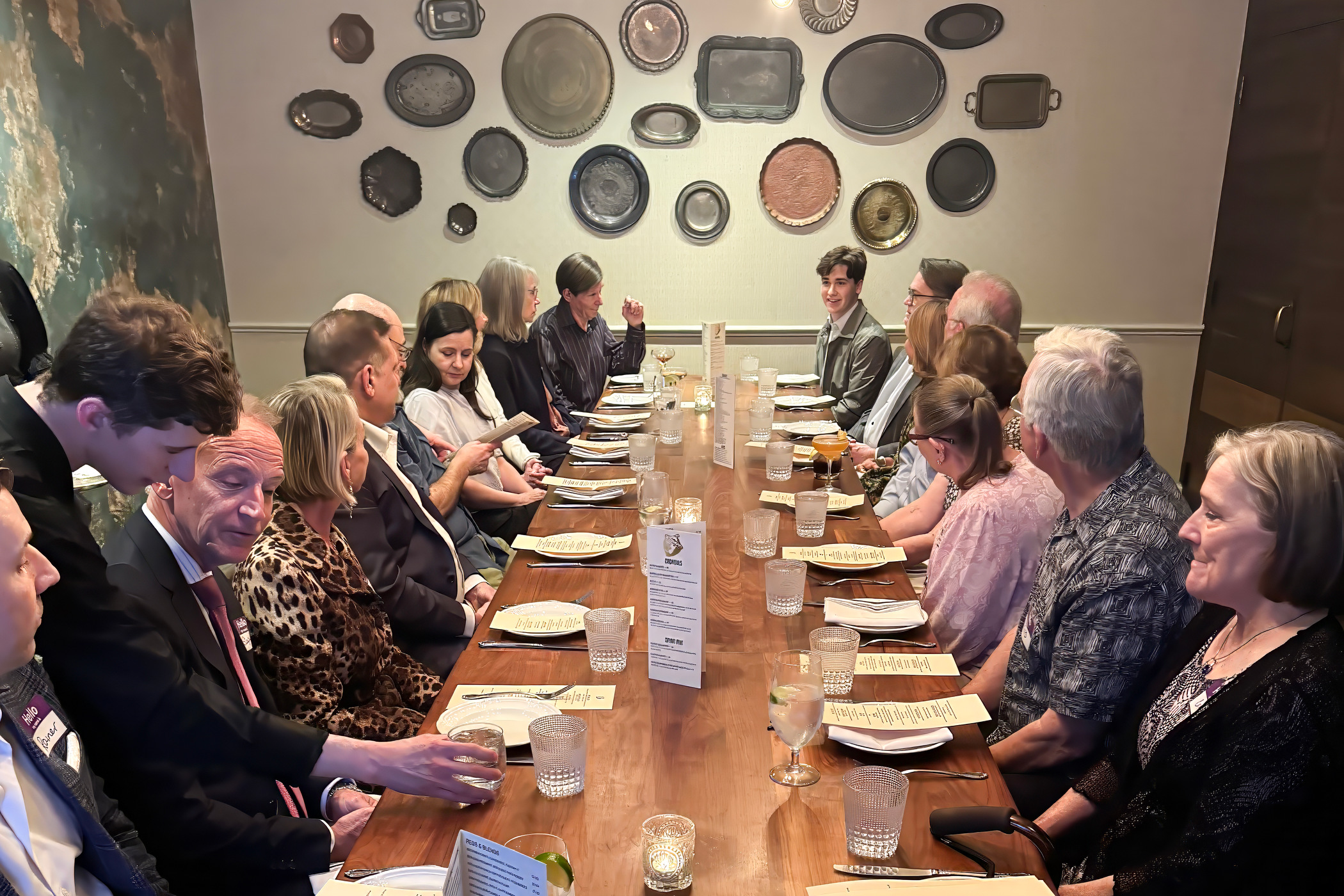
In the private dining room of a steakhouse in Austin, Tex., three staff members from the Alpha-1 Foundation welcomed about a dozen guests to dinner.
Over an intimate meal, they went around the table to share how alpha-1 antitrypsin deficiency, a genetic condition that can damage the lungs and liver, had affected their lives. One couple described how their adult son had spent years gravely ill and was awaiting a double lung transplant.
That family had engaged only briefly with the Alpha-1 Foundation, which raises money for research on the rare disease. But before the night was over, they had made a verbal commitment of $25,000, says Linda Rodriguez, its senior director of development. The gift arrived about a week later.
“Everybody goes around and tells their story,” she says. “When you hear someone else’s story, you feel that connection, and that’s what we’re building.”
Call it the anti-gala: small, private events that deepen relationships with donors where the spotlight never wavers from the mission. While glamorous balls still have their place in fundraising, some nonprofits are finding ways to get closer to major donors while spending less time and money.
The Chronicle spoke with fundraising leaders who shared their approaches to planning small, mission-focused events with an impressive return on investment.
Skipping the ask can bring in larger gifts.
The Alpha-1 Foundation has hosted four donor dinners this year, says Scott Santarella, president and CEO. At the beginning of each one, he tells the gathered guests, “I’m not here to ask you for money tonight. I’m here to share with you why we’re excited, where we’re going. And, yes, eventually we’re going to come back to you and seek your support.”
Opening the evening on that note takes the pressure off and lets donors feel included in something rare. “Hearing what we’re pitching them, and feeling like they’re special because it’s a small group, has resonated with these individuals extremely well,” he says.
World Food Program USA follows a similar playbook. The antihunger group has stopped hosting galas because they inherently conflict with its mission, says Barron Segar, its president and CEO: “I would struggle doing a high-end event, particularly for an organization that is focused on malnutrition and hunger, where you’re serving an extravagant meal with filets and lobster.”
Instead, he’s found success hosting virtual briefings on Zoom, bringing in major donors to hear directly from staff working in the field — no black tie required.
One of the group’s most successful online events centered on an invitation-only conversation with its country director in Gaza. Segar personally invited about 50 major donors and institutional partners to join the call.
Like Santarella, he didn’t present the event as a fundraiser; the goal was stewardship. “I didn’t expect that a number of people would increase their giving,” he says.
A few days after the Zoom, a longtime donor whose family had regularly given $250,000 a year called Segar to say they would increase their giving to $1 million — a change Segar credits to the briefing.
“Rarely am I going to do an event where there is going to be a hard ask that night,” he says. “I’m not looking for donors that are transactional.”
The venue should do the fundraising.
For 18 years, the Friends of Laurel Hill and West Laurel Hill Cemeteries threw a Halloween gala called the Gravediggers’ Ball to raise money to maintain two historic graveyards in Philadelphia. Typically hosted at a hotel or similar venue, it invited hundreds of people for a night of costumed revelry.
When attendance sagged, the nonprofit added a late-night dance tier to its ticket offerings to chase revenue and draw a younger crowd — but the result was one event trying to serve two audiences, and it satisfied neither. The newcomers came only for the after-hours party, while the original guests drifted away. “The people that were coming from year one are now 18 years older. The music’s too loud. They’d leave early,” says Nancy Goldenberg, president and CEO of Laurel Hill Cemetery.
“What evolved became, in my opinion, much more of a party. It was losing the sense of mission,” she says. The nonprofit killed the ball after 2023.
What has taken its place is a quieter concept that better suits the burial grounds, which date to 1836. Held on-site in its conservatory, this November’s A Spirited Affair will feature a smaller guest list — the space holds 110 — and VIP guided tours of historic mausoleums on the property. There will be no dancing and no costumes; the format is designed for a more contemplative evening.
“It became clear to us that as a cemetery, you cannot experience who and what we are by doing something off-site,” Goldenberg says. “Why should you give to a cemetery? Unless you really are here and sense the history and the beauty of the place and the meaning.”
Invite prospective donors to get to know them fast.
One of the more surprising outcomes of the Alpha-1 Foundation’s donor dinners is how successfully they have converted prospects into givers.
Rodriguez estimates that 80 percent of invitees “have probably either engaged very little or have never engaged with us.” Yet, as Santarella notes, those new attendees “represented some significant donations that I don’t think we would have received had we not invited them to dinner.”
The nonprofit credits some of that success to advance research. It uses Blackbaud’s Raiser’s Edge platform and its Prospect Insights tool to conduct wealth screenings and assess donors’ propensity to give.
To date, the team has held dinners in three other metropolitan areas — Charleston, S.C., Raleigh, N.C., and Los Angeles — where prospective donors are clustered. Its development-outreach manager personally emails and calls invitees so they can put a face to a name before arrival.
“It’s very easy to go to your major donors,” Rodriguez says. But connecting with new supporters through these gatherings shows “how we can get such large gifts from people that we haven’t been able to even steward yet — we’re just meeting them.”
Scaled-down events cost little but can raise big sums.
Smaller events come together faster and on a tighter budget than galas. Santarella estimates that the Alpha-1 Foundation’s four donor dinners this year have together required a few staff hours and $10,000 in restaurant bills but have brought in close to $500,000 in major gifts.
“You’re not going to do that in a gala,” Santarella says. “A gala, bottom line, is going to be a quarter of a million dollars [in expenses], depending on where you do it, how you do it. Then you’ve got to raise $600,000 to $700,000 to double your money.”
That figure leaves out staff time, which the Alpha-1 Foundation doesn’t lump in with its event costs. Segar takes the opposite view: When he evaluates an event at World Food Program USA, he counts payroll as part of the price.
“When you do a gala, your costs are easily going to be 50 cents on the dollar, factoring in entertainment, rental, travel, the cost of having staff, the cost of each department, contracts,” he says. “That’s time, and that is money.”
Virtual events cut the bill even further. Segar says the cost of organizing a Zoom donor briefing is minimal — largely just the staff hours to produce it. That frees up staff for the stewardship tasks that come next.
Meghan Amoroso, senior director of external affairs at World Food Program USA, says she prepares by pre-drafting emails to attendees so they’re ready to send as soon as the event ends.
“We get home from the event or at the hotel, and we’re just writing more of a genuine thank-you note or a text, and then the next day it’s more of a formal recap,” she says. “The follow-through and the work that happens after the event is almost more important than what is happening that evening.”
The best return on a small event is the next host.
Turning away from one big annual bash is part of Laurel Hill Cemetery’s broader strategy to cultivate donors through more intimate events. The nonprofit will host some of the events but leave others to donors, who will plan and host smaller fundraisers throughout the year.

Goldenberg says two such events are in the works for the fall and next spring, when current donors will welcome their family and friends to their homes, gardens, or another venue they own, covering the event’s expenses: “They invite a new cohort of people who are not familiar with Laurel Hill, who can become supporters, so that we begin to build up our donor base.”
These private events “have the potential of raising as much or more than the one we are hosting ourselves,” she says.
The Alpha-1 Foundation is seeing a similar dynamic play out among its new donors. The family that gave during the dinner in Austin plans to host a gala on the nonprofit’s behalf, inviting celebrities they know to raise the profile of the organization’s work. Planning it won’t fall to the group’s staff, and Rodriguez expects the arrangement to deepen an already growing relationship with the family.
As Segar puts it, “Don’t get me wrong: I want to go to your gala. I just don’t want to hold a gala.” In other words, the black-tie ball isn’t gone for good — it just may not be the nonprofit’s to throw.