How to Win Gen Z Now — and Gain Donors for Life
Young donors don’t give the way their parents did. Here’s what’s working with the generation that will define the sector’s future.

By M.J. Prest
Senior Editor, Solutions
June 3, 2026 | Read Time: 8 minutes
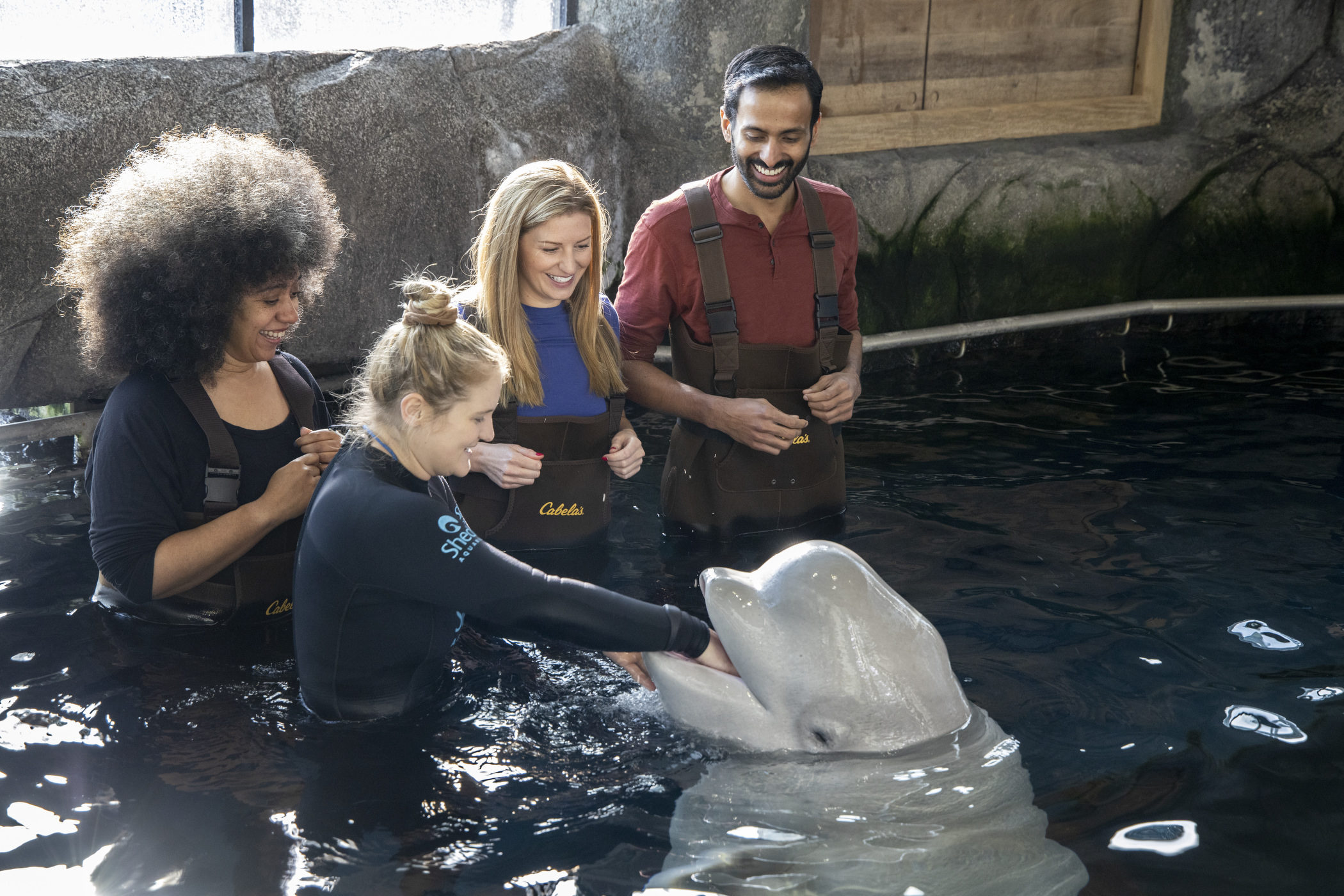
Holly West was in waders, waist deep in a whale pool at the Shedd Aquarium, with her hand in a beluga’s mouth.
It was early 2025, and the experience was a Christmas gift from her boyfriend. The two had moved to Chicago after graduating from the University of Wisconsin at Madison in 2024, and they’d been visiting the Shedd together for a few months as a low-key way to get to know their new city. When he decided to give her the Beluga Encounter as a present, the aquarium’s membership rate for two people was a more economical way to buy it.

A few weeks later, they were grinning together in the pool.
“The belugas were very friendly. We fed them fish, and we stuck our hands in their mouths because they like when you scratch their tongues,” West says. “It sounds very kitschy and very like Disney World, but it was really fun.”
They’ve kept the membership ever since, visiting at least monthly in winter and attending outdoor events in summer. The decision to keep giving, West says, came down to everything else she saw the aquarium doing.
“Obviously, there are lots of moral qualms about animals in captivity, but I think the Shedd does a really good job of conservation work and giving back to the Chicago water systems. And they seem to have a good pulse on how the animals are feeling,” she says. “So I’m happy to support them.”
West’s path to affinity — experience as the entry point, shared values as the reason to give — is one fundraisers across the nonprofit world are beginning to understand. Gen Z donors, the oldest of whom are now in their late 20s and entering their early giving years, require an approach that differs from what worked for their parents.
The Chronicle spoke to experts from various organizations that are connecting with Generation Z. Here are their top insights.
Gen Z supporters seek in-person experiences.
Creating opportunities for participation is an essential strategy for this age group, whose formative experiences were so disrupted by the pandemic. Most members of Generation Z were in high school, college, or just starting out in the work force when the world shut down.
They’re looking to make up for it now.
Hear More From the Author
Evan Ehlers was a student at Drexel University when he had the idea that would become Sharing Excess. With 50 extra meals left on his account at the end of a term, he used them all at once, packed the food into his car, and drove around Philadelphia distributing it to people in need. The experience sparked a realization about food waste — and a commitment to do something about it.
Eight years later, Sharing Excess is a national organization that mobilizes young volunteers to collect surplus food from farms, restaurants, and supermarkets, feeding up to 10 million people a year through partnerships with local hunger-relief groups.
The nonprofit offers several options for volunteering: picking up from grocery stores, sorting produce at wholesale markets, and distributing meals at pop-up events.
“They want to use the opportunity as a way to build community rather than to just give dollars — something that they can bring their friends together to do as a real-life activity,” Ehlers says.
Gen Z is screening for sincerity.
Calibrating your tone to reach Generation Z is crucial. Millennials prefer a more familiar, friendly marketing approach, which Gen Z finds cringeworthy.
They respond better to messages that look unpolished and feel low-key, with a small joke or spark of sincerity that hits home, says Sam Fankuchen, founder and CEO of Golden, which makes volunteer-management software that uses AI to convert volunteers into donors.
”What they’re looking for is that kind of genuine connection and feeling of involvement in a world that’s very synthetic,” he says.
One nonprofit account that has nailed the register: the Milwaukee Public Library on Instagram, whose deadpan, low-production videos have built a substantial following among young users.
Gen Z’s preference for realness extends to how they give. Research from the GivingTuesday Data Commons and GoFundMe found that 71 percent of adults 18 to 29 reported giving money, time, or items to charity in the week they were surveyed. But young donors are less concerned with the formalities of philanthropy.
What matters more to them is whether their gift will make a direct impact, which is why this generation has embraced crowdfunding, says Fankuchen. “Is it a nonprofit? Is it not a nonprofit? Those kinds of things maybe matter, but they’re not putting this on their tax return yet.”
Digital communities let peers do the asking.
Gen Z trusts its own. Nonprofits must make space for a thriving online community to create lasting connections among young supporters.
They just want to look at it with their face and make the gift.
The Morehead-Cain Foundation, which awards scholarships to emerging student leaders at the University of North Carolina at Chapel Hill, saw a 100 percent alumni giving rate from scholarship recipients in the class of 2025.
The foundation owes its success to the alumni it deputizes as “class ambassadors” who do the asking, says Jesse Soloff, its vice president of community. Their goal for young donors is participation, not the size of the gift, “to really instill that habit of giving and hopefully lead to a lifetime of philanthropy with Morehead-Cain,” he says.
These class ambassadors stay in touch with their fellow alumni on platforms like GroupMe or group chats over text message. The goal isn’t to jump directly into the fundraising pitch but to stay in touch organically, Soloff says: “We try to have people start with reconnection before they get to the giving.”

Trust plays a big role in the organization’s approach, which lets young people reach out on their own terms, he adds.
“We try not to be overly prescriptive. We know that each class has their own ways of connecting with one another. They have their own modes of communicating with one another,” he says. “So we try to give just a little bit of direction and some guardrails.”
Gen Z follows people, not brands.
Most nonprofits can’t be active on every social-media platform, so it’s better to do a few channels well than spread yourself too thin, the experts say.
For the Morehead-Cain Foundation, alumni demographics and engagement data pointed away from TikTok. “Leaning into Instagram, YouTube, LinkedIn, and Facebook has been a successful formula for us,” says Soloff.
Having Gen Z’s trusted peers do the advocating for you is irreplaceable — and that’s where an influencer strategy comes into play.
In 2023, Sharing Excess sent a “Hail Mary” email to Jimmy Donaldson, better known as the YouTube megastar MrBeast. He took the meeting because food security was a personal priority of his, and Beast Philanthropy had recently started a food pantry in Donaldson’s home state of North Carolina.
It’s a person who is driving the interest and the influence in the social issue — rather than a national brand that’s telling me what I should care about.
They collaborated on a video titled “We’re Giving Away $30 Million in Free Food,” which followed Sharing Excess’s expansion into a new gleaning operation at one of the world’s largest wholesale produce markets in the Bronx. The video has been viewed more than 25 million times.
These days, Ehlers says that Sharing Excess focuses its social-media strategy on TikTok and Instagram, with video content built around environmentalism and sustainability — causes that draw young supporters when paired with local ways to get involved.
He says that Gen Z wants to know, “Who are the young social entrepreneurs in my community or on my feed that I can get involved with? Because I understand their story, and it’s a person who is driving the interest and the influence in the social issue — rather than a national brand that’s telling me what I should care about.”
Every extra click reduces donations.
Collecting donations from younger donors means meeting them where they already pay and lowering the number of clicks to checkout.
Older people might not mind taking out their credit cards and punching in a number, but for a generation used to doing everything with their phones, any friction is a dealbreaker. Let young donors give with a tap using Apple Pay or Google Wallet.
“They just want to look at it with their face and make the gift,” Fankuchen says.
Making it easy for young donors to give can have transformative results. Once Sharing Excess opted in to Apple Pay as a payment option, online donations surged by more than 200 percent, Ehlers says.
The fundraisers successfully reaching Gen Z aren’t chasing big gifts but are building relationships that will deepen over the long term. ”It’s about their involvement now, their understanding, their advocacy, their storytelling, their network-sharing ability,” Ehlers says. “And then over time, maybe as they gain the means, they’re able to contribute back later on in life.”